
The Total Money Makeover vs The Debt Escape Plan: Which Debt Payoff System Actually Works?.
Two books, one decision — which one belongs on your shelf.
Side by side
Households in active consumer-debt distress who need a non-negotiable shared script. Not for investors…

People actively carrying credit card debt who have tried general budgeting approaches without success —…
What we're comparing
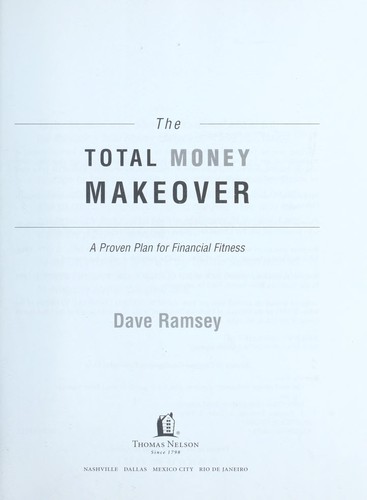
Dave Ramsey's The Total Money Makeover is the most widely followed debt-elimination system in America — structured, motivational, and built on seven sequential Baby Steps. Beverly Harzog's The Debt Escape Plan is a more targeted and emotionally nuanced companion that addresses the specific psychology behind credit card debt. Ramsey builds a complete financial operating system from scratch; Harzog solves a specific problem with more flexibility. Which one belongs on your nightstand depends on how deeply you're in debt and how much structure you need to get out.
Best for — depends on the reader
People who need structure, rules, and community. Ramsey's Financial Peace University amplifies the book's effect. Works best when the reader commits fully and doesn't negotiate with the system.
People who chafe at rigid systems or who carry primarily credit card debt rather than a mixed debt portfolio. More flexible readers with a specific problem to solve tend to get the most from Harzog.
Attribute by attribute
A check marks an objective capability a book offers (e.g. an audiobook edition). Publication year and length are shown as facts, not scored — newer or shorter isn't "better" for a classic. Confirm current editions on Amazon.
Dimension by dimension
Which one belongs on your shelf
“If you have $30,000+ in mixed debt (student loans, car note, credit cards) and feel overwhelmed, The Total Money Makeover gives you the structure and sequential clarity to attack it systematically. If you have primarily credit card debt and want to understand the psychology behind it before bulldozing through, The Debt Escape Plan is the more targeted intervention. The two are not mutually exclusive — Harzog's emotional framework complements Ramsey's action system. Together they cover the why and the how of debt freedom.”
Common questions
Is the debt snowball actually effective despite being mathematically suboptimal?
Behavioral research suggests yes for many people. The psychological momentum from eliminating small debts produces follow-through that the mathematically optimal avalanche method doesn't always sustain. If you've tried avalanche and stalled, snowball often works better in practice — even if it costs more in interest.
Can I follow both systems simultaneously?
Largely yes, with one conflict: Ramsey says cut all credit cards permanently; Harzog teaches responsible post-payoff credit use. Decide your position on that question first. Everything else in both systems is compatible.
Which book is better for someone with only credit card debt and no other liabilities?
The Debt Escape Plan is more directly applicable — it's built specifically for that situation. Ramsey's system was designed for multi-debt households and his broader framework may feel like overkill if credit cards are your only issue.