
How to Get Through a Dense Financial Book Without Quitting.
A practical method for finishing the books most people start and abandon
Books in this guide.




Most people who try to read The Intelligent Investor quit by Chapter 4. Same story with Margin of Safety. The books aren't bad — the readers aren't bad either. The mismatch is between how the book is written (1949 prose, dense footnotes, examples about long-dead companies) and how modern readers approach books (linear, start-to-finish, every word).
Here's a method that consistently gets normal readers to the end of a dense financial classic without faking it.
Accept that you are not going to read every word
This is the unlock. The Intelligent Investor runs 640 pages in the revised edition, and a large share of that is Graham's original commentary on specific 1970s stocks that no longer exist in that form. Reading every word is not the goal. Understanding Graham's framework is the goal. You can skip the dated examples and still get the framework intact.
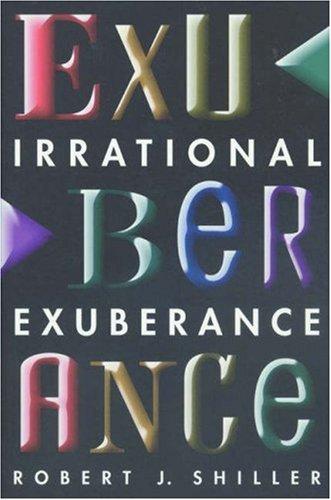
The same is true for Irrational Exuberance, where Shiller spends long passages on specific market cycles you don't need to memorize.
Read the Jason Zweig commentary first
The modern edition of The Intelligent Investor has Zweig commentary after each Graham chapter. Read Zweig FIRST, then Graham. Zweig translates the framework into modern language and modern examples. Once you understand the point Graham is making, his original prose stops feeling like a foreign language.
This trick — read the commentary, then read the source — works on most annotated classics.
Read in 30-minute blocks, not chapters
Graham's chapters are 25-40 pages of dense prose. Trying to finish a chapter in one sitting is how you end up resenting the book. Set a 30-minute timer, read until it rings, stop. A 640-page book at 12 pages per 30-minute block is roughly 55 sessions. At one session per day, that's two months. That is a perfectly fine pace.
Highlight three things per session and write nothing else
Every session, mark exactly three passages. Not 30. Three. The constraint forces you to actually decide what matters. At the end of the book you'll have 150-200 highlights, which is roughly the right amount of signal to convert into notes later.
Skip the parts that aren't earning their pages
If a chapter is 40 pages of analysis on a defunct utility company, skim it. If a section is a footnote-heavy digression, skim it. If a passage is just the author repeating a point they made better earlier, skim it. Skimming is not cheating. Skimming is how literate adults read non-fiction.
The Psychology of Money doesn't have this problem because Morgan Housel writes short essays. The Intelligent Investor was written in a different era for a different reader. You're allowed to adapt.
Pair the dense book with a light one
While reading Margin of Safety, also read something easier in parallel — The Simple Path to Wealth, or The Elements of Investing. When the dense book feels like a wall, switch to the light book for a session. You'll come back to the wall the next day with the willingness restored.
This isn't avoidance. Two books in flight, one dense, one light, is how serious readers actually operate.
What the finish line looks like
Finishing The Intelligent Investor in 8 weeks at 30 minutes a day, having skipped maybe 20% of the dated content, with 150 highlights and an honest understanding of margin of safety, the Mr. Market metaphor, and defensive vs enterprising investor frameworks — that's a complete read. You don't owe Graham every word. You owe yourself the framework.
The reader who quits at page 60 has nothing. The reader who finishes with 80% comprehension has the foundation that every serious value investor has built on for 75 years. Pick the second outcome.
Common questions.
Is it really okay to skip parts of a classic?
Yes. Non-fiction is for extracting frameworks, not memorizing prose. Skipping dated examples in a 1949 book to get to the timeless framework is what every working professional does — they just don't admit it.
Should I read the original or an abridged version?
Read the original with modern commentary (the Zweig-annotated Intelligent Investor, for example). Abridged editions cut the wrong things. The annotated original gives you the choice of what to skip.
What if I genuinely don't understand a chapter?
Move on. Mark it. Come back after you've finished the book. Almost always the later chapters retroactively explain the earlier ones, and the second pass costs a fraction of the time.