
How to Read Financial Books When You're Time-Constrained.
A working person's system for getting real value out of dense finance books in 20-minute blocks
Books in this guide.



Most finance book advice assumes a reader with a free hour and a quiet room. That's not most people. If you're working 50 hours a week, raising kids, or running a business, the question isn't "how do I love reading?" It's "how do I get the frameworks out of these books without quitting my job?"
Here's a system that works for time-constrained readers without pretending the constraint isn't real.
Pick books that survive interruption
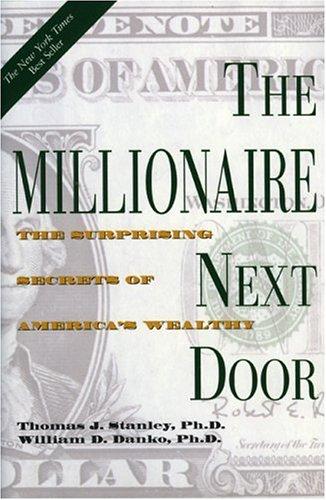
Some finance books are written in long chained arguments. The Intelligent Investor is one — Graham builds a case across chapters, and dipping in for ten minutes doesn't get you much. Other books are written as discrete chapters. The Psychology of Money is a collection of essays. The Millionaire Next Door is a series of observations with data tables. These are the right books for a time-constrained reader because losing your place costs you nothing.
Start with the modular books. Earn your way to the chained-argument books later when you can give them weekend time.
Read in 20-minute blocks, not "when you have time"
"When you have time" never arrives. Pick two specific blocks: 20 minutes before email in the morning, 20 minutes before sleep. Both is great, one is fine, zero is the failure mode you're avoiding. Twenty minutes covers roughly 10-15 pages of finance content, which is one essay in Psychology of Money or one section of The Simple Path to Wealth.
Annotate ruthlessly so you don't have to re-read
The expensive part of reading dense books is re-reading. If you mark up the book the first time — underline the claim, write a one-line summary of each chapter on the inside cover, dog-ear the page when a framework lands — you can recover the value in 5 minutes a year later instead of re-reading 30 pages.
Your future self is the customer. Write notes the way you'd want someone to write them for you.
Use the table of contents as a triage tool
Not every chapter of every book deserves equal time. The middle third of most finance books is the highest-value third. The intro restates what you already believe. The final chapter is usually a victory lap. Read the TOC, pick the 3-4 chapters that look most useful for your situation, read those carefully, skim the rest. This is not cheating. This is how busy professionals read.
Don't confuse audiobooks with reading
Audiobooks are great for narrative finance books (Digital Gold reads like a thriller). They're terrible for framework-heavy books (Margin of Safety, The Intelligent Investor) where you need to stop, reread a paragraph, and look at a table. If you're driving, listen to narrative. If you're at a desk, read the framework books on paper.
Keep a one-page summary per book
When you finish a book, spend 15 minutes writing a one-page summary: the three claims that landed, the one framework you want to remember, the one thing you disagreed with. This is the only artifact that survives long-term. Six months later you won't remember the book — you'll remember your one-page summary.
What realistic looks like
Eight to ten finance books a year is achievable on this system — more than most people who consume daily financial content online but never finish a book end-to-end. Five years of this and you'll have read 40-50 books — the same library most so-called experts have, built 20 minutes at a time.
Common questions.
What's the single best book to start with if I only have 20 minutes a day?
The Psychology of Money. Twenty essays, each readable in one sitting, almost no continuity required between them. You can put it down for three weeks and pick it back up without losing anything.
Is skimming dishonest?
No. Skimming is how researchers, executives, and serious readers handle high-volume reading. The goal of a finance book is to change how you make decisions, not to log pages. If chapter 8 doesn't apply to you, skim it.
Should I take notes in the book or in a separate notebook?
In the book. Notes in a separate notebook get lost. Notes in the margin live with the source material and are still there when you re-open the book five years later.