
How to Use Audiobooks for Finance Books Without Losing the Frameworks.
When audio works, when it doesn't, and how to capture frameworks without a pen in your hand
Books in this guide.




Audiobooks doubled most people's reading volume. They're also responsible for a lot of half-remembered finance books that the listener swears they read but can't actually summarize.
Here's how to get the audiobook volume without losing the comprehension.
Some finance books are great in audio. Some are terrible.
Narrative finance books — Digital Gold, books about specific funds or crashes, biographies, anything that reads like journalism — work beautifully in audio. The story carries you through, you don't need to flip back, and the experience is closer to listening to a podcast.
Framework-heavy books are different. The Intelligent Investor in audio is a waste of money. You can't see the tables. You can't re-read a sentence. You can't flip back to chapter 8 when the author references it in chapter 14. The book was written to be studied, not listened to.
The triage rule: if the book has tables, formulas, or sustained chains of reasoning, read the print version. If it has stories, essays, or interview material, audio is fine.
Books that work in audio
The Psychology of Money. Twenty discrete essays, each complete in itself. Lose your place between essays and you've lost nothing. Morgan Housel writes for the ear better than most finance authors.
Digital Gold. Reads like a thriller. Popper's reporting structure carries you through.
Rich Dad Poor Dad. Conversational, anecdotal, repetitive in a way that actually helps audio retention.
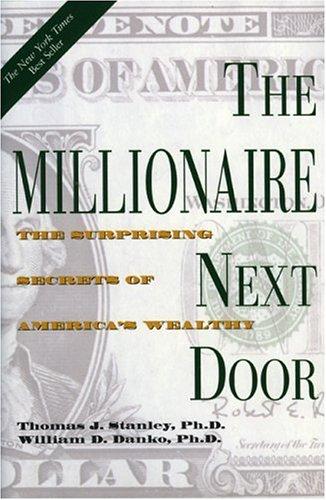
The Millionaire Next Door. Data-driven, but the data points are short and self-contained — you don't need to see most of the charts to follow the argument.
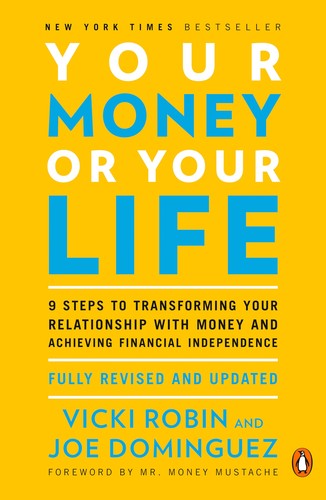
Your Money or Your Life. Philosophy and exercises. The exercises you'll need to do on paper anyway, but the philosophy lands in audio.
Books that don't work in audio
The Intelligent Investor. Tables and worked examples on almost every page. Read in print.
Margin of Safety. Same problem.
One Up on Wall Street has a middle ground — the storytelling chapters work in audio, the analytical chapters don't. If you want a half-audio compromise, this one tolerates it.
Irrational Exuberance. Heavy on charts and historical price data. Print only.
The Elements of Investing. Short enough that the print version is faster than the audio.
How to actually retain the frameworks
Here's the part most audio readers skip and then wonder why they don't remember anything.
After each chapter, pause. Spend 60 seconds out loud summarizing what the chapter said. If you can't do it, rewind. The summary forces you to actually process the chapter instead of just hearing it. You don't need to write anything down — saying it out loud is enough to encode it.
This is the difference between listening to a finance book and learning from one. Most people skip this and end up six months later having "read" a book they can't explain.
A note on speed
Most people listen too fast. 1.5x is fine for narrative books. 1.25x or slower is right for any book where the author is making a real argument. The time you save listening at 2x you lose in retention — and you've already paid for the audiobook, so the listening time isn't the bottleneck.
If you find yourself rewinding constantly, slow down.
When to switch from audio to print
If a book matters to a real decision you're about to make, get the print version. Audio is for absorbing the broad framework. Print is for doing the work.
You're about to buy a house? Audio of The Automatic Millionaire Homeowner is fine for the framework, but you should hold the print version when you're actually running the numbers on a specific house.
You're starting to pick individual stocks? Audio of One Up on Wall Street is fine for Lynch's general approach, but read The Intelligent Investor in print. The decisions are too consequential to make on audio retention alone.
What good audio listening looks like
Eight to ten audiobooks a year, on commutes and walks, supplementing four or five print books a year, is a healthy mix for a busy professional. The print books are where you do real learning. The audiobooks are where you cover ground and get exposed to authors you wouldn't otherwise have time for.
Audio is a complement to print reading, not a replacement.
Common questions.
Does listening at 2x speed hurt retention?
For narrative books, not much. For framework-heavy books, yes — you're not giving your brain time to encode the reasoning. Use 1.25x or normal speed for anything where you're learning a new framework.
Can I count audiobooks toward my reading goal?
Yes, if you're being honest about which books you actually understood. The test is whether you can explain the book's argument a week later. If you can, it counts. If you can't, you listened but didn't learn.