
When to Skip the Bestseller and Read the Original Instead.
Most popular finance books are summarizing somebody else's older book. Sometimes the original is the better read.
Books in this guide.




Walk through the personal finance section of a bookstore and you'll see hundreds of titles. Most of them are summarizing or repackaging a much smaller number of foundational works. Sometimes the popular version is genuinely better than the original — more accessible, better examples, written for a modern reader. Sometimes the popular version is a watered-down summary you'd be better off skipping.
Here's how to tell which is which.
When the bestseller earns its place
The popular version wins when the original is genuinely inaccessible to most readers and the popular author preserves the actual frameworks, not just the surface claims.
The Simple Path to Wealth by JL Collins is, in a real sense, a friendlier version of John Bogle's case for index funds. Bogle's books are correct and important, but they read like a foundation executive wrote them — because one did. Collins translates the same argument into a voice that a 25-year-old can read on a Saturday afternoon and act on Monday. The bestseller earns it because the framework survives the translation.
The Elements of Investing by Malkiel and Ellis is another good example. It's a short, modern, distilled version of A Random Walk Down Wall Street's core argument. If you don't want the longer treatment, the shorter book gives you the same conclusions without dilution.
When the bestseller cheats
The popular version fails when it keeps the conclusions but loses the reasoning that made the conclusions trustworthy.
A lot of secondhand value-investing books quote Benjamin Graham's "margin of safety" and "Mr. Market" but skip the mechanics. The conclusions sound profound stripped of context, but you can't actually apply them without the chapters Graham wrote to justify them. If you've ever read a book that says "buy with a margin of safety" without telling you how to estimate intrinsic value, you've been cheated. Read The Intelligent Investor — chapters 8 and 20 specifically — instead.
Same with most behavioral finance bestsellers. They quote Kahneman's research without making you do the mental work that Thinking Fast and Slow forces. The shortcut feels like learning. It's not. Read Kahneman himself, slowly.
The "this is just X book in a costume" test
Three quick tests when you pick up a finance bestseller.
One: does the author cite the foundational work? Honest popularizers credit the source. Sketchy ones don't.
Two: when the author makes a claim, do they show the reasoning, or just assert the conclusion? Assertion-heavy books are usually summaries of someone else's reasoning.
Three: if the book vanished tomorrow, would you have lost any framework that isn't in a better book? If no, read the better book.
Originals worth reading in their actual form
Some originals are dense but worth the effort because no summary captures them.
The Intelligent Investor by Benjamin Graham. Specifically chapter 8 (Mr. Market) and chapter 20 (margin of safety). Skim or skip the rest of the book; those two chapters are the actual core. Almost every modern value-investing book is paraphrasing them.
One Up on Wall Street by Peter Lynch. Most "buy what you know" advice you've seen is a watered-down Lynch quote. Lynch himself is funnier, sharper, and more disciplined than the people quoting him. Read the original.
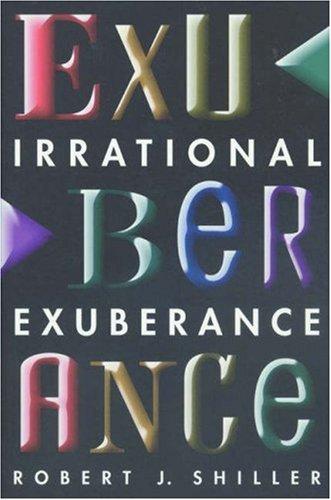
Irrational Exuberance by Robert Shiller. Most discussions of asset bubbles are downstream of this book. Shiller is a Nobel laureate writing for a serious reader — it's dense, but no bestseller captures the data the way he does.
Margin of Safety by Seth Klarman. Out of print and expensive, so most people read summaries. The original is worth the effort if you can find a library copy.
When to compromise
For most readers, the right answer is: read the accessible popularizer first to get the framework in your head, then read the original to firm up the reasoning. The Simple Path to Wealth gets you investing in index funds; Bogle's books explain why the math works. The Psychology of Money gets you thinking about behavior; Kahneman gives you the underlying research.
The bestseller and the original aren't competitors. They're a relay. Just don't stop after the bestseller and assume you've understood the topic. You've understood the conclusion. That's a different thing.
Common questions.
Should I always read the original?
No. Originals are often denser and more demanding than most readers want for an introduction. Read the popularizer first to get the framework, then the original if the topic matters to your real decisions.
Which originals are required, not optional?
If you're going to invest seriously in individual securities, The Intelligent Investor (chapters 8 and 20) is required. Most modern value-investing writing is paraphrasing those chapters, and the paraphrases lose the mechanics.