
Classic Finance Books Still Worth Reading.
The titles from the last century that have outlasted the markets they described
Books in this guide.




The finance section of any bookstore is dominated by recent publications. This makes intuitive sense — financial markets change, regulations evolve, and new products emerge. But it creates a selection bias against books that have already proven their durability.
The most valuable books in finance are often the oldest ones, because the mechanism that makes them valuable is not the market data they cite but the frameworks they establish for understanding how human beings behave around money. That mechanism doesn't change.
The Intelligent Investor (1949, updated 1973)
Benjamin Graham's foundational text on investment philosophy is the most durable finance book written in the 20th century. Warren Buffett called it the best investing book ever written, and his opinion has not changed in 60 years. The book is not dated by its market references — the case studies from the 1930s and 1940s are instructive precisely because the behavioral patterns they describe are unchanged.
The 2003 edition with commentary by Jason Zweig updates the examples and adds contemporary context without changing the framework. That edition is the right version for a modern reader.
Common Stocks and Uncommon Profits (1958)
Philip Fisher's book on qualitative stock analysis represents a tradition orthogonal to Graham's quantitative approach. Where Graham asked "how cheap is this stock?", Fisher asked "how good is this business?" Buffett has said his investment philosophy is 85% Graham and 15% Fisher. The enduring value of Fisher's book is his "scuttlebutt" methodology — gathering information from a business's customers, competitors, and employees before deciding whether to invest.
This approach is as applicable today as it was in 1958.
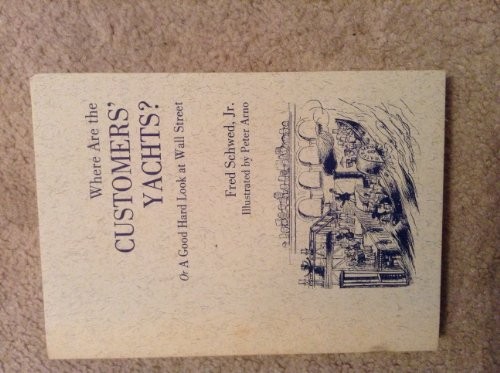
Where Are the Customers' Yachts? (1940)
Fred Schwed's satirical account of Wall Street in the 1930s is the most entertaining finance book on this list. The title comes from a story about a visitor to Newport who admired the brokers' and bankers' yachts and asked where the customers' yachts were — the implied answer being that the customers didn't have any.
The book's enduring value is its clear-eyed account of how financial professionals' incentives frequently diverge from their clients' interests. Nothing in the 80+ years since publication has changed this dynamic materially.
Think and Grow Rich (1937)
Napoleon Hill's book is often dismissed as self-help rather than finance, but its chapters on decision-making, persistence, and the organization of effort toward specific goals contain frameworks that are genuinely applicable to financial behavior. The book should be read critically — Hill's claims about research are often overstated — but the organizational principles in Chapters 2 through 7 have influenced a century of business writers for good reason.
Security Analysis (1934)
Graham and Dodd's original textbook on fundamental analysis is the most technically demanding book on this list. It is not a beginner book. But for serious investors who want to understand the intellectual foundations of value investing, it remains the source document. The 6th edition (2008) includes commentary from current practitioners and bridges the original Depression-era examples to modern markets.
One Up on Wall Street (1989)
Peter Lynch's account of his management of the Fidelity Magellan Fund is the most readable practical book on stock selection. Its central argument — that individual investors have informational advantages over institutional investors in their own industries and consumer lives — is as true today as it was in 1989, and possibly more true given the information access the internet provides.
What makes a finance book durable
The books above share a common characteristic: they describe human behavior, not market conditions. Human beings' relationship with risk, loss, status, and future uncertainty doesn't change materially between generations. Books that describe market conditions (specific instruments, specific regulations, specific economic regimes) age quickly. Books that describe human behavior in financial markets age slowly.
This distinction is useful when evaluating any finance book: the more its value depends on current market conditions, the faster it will age. The more its value depends on understanding how people behave with money, the longer it will last.
Common questions.
Are 1930s and 1940s finance books too outdated to be useful?
For the frameworks, no. For specific market data, yes. The Intelligent Investor's case studies involve companies that no longer exist, but the analytical approach those cases demonstrate is unchanged. The reader's job is to apply the framework to modern examples, not to follow the original examples literally.
Is it worth reading the original editions or updated editions of these books?
For most of the books above, updated editions are preferable — the commentary bridges old examples to modern markets. The exception is Where Are the Customers' Yachts?, where the original text is the attraction and later editions don't improve it.
Why does The Psychology of Money (2020) not appear on this list?
This list focuses on books at least 35 years old. The Psychology of Money is likely to join the durability canon — it describes human behavior rather than market conditions — but it hasn't had the time to prove it yet.