
The Underrated Financial Books Nobody Talks About.
Solid books that don't trend on social media but earn their shelf space
Books in this guide.




Most financial-book lists are the same eight or ten titles. There's a reason — those titles are good, and they earned the attention. But there are several books that don't trend, don't show up in clickbait listicles, and quietly outperform the bestsellers on specific topics.
Here are the ones that consistently surprise readers who finally pick them up.
The Next Millionaire Next Door (Stanley and Fallaw)
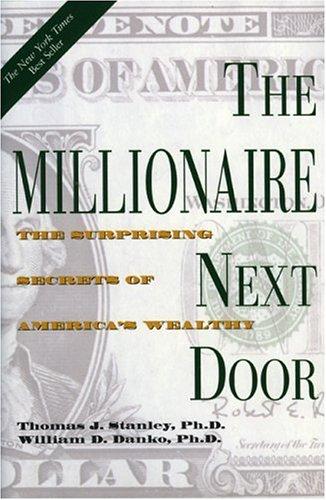
Everyone talks about The Millionaire Next Door, the 1996 original by Stanley and Danko. Almost nobody talks about The Next Millionaire Next Door, the 2018 follow-up by Stanley's daughter Sarah Stanley Fallaw, written after his death.
The follow-up matters because it answers the obvious objection to the original: "that was the 90s, the economy is different now." Fallaw replicated the methodology with new data and found most of the original findings held — frugality, stealth wealth, ordinary jobs in unsexy industries. She also updated the framework for student debt, two-income households, and digital lifestyle creep.
If you only read the original, you're missing the updated data. Read both.
Why Smart People Make Big Money Mistakes and How to Correct Them (Belsky and Gilovich)
Behavioral finance has become a crowded genre — Kahneman, Thaler, Ariely, and dozens of derivative bestsellers. Belsky and Gilovich's 1999 book gets lost in the shuffle, which is unfortunate because it does something most behavioral finance books don't: it applies the research to specific everyday decisions.
Mental accounting, sunk-cost fallacy, anchoring — these get explained with examples like overpaying for a remodel because you already spent on demolition, holding a losing stock because you don't want to "make the loss real," and refusing to drive 10 minutes to save $20 on a $1,000 purchase but driving 10 minutes to save $20 on a $50 purchase.
It's practical in a way Kahneman isn't, and shorter, and you can give it to a friend who would never read Thinking Fast and Slow.
Margin of Safety (Seth Klarman)
This one is famous in value-investing circles and almost unknown outside them. Klarman is the founder of the Baupost Group, one of the most respected hedge funds in the world. He wrote the book in 1991, refused to reprint it, and used copies trade for hundreds of dollars on secondary markets.
Read it through a library if you can find a copy, or read the available PDF excerpts. It's the most rigorous treatment of risk-first investing outside of Graham's own writing, and it shows you what institutional value investing actually looks like — which is different from the retail version most books describe.
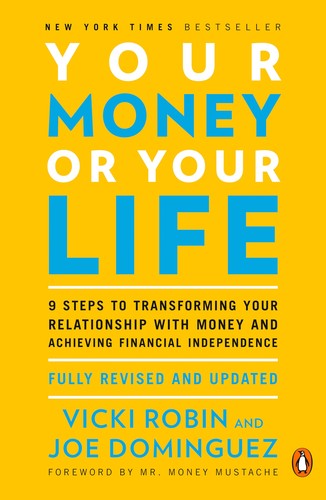
Your Money or Your Life (Robin and Dominguez)
This book is famous, but for the wrong reason. Most people know it as a FIRE movement foundation, and they assume it's about extreme frugality. It isn't really. It's about reframing money as life-energy — the hours of your finite life you traded to earn it.
The exercises in the book — particularly the one where you calculate your real hourly wage after commute, work clothes, decompression time, and taxes — change how you think about spending more than any compounding chart will.
It's a philosophy book disguised as a finance book, which is why it gets dismissed by people who never finish it.
The Elements of Investing (Malkiel and Ellis)
This one is short — fewer than 200 pages — and that's why people skip it. They assume short means lightweight.
It's not. Malkiel wrote A Random Walk Down Wall Street; Ellis wrote Winning the Loser's Game. Together they distilled the index-fund case into the cleanest, shortest, most defensible version of the argument in print. If you have one finance book to hand to a smart adult who's never read one, this is a strong candidate. It says less than The Simple Path to Wealth but with more authority.
Digital Gold (Nathaniel Popper)
If you want to understand Bitcoin without reading hype books, Popper is the right historian. He wrote Digital Gold as a New York Times reporter, and it reads like a serious work of business journalism — the people, the early infrastructure, the conflicts. You'll come out understanding why Bitcoin exists and what its early years looked like, without having to wade through evangelism.
It won't tell you whether to own Bitcoin. It will give you the context to make the call yourself, which is what a good book should do.
Why these books don't trend
Most of these books share three traits: they're old enough that the social-media churn has moved past them, they're more demanding than the average bestseller, and they don't have a charismatic author with a podcast.
That's the filter. The books that survive on signal alone, without ongoing marketing, are usually the ones doing the most actual work.
Common questions.
Why don't these books trend?
Most of them are older, denser, or written by people who aren't running ongoing marketing. The attention economy rewards new books with charismatic authors. Quality and attention are correlated, but loosely.
Where do I start on this list?
If you've already read the standard bestsellers, start with Why Smart People Make Big Money Mistakes — it's accessible, short, and changes how you make decisions. If you want depth, Margin of Safety. If you want philosophy, Your Money or Your Life.