
Red Flags in Finance Books.
The signals that separate useful financial guidance from expensive marketing
Books in this guide.




The personal finance section generates more books than almost any other category. Most of them are sincere. Some are cynically commercial. All of them should be read critically.
The red flags below aren't disqualifying on their own — almost every finance book carries at least one — but clusters of them indicate a book that is more likely to mislead than inform.
Red flag #1: The promise of specific returns
Any finance book that promises specific investment returns — "earn 20% annually," "double your money in three years" — is either deceptive or describing a strategy so narrow and risky that the book can't present it honestly. Legitimate investment books present expected return ranges based on historical data. They discuss risk alongside return. They don't promise.
This applies to books on options, real estate, day trading, and any other strategy where returns are highly variable and the outcome depends heavily on execution skill.
Red flag #2: The system that works for everyone
Legitimate personal finance advice is conditional. The right withdrawal rate depends on age, risk tolerance, and income sources. The right asset allocation depends on time horizon. The right debt payoff strategy depends on interest rates and psychological factors. A system that works for everyone — regardless of situation — is not a system; it's a slogan.
Books that acknowledge limitations and describe the conditions under which their advice doesn't apply are more trustworthy than books that present universal prescriptions.
Red flag #3: Excessive celebrity endorsements on the cover
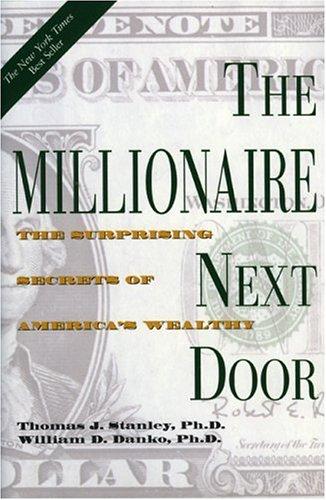
Endorsements are marketing, not analysis. The presence of many endorsements — particularly from people in adjacent industries — suggests the book is positioned for distribution rather than intellectual contribution. The most durable finance books (The Intelligent Investor, Common Stocks and Uncommon Profits, The Millionaire Next Door) earned their reputations through content, not cover blurbs.
Red flag #4: Anecdote without data
Finance books that build their argument primarily on individual stories — "I followed this method and became a millionaire" — are making a survivorship argument. The stories selected for the book are not a representative sample. Every strategy that has ever existed can be illustrated with a success story. The question is whether the strategy works as a rule across a broad population, which requires data rather than anecdote.
Authors who cite academic research, government data, or their own rigorous survey research are making verifiable claims. Authors who cite personal stories exclusively are making claims that can't be independently evaluated.
Red flag #5: The author's success is the product
Some finance books are primarily marketing material for the author's coaching programs, investment newsletters, or financial services. The test: does the book provide enough specific, actionable content to produce results without purchasing anything additional from the author? Books that consistently redirect readers to websites, programs, or paid services are products designed to generate leads, not instruction designed to produce outcomes.
Red flag #6: The tax or legal strategy that sounds too good
Any finance book that describes a tax strategy as "the secret the IRS doesn't want you to know" is likely describing either illegal tax avoidance or a strategy so narrow that it applies to almost no one. Legitimate tax strategy is documented, publicly available, and accessible to anyone with a tax professional. Strategies that require secrecy aren't legal strategies.
Red flag #7: The missing mechanism
A high-quality finance book explains not just what works, but why it works. If the explanation for a claimed outcome is missing — the book asserts that a strategy produces results without explaining the mechanism — that's worth noting. The absence of mechanism often means the author doesn't know why it works, which means they also don't know the conditions under which it stops working.
Books that avoid these red flags
The Intelligent Investor, The Psychology of Money, The Millionaire Next Door, and Common Stocks and Uncommon Profits are notable for what they don't do: they don't promise specific returns, they acknowledge limitations, they cite evidence, and they explain mechanisms. That combination of intellectual honesty is rare in the finance section and worth seeking out.
Common questions.
Are self-published finance books trustworthy?
Self-publication removes the editorial filter that traditional publishing provides — but traditional publishers have published plenty of bad finance books. The signals above apply regardless of publishing model. Assess the content, not the publisher.
Is there a finance book category that's more reliable than others?
Books grounded in academic research or original empirical data tend to be more reliable than books grounded in personal narrative. The Millionaire Next Door is based on survey data. The Intelligent Investor is based on decades of investment practice with documented results. These are harder to manufacture than personal success stories.
What if a book has some red flags but also genuinely useful content?
Read it critically. Identify the claims backed by evidence and the ones backed by anecdote. Apply the useful frameworks while holding the unsupported claims loosely. The presence of red flags doesn't make a book useless — it tells the reader how much independent verification to apply.