
How to Pick a Financial Book That's Worth Your Time.
A framework for evaluating finance books before committing hours to them
Books in this guide.




The finance section of any bookstore is full of books that don't deserve to be there. Most repeat the same advice — spend less than you earn, invest in diversified assets, start early — packaged with different metaphors, different case studies, and different authors' names on the cover.
A finance book worth reading has one of the following: original research, an original framework, or original application of an established framework. Most books have none of these. Here's how to evaluate before committing.
The 10-minute pre-read protocol
Before buying or borrowing any finance book, spend 10 minutes on this sequence:
Read the introduction and conclusion. These tell you what the book claims to argue. A good introduction states a specific claim and explains why it differs from what's already been written. A vague introduction ("financial peace is possible for everyone") is the first warning sign.
Read the table of contents. Do the chapter titles describe distinct ideas, or are they variations on the same idea? A book with 12 chapters on spending less has one idea, not 12.
Read pages 50-100. This is where most books reveal their actual depth. The first 50 pages are often the marketing pitch for the book's thesis. Pages 50-100 show whether there's substance behind it.
Look for the citation apparatus. Books making empirical claims ("most millionaires do X") should cite their sources. The absence of citations in a data-heavy book is a warning. The presence of specific research citations — with author, publication, year — is a positive signal.
Check the author's credentials. Not the endorsements (those are marketing), but the actual background. A former hedge fund manager writing about index investing has an interesting conflict to explain. A behavioral economist writing about financial decision-making has relevant expertise. Neither is automatically right or wrong, but the source affects how to read the claims.
The five questions that distinguish books worth reading
1. What is this book's one original claim?
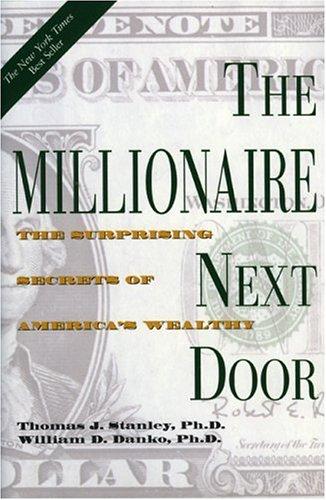
Every good finance book has one claim that distinguishes it from what came before. The Intelligent Investor's claim: markets behave irrationally in the short run, and patient investors can exploit that irrationality. The Psychology of Money's claim: financial decisions are more behavioral than analytical, and improving behavior matters more than improving knowledge. The Millionaire Next Door's claim: most genuinely wealthy Americans look nothing like the wealthy in popular imagination.
If a book's original claim can't be stated in one sentence, it probably doesn't have one.
2. Is the claim supported by evidence?
The quality of evidence matters. Personal anecdote is the weakest form. Case studies are stronger but still selective. Empirical research with control groups and large sample sizes is strongest. Most personal finance books rely primarily on anecdote and case study — this doesn't make them useless, but it means the claims should be held more lightly than empirically grounded conclusions.
3. Does the author update their view?
Authors who have maintained the same position for 30 years either have exceptional insight or have stopped learning. Look for evidence that an author has changed their mind, acknowledged limitations, or incorporated contrary evidence. Benjamin Graham revised his positions significantly between Security Analysis (1934) and The Intelligent Investor's final edition (1973). That intellectual evolution is part of what makes his work durable.
4. What does the book recommend that requires skill to execute?
Some books describe strategies that sound simple but require judgment calls that the book doesn't teach. "Buy undervalued stocks" requires the ability to identify undervaluation. "Invest in what you know" requires knowing which of the things you know are actually investable advantages. Books that describe ends without means are marketing materials, not instruction.
5. What would have to be true for this book's advice to fail?
Every finance book's advice works under some conditions and fails under others. The Simple Path to Wealth's index fund approach underperforms if an investor needs returns above market average (which it doesn't promise). Dave Ramsey's debt snowball is slower than the avalanche method but works better for readers who need the motivational momentum. Understanding the conditions under which advice fails makes the advice more useful.
Books that pass this test
The books below consistently pass the 10-minute pre-read: The Intelligent Investor (original framework, cited evidence), The Psychology of Money (original synthesis of behavioral research), The Millionaire Next Door (original empirical research), Common Stocks and Uncommon Profits (original qualitative framework), One Up on Wall Street (original practitioner methodology). They have earned their place on the shelf. Most books in the finance section haven't.
Common questions.
Should bestseller status matter when picking a finance book?
Bestseller status is a weak signal. Rich Dad Poor Dad is a bestseller; its factual claims are widely disputed. The Intelligent Investor sold modestly at first; it's now the most cited investing book in history. Bestseller status reflects marketing, not accuracy.
Are books by celebrities or famous investors automatically more trustworthy?
Not automatically. Famous investors write books for various reasons, and not all of them are instructional. Assess the content using the same framework as any other book. A book attributed to Warren Buffett's philosophy should be evaluated for whether it accurately represents his documented views.
What's the fastest way to identify a book that's rehashing existing ideas?
Read the introduction's claim statement and then Google the claim. If three other books from the past decade make the same argument with similar framing, the book is probably not adding enough to justify the time. If the claim is genuinely novel, the search will make that apparent.