
How to Spot a Pseudo-Finance Book That's Really Sales Hype.
The tells that separate a real personal finance book from a 250-page advertisement
Books in this guide.


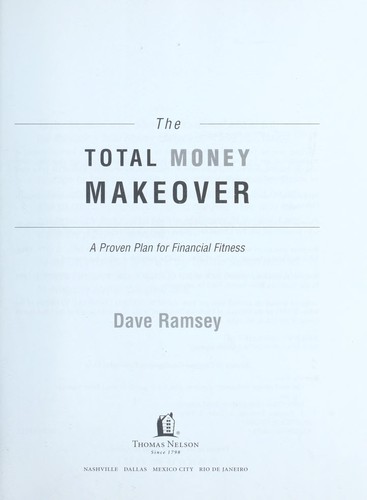
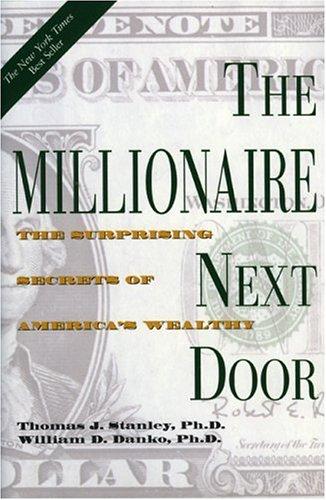
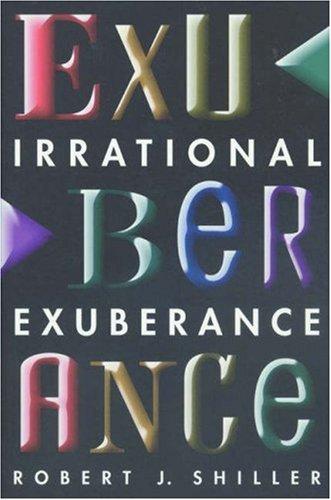


Walk into any airport bookstore and at least half the personal finance shelf is not actually about personal finance. It's a sales funnel — for a coaching program, a seminar, a "wealth system," a real estate course, a newsletter, or the author's image. The book is the top of the funnel. You are the lead.
A real finance book teaches you something useful even if you never contact the author again. A pseudo-finance book teaches you just enough to feel you need the next step. Here's how to tell them apart before you buy.
Tell 1: the back cover sells a result, not a framework
Real books promise frameworks. The Intelligent Investor doesn't promise wealth — it promises a disciplined way of evaluating securities. The Psychology of Money promises insight into financial behavior. The Total Money Makeover promises a debt-elimination process.
Pseudo books promise outcomes. "Make $10K a month." "Quit your job in 90 days." "The secret the wealthy don't want you to know." When the cover promises a result instead of a method, the book is almost always selling something else.
Tell 2: the author's primary business is not writing
Check what the author actually does for a living. If their main income is a coaching program, a paid newsletter, a real estate seminar, or a YouTube channel monetizing financial advice, the book is the marketing for that business.
That doesn't automatically make the book bad. But it dramatically changes what you're reading. The book has to keep you wanting more. It cannot give you the full system, because giving you the full system removes the reason to buy the next thing.
Compare: Burton Malkiel (academic), Robert Shiller (academic), Jason Zweig (journalist), Morgan Housel (writer), Thomas Stanley (researcher), Nathaniel Popper (journalist). Their primary business is the work. The book is the work.
Tell 3: the book name-drops the author's other products
Open to a random chapter. Count the references to the author's course, app, seminar, mastermind, podcast, "system," or "method." If it's more than two or three across the whole book, you're reading a sales document with chapters.
A useful test: a real book can be summarized without ever mentioning the author's name. The summary is the framework. A pseudo book's summary is "Buy [author]'s next thing."
Tell 4: the testimonials are at the front, not just the back
Most real finance books have a blurb page in the front matter — short endorsements from credible figures. Pseudo books open with multi-page testimonials from "students" describing dollar amounts they made after taking the author's course. That's a marketing artifact, not a publishing one.
Same with the dedication and acknowledgments — pseudo books often dedicate to "my students" or "everyone who has taken the [program name]." Real books usually dedicate to family or mentors.
Tell 5: the math is missing or vague
A real personal finance book that talks about compounding shows you the math. A real investing book that talks about returns gives you the historical data with sources. Burton Malkiel cites studies. Stanley cites his survey data. Even the accessible books — Psychology of Money, Simple Path to Wealth — show you the underlying numbers when they make a quantitative claim.
Pseudo books talk in round numbers without sources. "Most people lose 80% of their wealth to taxes." (No source.) "The wealthy use this loophole to save millions." (No specific loophole.) "Real estate has historically returned 12% a year." (No data, no time period.) The vagueness is structural — specifics could be checked.
Tell 6: the book is short on what to NOT do
Real finance books are honest about the downsides. The Intelligent Investor warns against speculation. The Psychology of Money is largely a tour of mistakes. Even Rich Dad Poor Dad — which has plenty of critics — at least frames its argument in opposition to specific behaviors (treating your house as an asset, working for money instead of having money work for you).
Pseudo books are universally upside. Every story is success. Every reader who follows the system gets the result. Real life doesn't look like that, so neither should a real book about real life.
Tell 7: no original research, no original data
Open the index (if there is one). Check the bibliography. A serious finance book either does original work (Stanley's surveys, Shiller's data series, Housel's synthesis of decades of behavioral research) or rests on a serious citation chain.
A pseudo book usually has no bibliography, a thin one, or one composed of the author's own previous books and podcasts. That's a closed loop. There's no source outside the author's own marketing.
The honest pseudo-test
Before buying, ask: would I find this book valuable if the author disappeared tomorrow? If the answer is yes — the framework stands on its own — it's probably a real book. If the answer is no — the book's value depends on the next step the author wants to sell you — it's a sales document.
The personal finance canon is small enough that you can spend a decade reading only the real books and never run out. The pseudo-finance shelf is bigger and louder, but it's a maze designed to keep you spending money on finance content instead of on actually building wealth. Recognize the difference and the shelf shrinks to something manageable.
Common questions.
Are there any pseudo-finance books worth reading anyway?
Sometimes. Rich Dad Poor Dad has been criticized for vagueness and for the author's adjacent businesses, but the core asset-vs-liability reframe is genuinely useful and worth one read. The rule isn't 'avoid all books with a funnel attached' — it's 'know what you're reading.'
What about books from financial advisors?
Advisor-authored books range widely. A book where the author's main business is fiduciary advice on a flat fee tends to be straighter than one where the main business is commission-based product sales. Check the fee model before the byline.