
How to Tell If a Finance Book Is Worth Your Time in the First 10 Pages.
A 10-minute triage to decide whether to invest 10 hours
Books in this guide.


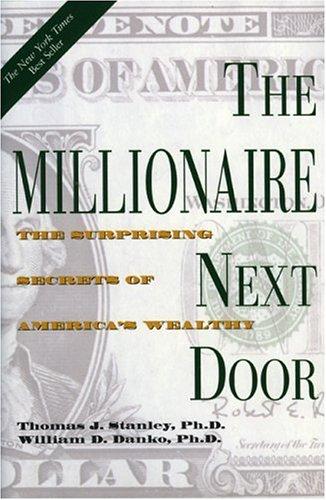

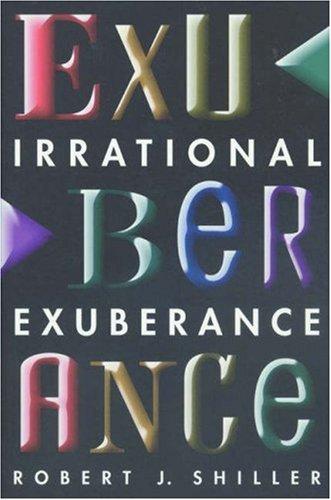
Reading a bad finance book costs you ten hours and a bit of trust in the genre. Triaging one costs ten minutes. The math says you should always triage.
Here's the test most serious readers run before they commit to a book.
Step one: read the table of contents
Open to the TOC and read it like an outline. You're looking for two things.
First: is there a clear arc, or is it a list of disconnected topics? Strong finance books build an argument across chapters. Weak ones are essay collections with no spine. Both can be valuable, but you should know which one you're holding before you start.
Second: are the chapter titles specific or vague? "Wealth Mindset" and "Financial Freedom" are vague. "How to read a 10-K" and "When the market crashes, what to actually do" are specific. Specific chapters usually deliver real frameworks. Vague chapters often deliver platitudes.
Step two: read the introduction
Skim the introduction at normal pace, not slow. You're looking for the author's main claim and the evidence they promise.
If the introduction is mostly the author's biography, that's a flag. Author biographies are fine in their place, but a finance book should open by telling you what it's going to teach, not who the author is.
If the introduction makes a specific contrarian claim, pay attention. "Most index-fund advice is wrong because…" is a real claim with a real argument behind it (or not — you'll find out). "I'm going to share my journey to financial freedom" is a podcast intro, not a book.
Step three: open to a random page in the middle
This is the most reliable test. Open to roughly the middle of the book — not the beginning, not the end. Read one full page.
What you want to see: a specific claim, a piece of supporting evidence (data, a worked example, a citation), and a takeaway you can act on. The Intelligent Investor passes this test on almost every page. The Psychology of Money passes it with a story plus a generalization. The Millionaire Next Door passes it with a data table.
What signals a weak book: a paragraph of motivational language with no specifics. "Wealth begins in the mind" with no follow-up. A page where you couldn't tell me what claim was being made.
Step four: check one footnote or citation
Flip to the notes section. Pick one citation at random.
A serious book will cite specific studies, original sources, or named practitioners. A weak book will cite other pop-finance books in a circular chain — book A cites book B, book B cites book C, book C cites book A, and none of them cite a primary source.
If the citations are all to other bestsellers, you're reading a derivative work. Sometimes that's fine. Often it means the author didn't do the work.
Step five: check the author's track record
This is the least reliable test, but worth a minute.
Did the author practice what they teach, in a verifiable way? Peter Lynch ran the Magellan Fund. Benjamin Graham ran an investment partnership and taught Buffett. Jack Bogle founded Vanguard. Their books carry their track records.
This doesn't mean academics or journalists can't write good finance books — Robert Shiller (Irrational Exuberance) is an academic, and Morgan Housel (Psychology of Money) is a writer. But you should know which mode the author is in, and weight the claims accordingly. A practitioner's claim about market timing is different from a journalist's claim about market timing.
What this triage catches
This five-step triage takes ten minutes and catches most of the duds. It won't catch every bad book — some books read well in the first ten pages and get worse — but it'll save you from the worst commitments.
The rest you'll catch after about chapter three. When you notice you're skimming because nothing new is landing, that's a signal. Quit the book. Reading a bad book to the end teaches you to distrust the genre, which is the most expensive thing reading a bad book can do.
Common questions.
What if a recommended book fails the triage?
Trust the triage over the recommendation. Recommendations are made for the recommender's situation, not yours. If the book doesn't land in the first ten pages, it probably won't land in chapter five either.
Is it bad to quit a book partway through?
No. Finishing books you don't enjoy teaches you to associate reading with obligation. Quit, mark what you learned, move on. The habit you're protecting is reading itself.