

The Next Millionaire Next Door: Enduring Strategies for Building Wealth

Curated by Brian Kim, CPA — every pick gets a plain-English summary and the key takeaways.
Brian Kim, CPA · 2.89M YouTube Subscribers →What this book actually teaches
- 01The original 1996 findings still hold — most American millionaires are self-made, under-spend income, and look unremarkable from the outside.
- 02Six behavioral factors — frugality, confidence, responsibility, planning, focus, social indifference — predict wealth accumulation better than income.
- 03The PAW/UAW formula (net worth versus expected wealth for your age and income) still discriminates well as a self-diagnostic.
- 04Social-media-driven consumption pressure is the new headwind; millionaires-next-door defend against it by neighborhood and peer-group selection.
- 05Job fit and autonomy beat prestige and title in the self-made-millionaire career pattern — choose work you can do for decades.
What's in this book
Sarah Stanley Fallaw, a behavioral economist, with material from her late father Thomas J. Stanley, revisits The Millionaire Next Door twenty-plus years later and asks whether the original findings still hold in a post-2008, post-social-media economy. The answer is yes, with updates. The typical American millionaire is still self-made, still under-spends income, still lives in a house worth a fraction of what they could afford, and still drives a vehicle most observers would not associate with wealth.
The book is built on Fallaw's own behavioral-economics research, including survey work on what she calls the 'wealth potential' factors — frugality, confidence, responsibility, planning, focus, and social indifference. These six behavioral dispositions, more than income or inheritance, predict net-worth accumulation. She updates the original PAW/UAW framework (Prodigious Accumulators of Wealth versus Under Accumulators of Wealth, defined by net worth divided by an expected-wealth formula based on age and income) and shows the formula still discriminates well. New chapters address how social media inflates lifestyle pressure, how the millionaire-next-door type now selects neighborhoods and schools to avoid the consumption arms race, how they shop online (heavily, with discipline, frequently used for comparison-pricing), and how the gig economy and freelance income fit the self-made-millionaire pattern. The career chapter argues that choosing a job that fits temperament and allows autonomy beats chasing the highest-prestige title — most of the surveyed millionaires were not in high-status careers but in dull, durable ones like contracting, accounting, and small-business ownership.
This is for readers who liked the original Millionaire Next Door and want the data refresh, for behavioral-finance enthusiasts, and for parents trying to figure out how to raise financially independent kids without the consumption-arms-race frame.
The weaknesses are mostly the same as the original. Survey methodology depends on self-report, and the highest-net-worth households are systematically under-sampled because they will not fill out surveys. The behavioral-factor framework is intuitively compelling but the causal direction is hard to prove — frugal people accumulate wealth, but accumulating wealth may also make you more comfortable being frugal. The book leans heavily on continuity with the 1996 original, which means readers of the first book will find a lot of familiar territory rather than new insight. And the 'just be frugal' message, while empirically supported, can feel inadequate to readers whose actual constraint is income, not spending.
Worth reading as the data-driven update to a foundational personal-finance text. Skip if you read the original recently and do not need the post-2008 and social-media chapters.
Read next

For anyone whose financial education was "get a good job and save" — the book is most valuable for first-time readers…
Buy on Amazon →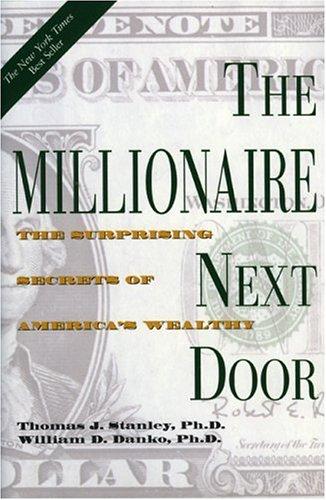
For anyone who confuses high income with wealth, or who feels behind because their lifestyle doesn't look like the we…
Buy on Amazon →
Anyone who earns enough to make discretionary spending choices but suspects their spending is not generating proporti…
Buy on Amazon →
Households in active consumer-debt distress who need a non-negotiable shared script. Not for investors already past B…
Buy on Amazon →About Thomas Stanley
Read more from Thomas Stanley and explore the full bibliography on ClearValue Books.
View Thomas Stanley's page →Get an email if our take on The Next Millionaire Next Door: Enduring Strategies for Building Wealth changes.
We re-review our picks. We'll email you if The Next Millionaire Next Door: Enduring Strategies for Building Wealth's ranking or review changes — no checking back.
Across the site
Featured in lists
- The Best Investing Books of the 2020s (#2 pick)
- The Best Finance Books of 2026 (#3 pick)
Recommended in answers
On Brian's lists

Ready to read The Next Millionaire Next Door: Enduring Strategies for Building Wealth?
Buy the edition we recommend on Amazon.
Buy on Amazon →