◈ DISCLOSURE · As an Amazon Associate, ClearValue Books earns from qualifying purchases.
◈ BRIAN'S PICK · BOOKS BRIAN RECOMMENDS ON REAL ESTATE

Books Brian Recommends on Real Estate.

Brian's reading list for understanding real estate as a wealth-building tool

Real estate is the most common alternative to the stock market that Brian's clients pursue — and also one of the most misunderstood. The wealth-building mechanics of homeownership, rental properties, and real estate as a tax strategy are genuinely powerful, but they're also more operationally complex than a brokerage account. Brian curated this list for people who want to understand real estate as an asset class before committing capital to it. His emphasis is on the financial fundamentals and mindset — not the get-rich-quick property-flipping frameworks that dominate the category.

Reviewed by Brian Kim, CPA ·
◈ THE FULL LIST

In order, with the reasoning behind each pick.

01
The Automatic Millionaire Homeowner: A Powerful Plan to Finish Rich in Real Estate cover

The Automatic Millionaire Homeowner: A Powerful Plan to Finish Rich in Real Estate

David Bach · 2005

Brian recommends Bach's homeowner-focused book as the starting point for anyone exploring real estate. It makes a clear, evidence-based case for why owning your primary residence — and paying it off on an accelerated timeline — is the foundation of the wealth picture for most American families. Brian uses the core argument with clients who are still renting and sitting on the decision.

02
Set for life cover

Set for life

Scott Trench

Brian recommends Scott Trench's book specifically for younger investors who are trying to understand how to use real estate as an early wealth accelerator. The house-hacking concept — living in one unit of a small multifamily property and collecting rent from the others — is one of the most efficient paths to real estate ownership with minimal capital, and Brian sees it work well for clients in the right market.

03
Rich Dad Poor Dad cover

Rich Dad Poor Dad

Robert Kiyosaki · 1997

Brian credits Kiyosaki with giving a generation of investors the mental model that property can be an income-generating asset rather than just a home. The asset-versus-liability framework is directly applicable to real estate analysis — a property that generates positive cash flow after all expenses is an asset; one that doesn't is a liability with appreciation upside. Brian uses this distinction with clients evaluating their first investment property.

04
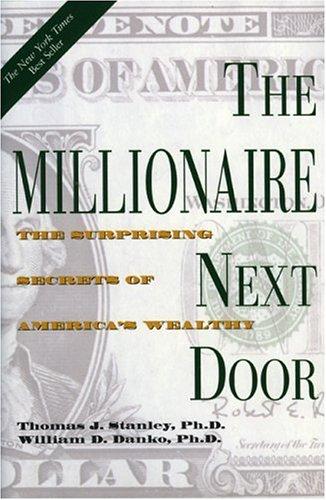
The Millionaire Next Door cover

The Millionaire Next Door

Thomas Stanley · 1996

Stanley's research on wealth accumulation patterns in the US consistently shows real estate ownership — particularly of a primary residence held for decades and paid off — as a core component of net worth for most American millionaires. Brian recommends this as context for why real estate belongs in a long-term wealth plan, even for investors who aren't pursuing rental income.

05
The Next Millionaire Next Door: Enduring Strategies for Building Wealth cover

The Next Millionaire Next Door: Enduring Strategies for Building Wealth

Thomas Stanley · 2018

The updated sequel to Stanley's original research tracks wealth accumulation patterns across a new generation and finds similar results: conservative spending, homeownership, and long time horizons define most American wealth-builders. Brian points clients to both books as a pair — the older Stanley establishes the pattern; this one confirms it still applies two decades later.

06
The Psychology of Money cover

The Psychology of Money

Morgan Housel · 2020

Real estate decisions are among the most emotionally loaded financial choices people make. Overpaying in a hot market, over-leveraging on rental properties, holding onto a losing investment for sentimental reasons — Brian sees these patterns repeatedly. Housel's framework for separating financial logic from emotional narrative is directly applicable to real estate decision-making at every scale.

◈ ◈ ◈
◈ THE METHODOLOGY

Why these books?

Every book on this list cleared the same three filters Brian uses when a client asks what to read first: it has to teach a durable principle (not a trick), it has to be written by a practitioner (not a pundit), and it has to be short enough that a busy operator will actually finish it.

Books that didn't make the cut weren't bad — they were redundant, dated, or aimed at an audience that already has the basics. The order matters: read them top-to-bottom and each one builds on the one before it.

◈ MORE FROM BRIAN

Other lists worth reading.

◈ BRIAN'S LIST
Books Brian Recommends for College Grads
◈ BRIAN'S LIST
Books Brian Recommends for Debt Payoff
◈ BRIAN'S LIST
Books Brian Recommends for Entrepreneurs
◈ BRIAN'S LIST
Books Brian Recommends for New Parents
ALL OF BRIAN'S LISTS →