
Best Books About Retirement Withdrawal Strategies.
The decumulation problem nobody trained you for
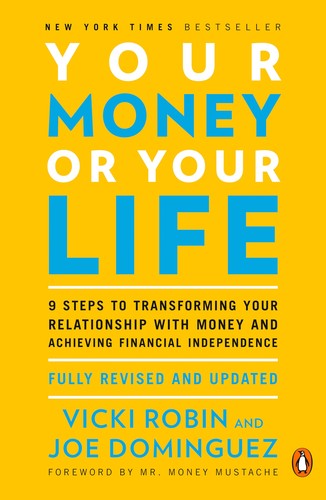
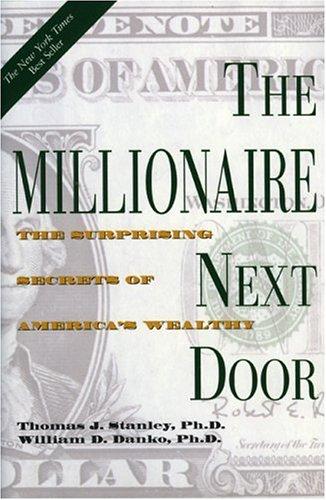
Accumulating retirement assets is a math problem with a well-known answer: save aggressively, invest in broad low-cost funds, ignore the noise, repeat for 30 years. Drawing those assets down is a different problem with no clean answer. Sequence-of-returns risk, longevity uncertainty, healthcare cost inflation, Social Security claiming strategy, tax-bracket management during distribution years, and the behavioral question of whether you can actually spend money you spent four decades not spending — none of these have a single optimal solution. Most general-audience books gesture at the withdrawal problem and then go back to talking about accumulation, because accumulation is where the audience and the book sales are. The books on this list at least take the problem seriously, even when they don't fully solve it. The Simple Path to Wealth has the best plain-English treatment of the 4% rule and its actual limitations in print. JL Collins walks through Bengen's original 1994 study, the assumptions built into it, and the conditions under which it does and doesn't hold. He's honest about the FIRE community's tendency to apply a rule designed for 30-year retirements to 50-year retirements without adjusting. The weakness is that Collins's prescription — flexible spending plus mostly-equities allocation — works in most historical periods but would have been brutal in 1966-1982. Read it as the starting point, not the final answer. Your Money or Your Life is the most useful book on this list for the behavioral side of withdrawal. Robin and Dominguez frame retirement not as the end of working but as the point at which passive income covers expenses — which means the withdrawal question is partially solved by defining your expense floor honestly. The original 1992 bond-ladder withdrawal recommendation is dated and was never general-purpose advice, but the framework for thinking about "enough" remains the single best treatment in popular finance. The Psychology of Money belongs here for the chapter on the difference between getting wealthy and staying wealthy. The single most underrated withdrawal-phase risk isn't a market crash — it's the retiree who, after 35 years of disciplined accumulation, makes one panicked allocation change in year 4 of retirement and locks in a sequence-of-returns disaster. Housel's framework on reasonable vs. rational applies more in the first 5 years of withdrawal than anywhere else in your financial life. The Millionaire Next Door is on the list for an unexpected reason: most of the millionaires Stanley and Danko studied were in or near retirement, and the spending patterns are instructive. Households that successfully spent down (or in many cases didn't spend down — most of them died with more than they retired with) shared specific habits: under-spending in the first decade of retirement, deliberate lifestyle continuity rather than inflation, and intentional decisions about transferring wealth instead of spending it. The chapters on Economic Outpatient Care are particularly relevant for retirees with adult children. The Next Millionaire Next Door is the 2018 update with newer data, and it includes more discussion of withdrawal-phase behaviors than the original. If you're reading these books primarily for the retirement-phase content, this is the better of the two.
Featured on this hub



Questions about this hub
Is the 4% rule still safe for a 30-year retirement?
Probably, with caveats. Bengen's original 1994 study showed 4% worked in every 30-year historical period using 50-75% equities. Bengen himself has updated the number both up (4.5% in some studies) and conditionally down (3.3% for very early retirees with 50+ year horizons). The Simple Path to Wealth covers this honestly. For a standard 65-year-old retiree with a 30-year horizon, 4% remains a reasonable starting point with flexibility built in.
When should I start reading withdrawal-strategy books — at retirement or before?
5-10 years before. The hardest withdrawal-phase decisions (asset allocation glide path, Roth conversion strategy, Social Security claiming) need to be set up during the years leading into retirement, not after. Reading these books in the year you retire is too late to act on much of the strategic guidance.
Do any of these books cover Roth conversion strategy?
Not in depth. Roth conversions during low-income early retirement years are one of the highest-leverage tax moves available to retirees, and none of the books on this list treat the topic with the rigor it deserves. For that specific question, the academic literature (Kitces, the Bogleheads wiki) is better than any general-audience book.