
Financial Independence and FIRE: Accelerating the Timeline to Work-Optional Life.
The savings rate, withdrawal math, and lifestyle design behind retiring decades early
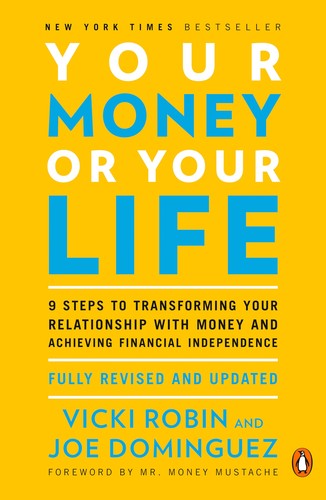
Financial Independence, Retire Early — FIRE — is the framework for reaching a state of financial security sufficient to support living expenses indefinitely without requiring employment income. The movement crystallized in the mid-2010s, drawing on foundational texts including Vicki Robin and Joe Dominguez's "Your Money or Your Life" (1992) and JL Collins's "The Simple Path to Wealth," and was amplified by personal finance bloggers including Mr. Money Mustache, who documented achieving early retirement at 30 through extreme savings in an ordinary engineering salary. The mathematics are simple. Financial independence is achieved when a portfolio can sustain annual withdrawals indefinitely — most FIRE adherents use the 4% rule as the working benchmark, implying a portfolio of 25× annual expenses. An individual spending $40,000 per year needs $1 million invested; spending $60,000 per year requires $1.5 million. The variable that accelerates or delays the timeline more than any other is the savings rate: a household saving 10% of income may take 40+ years to reach FI; one saving 50% reaches it in roughly 17 years; 70% saves in about 8-9 years. The power lies not primarily in investment returns but in the dual effect of higher savings compressing expenses (proving the lifestyle is sustainable on less) and growing the portfolio faster. FIRE has several variants. Lean FIRE targets early retirement on a minimal budget (under $40,000/year); Fat FIRE pursues work-optional status with a comfortable spending level ($80,000+/year and correspondingly larger portfolio); Barista FIRE maintains part-time work for healthcare and supplemental income while the portfolio grows toward full independence. The books in this collection provide both the philosophical framework for examining the relationship between money and work and the practical mechanics of implementation.



Questions about this theme
Is the 4% rule safe enough for someone retiring at 35 with a 50-year horizon?
The original Bengen research and subsequent Trinity Study validated 4% over 30-year retirement periods in historical U.S. markets. For a 50-60 year horizon, the failure rate of the 4% rule increases meaningfully in Monte Carlo simulations, particularly when starting valuations are high and expected future returns are muted. Most FIRE practitioners who plan for very long retirements use 3% to 3.5% as a more conservative withdrawal rate, or rely on flexible spending rules that reduce withdrawals during down markets. The FIRE community's response to sequence-of-returns risk also includes maintaining the option to generate some income during downturns — consulting, freelancing, or part-time work — which dramatically reduces the probability of portfolio depletion even with a 4% starting withdrawal rate.
How does healthcare cost factor into FIRE planning before Medicare eligibility?
Healthcare is the most significant wildcard in early retirement planning in the United States. FIRE adherents who retire before Medicare eligibility at 65 must bridge 20-30+ years of healthcare costs through marketplace insurance, a spouse's employer plan, health-sharing ministries, or geographic arbitrage (living in countries with lower-cost or publicly funded healthcare). ACA marketplace premiums are income-dependent: early retirees with carefully managed taxable income — through Roth conversion ladders, capital gains harvesting, and controlling MAGI — can qualify for substantial premium subsidies. Healthcare costs are frequently cited as the primary financial risk that drives early retirees to maintain some form of income-generating activity rather than pursuing a complete employment exit.
What is a Roth conversion ladder and why is it a cornerstone FIRE strategy?
A Roth conversion ladder is a multi-year strategy for accessing traditional pre-tax retirement account funds before age 59.5 without the 10% early withdrawal penalty. The process works by converting a portion of traditional IRA or 401(k) funds to a Roth IRA annually — paying ordinary income tax on the converted amount in the year of conversion — and then withdrawing the converted principal (not earnings) five years later, penalty-free. An early retiree who begins the ladder at age 40 can access those funds at 45. The strategy requires 5 years of bridge funding from taxable accounts, Roth contribution basis, or part-time income while the ladder stages are established. It is most powerful when conversions are executed in low-income years — the gap between earning income and taking Social Security — when marginal tax rates are low.