What is the best book to pay off debt?
In one paragraph
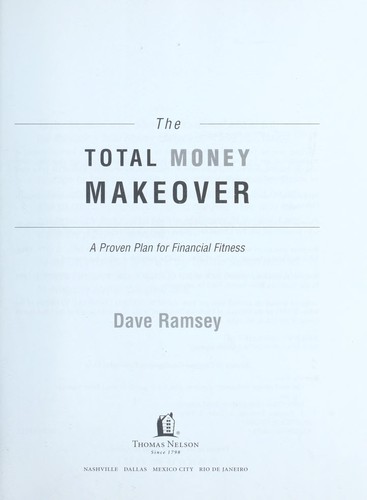
The Total Money Makeover by Dave Ramsey is the most widely used debt-payoff book — its seven Baby Steps and "debt snowball" method (smallest balance first) have helped millions of readers eliminate debt by building momentum and habit rather than optimizing purely for interest rates.
What this actually means
Debt payoff books split into two camps: mathematical optimizers and behavioral systems. The research consistently shows that the behavioral camp — despite being less mathematically efficient — produces better real-world outcomes for most people.
The Total Money Makeover is the flagship of the behavioral approach. Ramsey's debt snowball method has readers list all debts from smallest to largest balance, pay minimums on everything, and attack the smallest balance with every extra dollar until it's gone, then roll that payment to the next. The math says this costs more in interest than attacking the highest-rate debt first. The behavioral science says people who use the snowball method actually finish — because the early wins create momentum.
Debt-Free Forever by Gail Vaz-Oxlade is the strongest Canadian alternative and works well for American readers too. Vaz-Oxlade is more granular on budget mechanics than Ramsey and less driven by a singular system, which some readers prefer.
The Debt Escape Plan by Beverly Harzog is worth reading for credit-card debt specifically — it includes detailed guidance on balance transfers, negotiating with creditors, and rebuilding credit after payoff. It is more tactical than either Ramsey or Vaz-Oxlade.
One thing to understand before choosing: if the debt problem is primarily behavioral (spending exceeds income, impulse purchases), Ramsey's approach works because it addresses the psychology. If the problem is more structural (medical debt, unemployment gap, divorce), a more tactical book like Harzog's may be more useful.
For most readers with consumer debt (credit cards, car loans, personal loans): The Total Money Makeover first, then revisit the interest-optimization question once the habit of paying extra is established.