

Debt-free forever

Curated by Brian Kim, CPA — every pick gets a plain-English summary and the key takeaways.
Brian Kim, CPA · 2.89M YouTube Subscribers →What this book actually teaches
- 01Build a complete net worth statement first — people who avoid this calculation are almost always in worse shape than they think.
- 02The jar system funds spending categories at the start of each period; when a jar is empty, spending in that category stops — simplicity is the feature.
- 03Vaz-Oxlade recommends highest-interest-rate-first (avalanche) and makes the mathematical case directly rather than defaulting to psychological framing.
- 04Debt consolidation is a useful tool when it genuinely reduces interest cost and does not extend the repayment timeline — and a trap when it does the opposite.
- 05The book is Canadian in context (Equifax/TransUnion Canada, RRSP, Canadian banking products); US readers need to translate the institutional specifics.
What's in this book
Gail Vaz-Oxlade's Debt-Free Forever makes a direct argument: most people in debt know they have a problem and do not know specifically how bad it is, and the first step to fixing it is forcing the numbers into the open. The book is organized as a working manual — readers are not meant to read it passively but to complete the exercises, build the budget, run the math, and end up with an actual debt elimination plan by the last page.
Vaz-Oxlade, a Canadian personal finance author best known as the host of the television programs Till Debt Do U's Part and Princess, writes in a direct, occasionally blunt style that matches her on-screen persona. The book's approach is transactional rather than motivational: here is the process, work through it, move on. The early chapters walk readers through building a complete net worth statement — assets minus liabilities — because Vaz-Oxlade argues that people who avoid this calculation are almost always in worse shape than they think, and clarity is the prerequisite for any plan.
The budgeting methodology draws on her jar system, a cash-based allocation approach in which spending categories are divided into physical containers (or envelope equivalents) and funded at the start of each period. When a jar is empty, spending in that category stops. The simplicity is intentional: the jar system eliminates the category-tracking complexity that makes more sophisticated budgets collapse under real-world use. The money is either there or it is not.
On debt elimination, the book recommends a version of the avalanche method — highest interest rate first — while acknowledging the psychological appeal of the snowball. Vaz-Oxlade's position is that interest cost is real money and that emotional wins do not offset it; she is more willing than some personal finance authors to make the mathematical case directly. She covers credit card negotiation, dealing with collection agencies, understanding credit reports, and the mechanics of debt consolidation with a clear-eyed analysis of when consolidation is a useful tool versus when it extends the problem without solving it.
The Canadian context is present throughout — references are to Canadian credit bureaus (Equifax and TransUnion as they operate in Canada), Canadian banking products, and RRSP rather than 401(k). American readers can apply the framework but will need to translate the specific institutions and tax-advantaged account references.
This is for people who are ready to work through a concrete plan — not readers who want to be inspired to eventually deal with their debt.
The weaknesses follow from the format. The workbook structure requires active engagement; readers who skip the exercises get significantly less value. The jar system is effective for cash-heavy lifestyles but requires more adaptation for people who operate primarily through digital payments, subscriptions, and automatic billing — a population that has grown significantly since the book's 2010 publication. The advice on dealing with collection agencies, while generally sound, reflects the Canadian regulatory environment and may not translate directly to US FDCPA rules.
As a debt elimination workbook with a functioning budget system and honest math, Debt-Free Forever is well-executed. The direct style and practical exercises make it one of the more useful books in the genre for readers who are ready to act.
Read next

For anyone whose financial education was "get a good job and save" — the book is most valuable for first-time readers…
Buy on Amazon →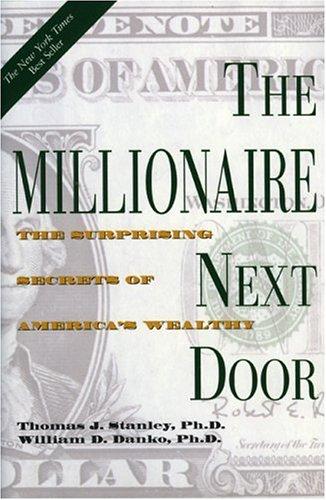
For anyone who confuses high income with wealth, or who feels behind because their lifestyle doesn't look like the we…
Buy on Amazon →
Anyone who earns enough to make discretionary spending choices but suspects their spending is not generating proporti…
Buy on Amazon →
Households in active consumer-debt distress who need a non-negotiable shared script. Not for investors already past B…
Buy on Amazon →About Gail Vaz Oxlade
Read more from Gail Vaz Oxlade and explore the full bibliography on ClearValue Books.
View Gail Vaz Oxlade's page →Get an email if our take on Debt-free forever changes.
We re-review our picks. We'll email you if Debt-free forever's ranking or review changes — no checking back.
Across the site
Featured in lists
Recommended in answers
On Brian's lists

Ready to read Debt-free forever?
Buy the edition we recommend on Amazon.
Buy on Amazon →