
The Best Business Books for Startup Founders (2026).
The reads that matter before, during, and after you raise
Startup founders operate in a different context than small business owners or career entrepreneurs — they're building for scale, often with investor capital, under time pressure, and with a team that didn't exist twelve months ago. The books on this list were chosen for that context: how to think about competitive strategy when you're small, how to build a plan that actually survives contact with the market, how to generate wealth through equity rather than income, and how to make strategic decisions under uncertainty. These are not hustle-porn reads or VC memoir puff pieces — they're frameworks that hold up when your burn rate is real and your runway is shrinking.
Books with durable frameworks relevant to the pre-scale stage — strategy, planning, wealth-building through equity, and competitive positioning. We excluded general motivational titles and books that are more useful post-scale. Priority went to titles that have proven useful across multiple founder cohorts, not just one famous success story.
The list, in order
- №1◈ Best for competitive strategy
Entrepreneurship strategy
by Lisa K Gundry · 2007
The most rigorous strategic thinking framework for founders who need to carve out a defensible position against better-resourced competitors. Goes beyond the standard "be different" advice into how to actually build and hold a market position. Read before you finalize your go-to-market.
- №2◈ Best for business planning discipline
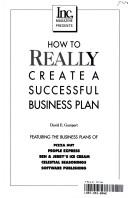
Inc. magazine presents how to really create a successful business plan
by David E Gumpert · 1990
A business plan is how you think clearly about your business — not just a fundraising document. This guide walks through the planning discipline that separates founders who iterate intelligently from those who pivot reactively. Relevant whether or not you're raising capital.
- №3◈ Best for founder mindset
Think and Grow Rich
by Napoleon Hill
◈CanonThe mastermind principle is still the best framework for building the advisory network every early-stage founder needs. Hill's concept of a definite chief aim maps directly to founder obsession — the cognitive narrowing that makes great founders effective and annoying at dinner parties.
- №4◈ Best for ownership mindset
Rich Dad Poor Dad
by Robert Kiyosaki · 1997
◈Canon★Brian's PickFounders need to think like owners, not employees — and most first-time founders came from employment. Kiyosaki's original assets-vs.-liabilities framework installs the ownership mindset that makes the difference between founders who build equity and founders who build a job with no boss.
- №5◈ Best for wealth-through-equity thinking
Wealth can't wait
by David Osborn
Osborn and Osborn make the case for building wealth through business ownership rather than traditional savings vehicles — a framework tailor-made for founders who are deferring salary now in exchange for equity upside. Useful for founders thinking through how the financial arc of a startup actually works.



Get notified when our book picks change.
Set it once. We'll email you when a pick worth knowing about changes — no checking back.
Questions about this list
Should startup founders read the same books as small business owners?
There's overlap, but the priorities differ. Startup founders need more emphasis on competitive strategy, equity-based wealth building, and planning under uncertainty. Small business owner books tend to focus on tax optimization and personal financial integration — important later, but not the first-order problem for a seed-stage founder.
Are these books relevant if I'm not raising venture capital?
Yes. Most of these books don't assume VC-backed growth — they're about the strategic and financial thinking that applies whether you're bootstrapped or funded. Entrepreneurship Strategy and the business planning guide are especially useful for bootstrapped founders who need to make capital allocation decisions without a board.
What about books specifically about fundraising and pitch decks?
We deliberately excluded pure fundraising books from this list. Pitch-deck mechanics change faster than books can track, and the fundamentals — your business model, your competitive position, your team — matter more than pitch format. Master the foundations these books teach first; the fundraising tactics are learnable in a week of research once you have the substance.