
The Best Books for Writing a Business Plan.
From the one-page overview to the investor-ready document — write a plan that actually works
A business plan is not a document you write once and file away. For an entrepreneur seeking SBA financing, a business plan is a loan underwriting requirement. For someone pitching investors, it's a credibility test. For a first-time founder, it's the most valuable strategic exercise available — the process of writing one forces clarity about markets, competition, unit economics, and the specific assumptions your business depends on. The problem is that most business plan resources either teach you to fill out a template without thinking, or go so deep into theory that the practitioner gets lost. The books on this list are different: they're written by people who have helped hundreds of real businesses get funded and launched, and they address the actual questions a business plan needs to answer — not just the sections it needs to contain. Whether you're writing for an SBA loan, a bank, angel investors, or simply to think clearly about your business, these books will produce a sharper, more credible plan.
We selected books that directly address business plan writing mechanics — financial projections, market sizing, competitive analysis, and executive summary construction. We excluded books that are primarily about business strategy without addressing the plan document itself. Priority went to titles written by practitioners who have reviewed plans from the evaluator's perspective (lenders, investors, or experienced advisors).
The list, in order
- №1◈ Best Overall
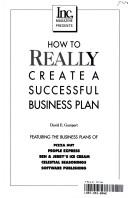
Inc. magazine presents how to really create a successful business plan
by David E Gumpert · 1990
David Gumpert's classic, published through Inc. Magazine, remains one of the most realistic and comprehensive guides to building a business plan that works in the real world. It addresses the plan from the reader's perspective — what a lender or investor is actually looking for in each section — which is exactly the orientation most entrepreneurs lack when writing their first plan.
- №2◈ Best for Language and Presentation
Perfect phrases for business proposals and business plans
by Don Debelak · 2006
A practical phrase-level reference that helps writers find the right language for each section of a business plan or proposal. Particularly useful for entrepreneurs who know what they want to say but struggle to say it in the professional, precise language that lenders and investors expect. The proposal section is equally valuable for B2B businesses seeking corporate clients.
- №3◈ Best for Strategic Thinking
Entrepreneurship strategy
by Lisa K Gundry · 2007
This book situates business plan writing within the broader framework of entrepreneurial strategy — helping readers understand not just what to write in each section but why those sections matter and how they connect to real business outcomes. Strong on competitive analysis and market opportunity assessment, which are the sections most amateur business plans get wrong.
- №4◈ Best for Financial Projections
The Business Owner's Guide to Financial Freedom: What Wall Street Isn't Telling You
by Mark J Kohler · 2017
Mark Kohler's guide addresses the financial section of a business plan with the depth it deserves — including cash flow projections, break-even analysis, and the tax structure decisions that affect your financial statements. Most business plan books treat finance as a formality; this one treats it as the core of the document, which is how lenders and investors actually read it.
- №5◈ Best for Technical Founders
Entrepreneurship for engineers and scientists
by Kathleen R Allen · 2010
Written for technically oriented founders who typically excel at product development but struggle with the business case. This book translates technical advantages into the market language that business plans require — total addressable market, customer discovery, competitive differentiation, and go-to-market strategy. Essential for anyone writing a plan for a technology, medical device, or deep-tech venture.


Get notified when our book picks change.
Set it once. We'll email you when a pick worth knowing about changes — no checking back.
Questions about this list
How long should a business plan be?
For most purposes, 15-25 pages excluding appendices is the right range. SBA lenders typically want a complete plan with financial projections going back 3 years (if existing) and forward 3 years. Investor pitch decks are separate — usually 10-15 slides — and a full plan document comes later in due diligence. One-page business model canvases are useful for internal clarity but don't substitute for a lender's requirements.
Do I need a business plan for an SBA loan?
Yes. SBA 7(a) and 504 loans require a complete business plan as part of the application package. Lenders look specifically at your market analysis (is there demand?), management experience (can your team execute?), and financial projections (can you repay the loan?). A weak business plan is one of the most common reasons SBA loan applications are declined or delayed.
What's the most important section of a business plan?
The executive summary and the financial projections — and they need to tell the same story. The executive summary is what most readers decide on; the financials are what they stress-test. Your assumptions in the financial model should flow directly from the market analysis and operational plan. Inconsistency between sections is a major red flag for experienced evaluators.