
Best Personal Finance Audiobooks (2026).
Which finance books actually hold up in your ears — and which ones need the print edition
Not every finance book survives the trip to audio. Books built on tables, worked examples, or charts lose most of their value the moment you can't flip back a page — you end up having "listened to" a book you can't actually explain. The four titles below are the opposite case: none of them depend on a visual to make their argument, so the audiobook edition delivers the full book, not a diminished version of it. We confirmed each one has a real unabridged audiobook edition — narrator and runtime cited below — and ordered the list from the shortest, easiest listen to the one that asks the most of you (and is worth pairing with the print edition for its exercises). If you're deciding whether a specific book belongs on this list or the print-only pile, our audiobook usage guide covers the general rule.
Books had to have a real, currently available unabridged audiobook edition, and their core argument had to hold up without tables, charts, or worked numerical examples — narrative, essay-form, or research-with-self-contained-data-points books qualify; formula-heavy investing texts don't. We verified narrator and runtime against each book's current Audible listing rather than estimating.
The list, in order
- №1◈ Best short-form listen
The Psychology of Money
by Morgan Housel · 2020
◈Canon★Brian's PickMorgan Housel's book is nineteen short, self-contained essays, which makes it close to the ideal audiobook structure — lose your place between chapters and you've lost nothing. Narrated by Chris Hill at just under 6 hours (5 hrs 54 min), it's the shortest listen on this list and the easiest one to finish in a single commute week.
- №2◈ Best conversational listen
Rich Dad Poor Dad
by Robert Kiyosaki · 1997
◈Canon★Brian's PickRobert Kiyosaki's book is conversational and anecdotal by design, built around dialogue with his two "dads" rather than reference material — a structure that translates directly to spoken narration. The original edition, narrated by Tim Wheeler, runs about 6 hrs 9 min (a 20th-anniversary edition narrated by Tom Parks runs longer, at 8 hrs 22 min).
- №3◈ Best data-driven listen
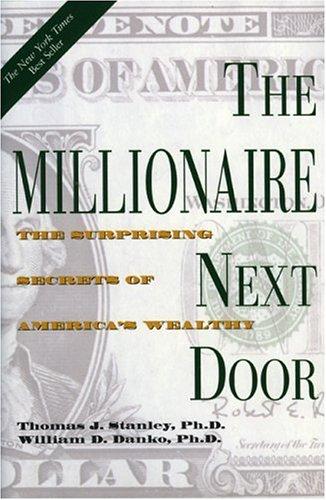
The Millionaire Next Door
by Thomas Stanley · 1996
◈Canon★Brian's PickThomas Stanley and William Danko's research is data-driven, but the data points are short and self-contained — net worth multiples, spending habits, car choices — so you don't need to see a table to follow the argument the way you would with a regression chart. The unabridged audiobook, narrated by Cotter Smith, runs about 8 hrs 16 min.
- №4◈ Best for FIRE philosophy — pair with print for the exercises
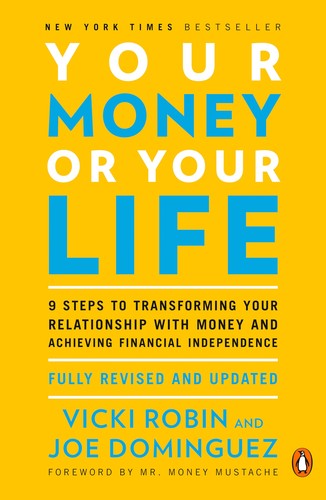
Your Money or Your Life: 9 Steps to Transforming Your Relationship with Money and Achieving Financial Independence
by Vicki Robin · 1992
◈CanonVicki Robin's philosophy — that every purchase costs you hours of life energy, not just dollars — lands fully in audio, and the fully revised 2018 edition is narrated by Robin herself, running about 11 hrs 21 min. The catch: the book's nine-step program includes real exercises (calculating your real hourly wage, tracking every dollar), and those need paper. Listen for the framework, then do the exercises from the print or ebook edition.


Get notified when our book picks change.
Set it once. We'll email you when a pick worth knowing about changes — no checking back.
Questions about this list
Which personal finance audiobook should I start with?
The Psychology of Money if you want the shortest, easiest listen — its essay structure means you can't really lose the thread. Rich Dad Poor Dad if you want something conversational for a long drive. Save Your Money or Your Life for when you're ready to also do the paper exercises, not just absorb the philosophy.
Are there personal finance books to avoid in audio format?
Yes — anything built on tables, formulas, or worked numerical examples. The Intelligent Investor and Margin of Safety are the clearest cases: you can't see the tables, and you can't flip back to an earlier chapter the way the argument requires. Read those in print instead of audio.
Does listening to a finance book count as actually reading it?
If you can explain the book's core argument a week later, yes. If you can't, you listened but didn't retain it — which is common at higher playback speeds. For any book making a real argument (as opposed to telling a story), 1.25x or normal speed retains the reasoning better than 2x does.