
Best Real Estate Books for House Flipping (2026).
The buy-renovate-sell cycle is simple to describe and hard to execute — read these before your first deal.
House flipping looks straightforward on paper: buy low, renovate, sell high. In practice, flipping is a business with thin margins, unpredictable renovation costs, and significant tax exposure that most first-time flippers discover too late. After-repair value (ARV) calculations are the foundation of any viable deal — overpaying relative to ARV is the most common way new flippers lose money. Contractor management is the execution risk: projects that run 30% over budget and six weeks late can turn a projected $40,000 profit into a $10,000 loss. And capital gains taxes on properties held less than a year are taxed as ordinary income, not at preferential long-term capital gains rates. The books on this list address the mindset, deal analysis, and financial literacy that separate successful flippers from expensive lessons. They won't teach you the specific mechanics of a kitchen gut — those are better learned from local contractors — but they will help you think like a real estate investor rather than a renovator.
Books must address real estate deal analysis, investor mindset, or the financial mechanics of property transactions in ways directly applicable to flippers. Titles that help readers understand the wealth-building context for flipping — why and whether to flip versus buy-and-hold — were prioritized alongside books covering deal evaluation fundamentals.
The list, in order
- №1◈ Investor Mindset
Rich Dad Poor Dad
by Robert Kiyosaki · 1997
◈Canon★Brian's PickKiyosaki's foundational argument — that assets put money in your pocket while liabilities take it out — is the mental model every flipper needs before evaluating a deal. The book frames real estate as a vehicle for cash flow and wealth, not just a transaction, which is the right lens for deciding whether any particular flip is worth doing or whether buy-and-hold would generate better risk-adjusted returns.
- №2◈ Leverage & Homeownership
The Automatic Millionaire Homeowner: A Powerful Plan to Finish Rich in Real Estate
by David Bach · 2005
David Bach's homeowner-focused wealth-building framework is particularly useful for flippers who are using primary residence strategies — live-in flips, house hacking, or using home equity as deal capital. The section on leveraging homeownership as a wealth engine covers the financial mechanics that make the live-in flip one of the highest-return low-tax strategies available to individual investors.
- №3◈ Behavioral Finance
The Psychology of Money
by Morgan Housel · 2020
◈Canon★Brian's PickFlipping is emotionally expensive: renovation surprises, slow markets, and missed profit projections are psychologically hard to handle. Morgan Housel's behavioral finance lens helps flippers recognize the biases — anchoring on purchase price, overconfidence in renovation timelines, loss aversion on needed price reductions — that cause the most damage. Knowing these patterns doesn't eliminate them, but it helps flippers catch themselves.
- №4◈ Capital Accumulation
Set for life
by Scott Trench
Scott Trench's aggressive approach to building wealth through real estate and savings rate is directly applicable to flippers in the accumulation phase. His house-hacking strategy and deal evaluation framework help flippers understand how to use each project to build the capital base for the next one rather than spending profits as they come.
- №5◈ Wealth Building Discipline
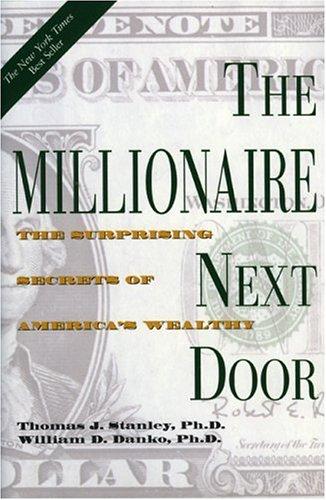
The Millionaire Next Door
by Thomas Stanley · 1996
◈Canon★Brian's PickStanley and Danko's research on how wealth is actually built — through frugality, reinvestment, and avoiding lifestyle inflation — is a useful counterweight to the flip-TV fantasy of getting rich fast. Many experienced flippers keep most of their profits invested rather than spent. This book explains why that discipline is the difference between a profitable year and generational wealth.


Get notified when our book picks change.
Set it once. We'll email you when a pick worth knowing about changes — no checking back.
Questions about this list
How do you calculate ARV for a house flip?
After-repair value (ARV) is the estimated market value of the property after renovations are complete. The standard approach is to pull recent comparable sales (comps) within a half-mile radius for properties with similar square footage, bed/bath count, and condition — then adjust for differences. Most experienced flippers use the 70% rule as a starting filter: don't pay more than 70% of ARV minus estimated repair costs. This leaves room for holding costs, closing costs, and unexpected overruns.
How are profits from house flipping taxed?
Properties sold in less than 12 months are subject to short-term capital gains tax, which is taxed as ordinary income — meaning your marginal tax rate, not the preferential 15–20% long-term rate. This is one of the most significant differences between flipping (a business) and buy-and-hold investing. Flippers who do multiple deals per year may also be classified as real estate dealers, which has additional tax implications. Consult a CPA with real estate experience before your first deal.
What is the biggest risk in house flipping?
Renovation cost overruns combined with a slower-than-expected sales timeline. A project that runs $20,000 over budget and takes two extra months to sell can absorb the entire projected profit — plus carrying costs accumulate daily (mortgage/hard money interest, taxes, insurance, utilities). The most successful flippers manage this through detailed contractor bids before purchase, conservative contingency budgets (15–20% of renovation costs), and strict timelines built into contractor agreements.