
Best Retirement Books for Singles (2026).
No second income, no spousal backup plan — these books address retirement planning on your own terms.
Retiring as a single person means facing risks that married couples can partially hedge away. There's no second income to cushion a bad sequence of returns. There's no spouse to make healthcare decisions if you become incapacitated. Long-term care costs fall entirely on you — and the cost of a private memory care facility can exceed $100,000 per year. Beneficiary and estate planning decisions that couples make jointly require deliberate solo choices about who handles your affairs and inherits your assets. Social Security survivor benefits don't apply. None of this is insurmountable, but it requires explicit planning that generic retirement books rarely address. The books on this list were selected because they take single-person retirement seriously, covering long-term care insurance, advance healthcare directives, trust and estate basics, and the lifestyle considerations of building a strong social network as a solo retiree.
Books must address at least one challenge specific to single retirees: sole-income risk management, long-term care planning without a spousal caregiver, beneficiary and estate decisions as an individual, or the social and lifestyle design of retirement without a default partner. Generic couples-focused retirement titles were excluded.
The list, in order
- №1◈ Solo Retirement Planning
Driving solo
by Susan Covell Alpert
Candy Harrington writes specifically for single people navigating life's major transitions alone, including retirement. The book addresses the planning gaps that married-couple-focused books ignore: who will be your healthcare proxy, how to build a support network intentionally, and how to structure your finances and housing when there's no backup income or caregiver. The only book on this list written specifically for solo retirees.
- №2◈ Suddenly Single Transition
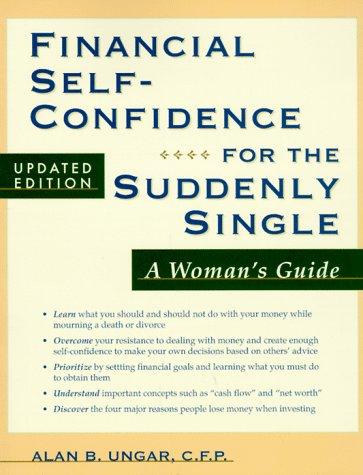
Financial Self-Confidence for the Suddenly Single
by Alan B Ungar · 1997
Written for people who find themselves single after divorce or widowhood, this book covers the financial literacy ground that many people — particularly those who delegated financial decisions in a marriage — need to cover quickly. Beneficiary updates, account consolidation, Social Security survivor benefit rules, and rebuilding a solo financial plan are all addressed practically.
- №3◈ Portfolio Simplicity
The Simple Path to Wealth
by Jl Collins · 2016
◈Canon★Brian's PickFor single retirees, portfolio simplicity is even more important than for couples — there may not be a financially-literate partner to manage complexity in your absence. JL Collins' two-fund approach (total market index + bonds) is easy to hand off to an executor or successor trustee, and his withdrawal rate discussion is applicable to a single-income retirement portfolio.
- №4◈ Practical Senior Guide
The Savvy Senior
by Jim Miller
Jim Miller's guide covers the practical senior resources that single retirees are more likely to need without a spouse to coordinate: Medicare enrollment, Social Security claiming, senior housing options, and caregiver resources. The tone is practical rather than philosophical, which is exactly right for the operational planning that solo retirees need to do.
- №5◈ Long-Term Care
Planning for Longterm Care For Dummies
by Consumer Dummies
Long-term care is the sleeper risk in every retirement plan and the most acute risk for single retirees, who cannot rely on a spouse as an unpaid caregiver. This book explains the insurance options (traditional LTC, hybrid life/LTC policies), Medicaid planning considerations, and how to evaluate care settings — the information single retirees need to make this decision rather than avoid it.



Get notified when our book picks change.
Set it once. We'll email you when a pick worth knowing about changes — no checking back.
Questions about this list
How much more do single people need to retire than married couples?
Single retirees don't need double what a couple needs — shared housing and fixed expenses create economies of scale for couples — but singles do face higher per-person costs for healthcare, housing, and especially long-term care (no spousal caregiver). A rough rule of thumb is that a single person needs 70–80% of what a couple needs for an equivalent standard of living, but with a higher emergency buffer to absorb shocks without a backup income.
What estate planning documents does a single retiree need?
At minimum: a will, a durable power of attorney (for finances), a healthcare proxy or healthcare power of attorney, and an advance directive (living will). Without a spouse as the default decision-maker, these documents are not optional — they determine who manages your finances and healthcare if you can't. A revocable living trust is also worth considering to avoid probate and simplify account transfer. "Driving Solo" covers the social and practical sides; consult an estate attorney for the legal documents.
Should single retirees buy long-term care insurance?
Single retirees have the strongest case for long-term care insurance because there is no unpaid spousal caregiver to absorb costs. The decision depends on your assets: if you have very few assets, Medicaid may cover care; if you have significant assets, you may self-insure; the middle range is where traditional or hybrid LTC insurance makes the most financial sense. "Planning for Long-Term Care for Dummies" walks through the cost-benefit analysis without trying to sell you a policy.