

Corporate Strategy

Curated by Brian Kim, CPA — every pick gets a plain-English summary and the key takeaways.
Brian Kim, CPA · 2.89M YouTube Subscribers →What this book actually teaches
- 01The book follows the standard strategy process sequence — external analysis, internal capability assessment, strategic gap identification, option generation, choice, and implementation — and treats each stage with enough worked examples to be applied rather than just understood.
- 02The external analysis chapters integrate Porter's Five Forces, PESTEL, and competitive benchmarking; the internal analysis chapters are built on the resource-based view of the firm and value chain analysis, giving readers a complete diagnostic toolkit across both dimensions.
- 03The strategic options treatment is organized as a comparative evaluation of growth, stability, and retrenchment directions with consistent criteria — resource requirements, risk profiles, and enabling conditions — which is more practically useful than books that prescribe a single preferred strategy direction.
- 04Du Toit's South African academic base gives the book an emerging-market and African business context that most strategy textbooks written from North American or European perspectives do not provide — a distinctive asset for readers operating in those markets.
- 05The 2006 vintage predates platform economy, digital-native competitive dynamics, and ecosystem strategy concepts; the frameworks remain analytically sound but the worked examples and industry cases are dated and will require updating for technology-influenced industries.
What's in this book
Corporate Strategy by Angélique Du Toit, published in 2006, is a practitioner-oriented strategy textbook aimed at managers and MBA students who need a working framework for thinking through strategic decisions at the enterprise level. Du Toit, writing from a business school context, structures the book as a guided walkthrough of the major tools and frameworks that corporate strategists use — from environmental analysis through resource-based thinking to strategic choice and implementation — with an emphasis on applying concepts rather than cataloguing academic theory.
The book's organizing logic follows the standard strategy process sequence: analyze the external environment, assess internal capabilities, identify the strategic gap, generate and evaluate options, choose a direction, and implement. That sequence is not original to Du Toit, but the book's value is in how it treats each stage. The external analysis chapters cover industry structure analysis (Porter's Five Forces), macro-environment scanning (PEST/PESTEL), and competitive benchmarking with enough worked examples that readers can apply the tools to their own organizations rather than just understand them in the abstract. The internal analysis chapters draw on the resource-based view of the firm — the idea that durable competitive advantage comes from internal resources and capabilities that are valuable, rare, hard to imitate, and organizationally embedded — and include a useful treatment of value chain analysis as a diagnostic for where a business actually creates and captures value.
The strategic options chapters cover the major strategic directions available to established businesses: growth through organic expansion, acquisition, diversification, and international market entry; stability strategies for mature or resource-constrained organizations; and retrenchment for businesses needing to concentrate or exit. Du Toit treats each with a consistent evaluative lens: what are the resource requirements, what are the risk profiles, what are the conditions under which each option makes strategic sense. This comparative structure is more useful for practicing managers than books that advocate a single preferred strategy direction.
The implementation section addresses organizational structure, leadership alignment, resource allocation, and the management of strategic change — covering why strategies that are analytically sound fail at execution. The change management treatment is not as detailed as specialist books on organizational change, but it is sufficient to close the gap between strategy formulation and strategy execution in a single text.
The book's explicit attention to African business contexts — Du Toit writes from a South African academic base and includes cases and examples from African markets — is both a distinctive feature and a partial limitation depending on the reader's context. For readers operating in emerging markets or specifically in sub-Saharan Africa, the contextual grounding is an asset that most strategy textbooks written from North American or European perspectives do not provide.
This is for MBA students, managers moving into strategic planning roles, and business owners who want a structured, tools-based approach to strategic analysis rather than a single-thesis argument — particularly those who want a text that bridges environmental analysis, capability assessment, and implementation in a single framework.
The weaknesses are depth and vintage. Each chapter covers its topic at a survey level sufficient for orientation but not for deep expertise — readers who need detailed treatment of any single tool (e.g., competitive intelligence methods, M&A integration frameworks, or advanced resource-based strategy) will need more specialized sources. The 2006 publication date means the book predates the platform economy, digital-native competitive dynamics, and ecosystem strategy concepts that now dominate strategy thinking in technology-influenced industries. The analytical frameworks remain sound, but the worked examples and industry cases are dated.
For readers who want a competent, tools-grounded introduction to corporate strategy that covers the full process from environmental analysis through implementation — and who are operating in emerging market or African business contexts where the examples are directly relevant — this is a solid textbook choice.
Read next
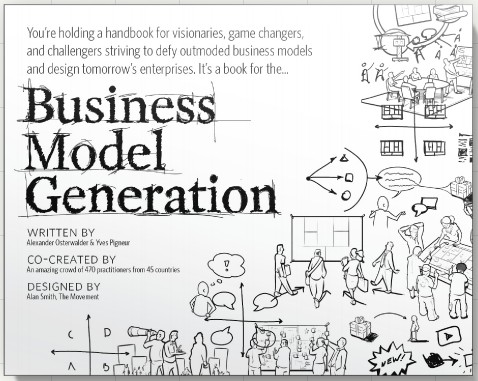
For entrepreneurs designing new ventures, corporate innovation teams working on business model transformation, MBA st…
Buy on Amazon →
Engineers, scientists, and researchers considering or early in the process of commercializing a technical innovation…
Buy on Amazon →
Small business owners — particularly those with five or more years of meaningful profitability — who want a CPA-ancho…
Buy on Amazon →
Tax professionals, policy analysts, and informed citizens who want to understand the structural case for replacing th…
Buy on Amazon →How Corporate Strategy stacks up
About Igor Ansoff
Read more from Igor Ansoff and explore the full bibliography on ClearValue Books.
View Igor Ansoff's page →Get an email if our take on Corporate Strategy changes.
We re-review our picks. We'll email you if Corporate Strategy's ranking or review changes — no checking back.
Across the site
Featured in lists
- Best Business Books for Consulting (2026) (#2 pick)
- The Best Business Strategy Books (#2 pick)
- The Best Business Books of All Time (#5 pick)
Compared with

Ready to read Corporate Strategy?
Buy the edition we recommend on Amazon.
Buy on Amazon →