
The Best Business Books of All Time.
The books that have shaped how entrepreneurs and executives think about money, strategy, and wealth
Some business books get read once and forgotten. Others get underlined, re-read, gifted to employees, and cited in board meetings decades after publication. The titles on this list belong to the second category — books that have demonstrably changed how generations of entrepreneurs, investors, and executives think about building wealth, competing in markets, and making decisions. They share a few qualities: they're grounded in research or firsthand mastery rather than recycled advice; they challenge conventional wisdom rather than confirm it; and their core insights hold up across market cycles and economic conditions. This is not a list of every important business book — it's a short, defensible set of titles that belong in every serious business reader's library regardless of their industry, company stage, or career level. If you've read all five, you understand the intellectual foundations that most successful business people build on. If you haven't, start here.
Inclusion required a book to have proven staying power across decades — not recent buzz but enduring influence on business thinking and practice. We evaluated each title on the originality and durability of its core insight, its grounding in data or deep domain expertise, and its actual impact on how practitioners operate. We excluded books that are widely known but frequently cited without being read.
The list, in order
- №1◈ Most Foundational
Think and Grow Rich
by Napoleon Hill
◈CanonNapoleon Hill's 1937 study of the mental habits of successful industrialists and entrepreneurs remains the most-cited book in the wealth-building canon. Its core insight — that belief systems, goal clarity, and mastermind relationships are as important as technical skill — has been validated by behavioral economics research long after Hill wrote it. Dismiss it as self-help at your peril; it's actually a rigorous interview-based study of what separates high achievers from the rest.
- №2◈ Most Widely Read
Rich Dad Poor Dad
by Robert Kiyosaki · 1997
◈Canon★Brian's PickRobert Kiyosaki's distinction between assets (things that put money in your pocket) and liabilities (things that take it out) reframed how millions of people think about wealth accumulation. The book's financial independence framework and critique of the employee mindset have made it the most widely read financial book of the past 30 years. Whatever its critics say about oversimplification, its core mental model is correct and has shaped a generation of investors.
- №3◈ Best Research-Backed
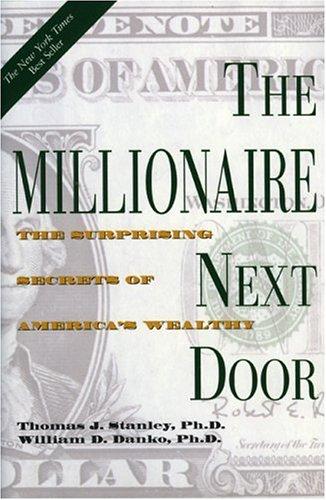
The Millionaire Next Door
by Thomas Stanley · 1996
◈Canon★Brian's PickThomas Stanley and William Danko's empirical research on how American millionaires actually live — frugally, in modest houses, driving used cars — is the most powerful counternarrative to conspicuous consumption available. Their finding that most wealth is built through small business ownership and disciplined saving, not high income alone, has been replicated in subsequent research. Data-driven and quietly radical.
- №4◈ Best Strategy Classic
Competing for the Future
by Gary Hamel
Gary Hamel and C.K. Prahalad's argument that the future belongs to companies that create it rather than simply defend their existing positions changed how executives think about strategy. Their concepts of core competencies and strategic intent became standard business vocabulary within a decade of publication. Still essential for understanding why incumbents lose to upstarts and what to do about it.
- №5◈ Best Academic Foundation
Corporate Strategy
by Igor Ansoff
Igor Ansoff's foundational work on corporate strategy introduced the systematic frameworks that underpin modern strategic planning — the growth matrix, gap analysis, and the concept of strategic posture. More rigorous than most strategy books that followed it, this is the text that serious strategists trace their lineage to.




Get notified when our book picks change.
Set it once. We'll email you when a pick worth knowing about changes — no checking back.
Questions about this list
Should I read all five, or start with the one most relevant to my situation?
Start with the one that addresses your most pressing gap. If you're building an early wealth foundation, 'Rich Dad Poor Dad' or 'Think and Grow Rich' first. If you're leading a company and wrestling with competition and positioning, go straight to 'Competing for the Future.' Once you've read your first-choice entry, the others reward reading in any order.
Are these books still relevant, given how fast business changes?
The most enduring business books deal with human behavior, competitive dynamics, and mental models — all of which change slowly. The specific examples in a 1990s strategy book may be dated; the underlying frameworks are not. If anything, readers who understand these foundational texts are better equipped to evaluate the flood of new business books, most of which are refinements on ideas these titles established.
What should I read after these five?
From here, branch into your specific domain: 'The Psychology of Money' for investor mindset, 'The Warren Buffett CEO' for leadership models, or 'Creating Customer Value' for customer-centric strategy. The books in our other lists — best strategy books, best leadership books — pick up where these all-timers leave off.