

Competing for the Future

Curated by Brian Kim, CPA — every pick gets a plain-English summary and the key takeaways.
Brian Kim, CPA · 2.89M YouTube Subscribers →What this book actually teaches
- 01Most corporate strategy is about defending today's position — companies that only compete in the present arrive at the future with nothing left to compete for.
- 02Core competencies (bundles of skills and technologies, not products) are the correct unit of strategic investment; map and protect them explicitly.
- 03Strategic intent — a stretching, decade-long ambition — guides resource allocation and competency-building more effectively than annual planning cycles.
- 04Industry foresight must be built ahead of market signals, not derived from current customer surveys or competitor benchmarking.
- 05The book is long relative to its argument density; the HBR articles plus four or five core chapters deliver most of the value.
What's in this book
Gary Hamel and C. K. Prahalad's central argument in Competing for the Future is that most large companies are managing the present rather than creating the future, and that the companies winning the next decade are the ones who have already spent years building the foresight, the capabilities, and the resource commitments to compete for industry positions that don't yet exist. Published in 1994, it sits at the inflection point between industrial-era strategic planning and the capability-based strategy movement that would define the following two decades.
The diagnosis is sharp. Hamel and Prahalad observe that most corporate strategy is really about defending market share in existing categories — efficiency programs, restructuring, benchmarking against current competitors. The problem is that those categories are themselves being disrupted. Companies that only compete in the present find, when the future arrives, that they have optimized a position that no longer exists. The authors call this "strategy as learning to forget" — incumbents systematically prune the peripheral bets and foresight investments that might have told them the ground was moving.
The prescriptive framework has several interconnected pieces. Core competencies — the concept Hamel and Prahalad introduced in their landmark 1990 Harvard Business Review article — are the foundation. A core competency is not a product or a division; it is a bundle of skills and technologies that enables a company to enter many different product markets and that competitors would find difficult to replicate quickly. Companies should map their competency portfolios, protect them through investment, and ask which competencies they will need to lead markets ten years out rather than only which products they will sell next year. Strategic intent is the companion concept: a compelling, stretching ambition — NEC's goal in the 1980s of combining computing and communications, Canon's goal of beating Xerox — that galvanizes resource allocation and guides acquisition of new competencies over time. Industry foresight is the third element: the ability to see, ahead of current market signals, where the white spaces and emerging categories are. Hamel and Prahalad argue this foresight is built through deep engagement with technology trends, demographic shifts, regulatory changes, and lifestyle changes — not through extrapolation from today's customer surveys.
The practical implications cut across strategy, R&D allocation, M&A screening, and talent development. A company with genuine strategic foresight knows which competencies to build internally, which to acquire, and which external developments to seed through partnerships or minority stakes. The resource-allocation process becomes an argument about the future as much as about current-year returns.
The weaknesses are worth naming honestly. The book is genuinely long for the volume of ideas it carries — a careful reader can extract the core arguments from the HBR articles and a close reading of four or five chapters, and the middle sections repeat the diagnosis more than they deepen the prescription. The case examples are almost all large industrial and technology multinationals (NEC, Canon, Honda, Motorola, Wal-Mart), which limits direct applicability for mid-market operators and startups even though the underlying logic translates. Some of the prescriptions for "industry foresight" are described at a level of generality that feels more like aspiration than method — knowing you need to see the future clearly does not tell you how to build the organizational processes that generate that sight. And a handful of the 1994 examples have since aged poorly: companies held up as models of strategic foresight hit serious execution problems in the late 1990s and 2000s.
For anyone running a business, managing a product portfolio, or advising on corporate strategy, the core concepts — competency portfolios, strategic intent, competing for the future rather than defending the present — remain among the most durable frameworks in the strategy canon. Read it for the argument structure; skim the case chapters once you have absorbed the model.
Read next
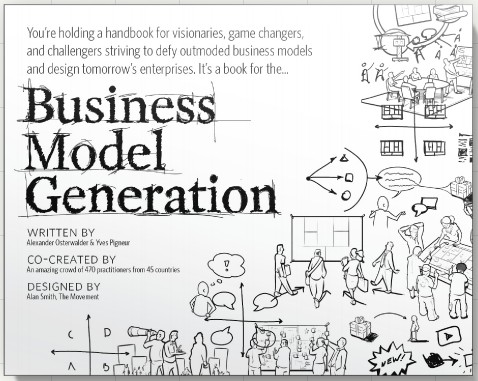
For entrepreneurs designing new ventures, corporate innovation teams working on business model transformation, MBA st…
Buy on Amazon →
Engineers, scientists, and researchers considering or early in the process of commercializing a technical innovation…
Buy on Amazon →
Small business owners — particularly those with five or more years of meaningful profitability — who want a CPA-ancho…
Buy on Amazon →
Tax professionals, policy analysts, and informed citizens who want to understand the structural case for replacing th…
Buy on Amazon →About Gary Hamel
Read more from Gary Hamel and explore the full bibliography on ClearValue Books.
View Gary Hamel's page →Get an email if our take on Competing for the Future changes.
We re-review our picks. We'll email you if Competing for the Future's ranking or review changes — no checking back.
Across the site
Featured in lists
- Best Business Books for Consulting (2026) (#1 pick)
- The Best Business Strategy Books (#1 pick)
- The Best Business Books of All Time (#4 pick)
Compared with

Ready to read Competing for the Future?
Buy the edition we recommend on Amazon.
Buy on Amazon →