
How to Build a Personal Finance Reading List That Actually Changes Your Behavior.
A framework for selecting books based on your current financial situation — not Amazon's bestseller algorithm
Books in this guide.


Most personal finance reading lists are built by the wrong people for the wrong reasons. Amazon's recommendation engine surfaces what sold well, not what helps. Blogger reading lists often reflect affiliate commissions. "Best personal finance books" roundups aggregate the same fifteen titles in rotating order.
A useful reading list is built around your situation — your current financial position, your knowledge gaps, and the specific decisions you face in the next two to five years. The steps below build one from scratch.
Step 1: Identify where you actually are
Before picking books, name your current financial reality honestly. Are you carrying high-interest consumer debt? Do you have no investment accounts or accounts you've never touched? Are you approaching retirement without a withdrawal strategy? Do you have a functioning budget or are you uncertain where your income goes each month?
The answer matters because personal finance books are not interchangeable. A book about optimizing an investment portfolio is irrelevant to someone who carries credit card balances. A book about debt payoff is wasted on someone who has been debt-free for a decade. The best reading list starts with accurate self-diagnosis.
Step 2: Match book type to situation
Personal finance books cluster into a few functional categories:
Behavioral books address the gap between knowing what to do and doing it. They belong near the front of any reading sequence because the behavioral layer is what most people actually need, regardless of knowledge level. The Psychology of Money by Morgan Housel is the most accessible entry here.
Foundation books cover the full personal finance system: budgeting, emergency funds, insurance, debt payoff, and basic investing. They are appropriate for readers who lack a complete framework. Dave Ramsey's Complete Guide to Money provides one complete opinionated system.
Investment books cover the mechanics and philosophy of building a portfolio. They should follow foundation books, not precede them. The Simple Path to Wealth by JL Collins is a strong entry point; The Intelligent Investor by Benjamin Graham is appropriate once you have a foundation.
Situation-specific books address particular life stages or circumstances: retirement income, real estate, high-income professional planning, or entrepreneurship. These belong after the foundation sequence.
Step 3: Sequence, don't stack
The most common reading list mistake is treating books as independent items rather than a sequence. Reading The Intelligent Investor before understanding compound interest and diversification is like reading an advanced medical textbook before studying basic anatomy. The concepts won't land.
A working personal finance sequence moves through: behavioral awareness → cash flow system → debt resolution → savings framework → investment philosophy → situation-specific application. Books belong where they fit in that sequence, not where Amazon places them in a results page.
Step 4: Set a completion standard
A reading list you don't finish is worse than no reading list at all, because it creates the illusion of progress. For each book you add, ask: will I actually read this in the next six months? If the answer is uncertain, keep the list short. Three completed books change behavior. Thirty unread ones sit on a shelf.
A practical constraint: add no more than one book per financial goal. If you have three active financial goals — pay off student loans, start an investment account, buy a house in four years — add one book per goal and hold the rest in reserve until a goal clears.
Step 5: Replace books that aren't working
Not every well-reviewed book works for every reader. If you are 80 pages into a book and absorbing nothing, the time lost reading the remaining 200 pages is real. Replace it without guilt. The measure of a personal finance book isn't whether it's considered canonical — it's whether it changed something about how you think or act.
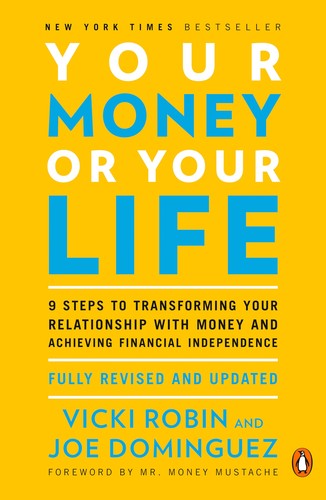
Your Money or Your Life by Vicki Robin works extraordinarily well for readers who respond to philosophical reframing. It falls flat for readers who want a tactical checklist. The Elements of Investing by Burton Malkiel and Charles Ellis works for readers who want academic rigor in a compact format. Neither is the better book in the abstract.
What does not belong on a reading list
Books that promise a specific outcome — a specific return, a specific timeline to wealth, a specific strategy guaranteed to beat the market — belong on a different shelf. Personal finance books worth reading present principles, frameworks, and evidence. They do not promise results. Any book whose cover features a claim that cannot be legally made by a licensed financial advisor is a book you can skip.
The same applies to celebrity finance books that package a single idea into 250 pages of anecdotes. Some have a useful core argument. Most communicate it in the introduction and spend the remaining chapters repeating it at greater length.
Common questions.
How many personal finance books do I actually need to read?
The foundational concepts in personal finance fit into approximately five books read in sequence. Everything beyond that is reinforcement, specialization, or entertainment. Readers who have completed a behavioral book, a foundation book, and a solid investment book are equipped to make the core financial decisions in their lives. The rest is refinement.
Should I read new personal finance books or classics?
For the behavioral and foundation layers, newer books often communicate more effectively because they address the financial context readers actually live in — low interest rates, 401(k) investing, index fund access, and digital banking. For investment philosophy, the classics hold up: The Intelligent Investor's principles are as valid as they were in 1949. The practical answer is to use newer books for foundation and behavioral reading, classics for investment philosophy.
Is it worth re-reading personal finance books?
Some books reward re-reading at different life stages. The Psychology of Money reads differently when you have actually experienced a market decline than when you first read it hypothetically. The Simple Path to Wealth is more practically useful when you have an investment account to apply it to. One structured re-read at a major life inflection point — new job, marriage, first child, approaching retirement — is often more valuable than adding a new title.