
The Bogleheads Reading Sequence: How the Community Orders Its Essential Books.
The canonical reading order that emerged from decades of forum discussion among index investors
Books in this guide.




The Bogleheads are an online community of investors organized around the principles of John C. Bogle, the founder of Vanguard and the inventor of the retail index fund. Since the early 2000s, the Bogleheads forum has been one of the most data-driven communities in personal finance on the internet — populated by engineers, physicians, attorneys, and academics who treat investment decisions the way they treat other empirical questions: with evidence, skepticism toward marketing claims, and a strong prior toward simplicity.
Over two decades of forum discussion, a loose reading consensus has emerged. It isn't a formal list — the community is too diverse and too skeptical of authority for that — but certain books come up repeatedly in response to the same questions, and certain sequencing patterns have calcified into informal orthodoxy.
The entry point: accessible philosophy before mechanics
The community consistently steers new investors toward a behavioral or philosophical book before anything technical. The most commonly recommended entry point in recent years has been The Psychology of Money by Morgan Housel — widely praised for being accessible regardless of financial background and for framing the behavioral failures that derail even well-constructed portfolios.
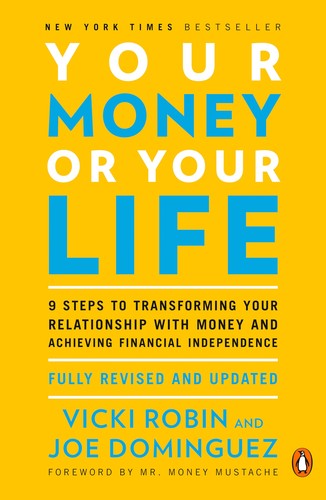
Your Money or Your Life by Vicki Robin is the older Bogleheads entry point, particularly for readers drawn to the financial independence framing. Where Housel's book is anecdote-driven, Robin's is more structured around the concept of "life energy" — the hours of life you trade for money — and the crossover point between passive income and expenses. Both books share the premise that money decisions are fundamentally behavioral, not mathematical.
The technical foundation: Bogle and his interpreters
After the behavioral entry, the community moves to investment mechanics. The canonical Bogleheads reading here is The Little Book of Common Sense Investing by John Bogle himself, though many members note that Bogle's prose can be repetitive and recommend William Bernstein's The Four Pillars of Investing or The Elements of Investing (co-authored with Charles Ellis) as more complete technical foundations.
The Elements of Investing is particularly well-regarded because it is short — under 200 pages — dense with evidence, and co-authored by Ellis, whose Winning the Loser's Game is the canonical institutional argument for passive investing. Together, Bogle and Ellis represent the two pillars of the passive-investing argument: Bogle from the perspective of the retail investor, Ellis from the perspective of the institutional consultant watching professional managers fail to beat the indices over time.
The historical layer: why market history matters
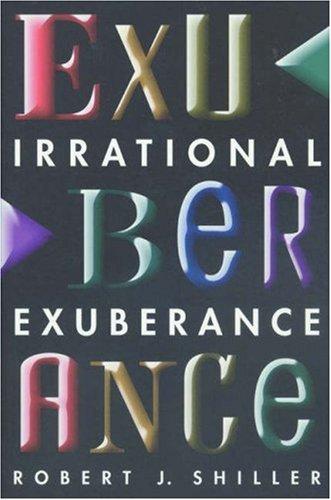
Bogleheads treat market history as a prerequisite for investment discipline. The argument is that investors who don't know what a 40% drawdown looks like in historical context are unprepared to hold through one. The books most commonly recommended for this layer are Jeremy Siegel's Stocks for the Long Run — a comprehensive data history of equity returns — and Robert Shiller's Irrational Exuberance, which provides the behavioral and valuation context that pure return data obscures.
A Non-Random Walk Down Wall Street by Andrew Lo and Craig MacKinlay serves a more specific function: it's the academic counterpoint to Burton Malkiel's A Random Walk Down Wall Street, providing evidence that markets aren't perfectly efficient at all time scales. The community uses it not to argue for active management but to understand why long-run efficient market results still accommodate short-term anomalies.
The practical layer: implementation without complexity
After philosophy, mechanics, and history, the community recommends implementation reading that is specifically practical. The Simple Path to Wealth by JL Collins is consistently recommended here — not because it is more rigorous than the earlier books, but because it is the most direct translation of Bogleheads principles into specific, actionable steps: choose a total market index fund, set an asset allocation, automate contributions, ignore market noise.
The Bogleheads Guide to Investing (by Taylor Larimore, Mel Lindauer, and Michael LeBoeuf — three of the original forum community founders) fills a similar role, covering the full implementation path from account opening through retirement distribution.
What the community explicitly deprioritizes
The Bogleheads reading sequence is partly defined by what it excludes. Books that focus on individual stock picking, sector rotation, technical analysis, or complex options strategies are not part of the canon — not because the community is unfamiliar with them, but because the forum's collective evidence review consistently finds they don't produce better outcomes for most investors. Market-timing strategies receive the same treatment.
Celebrity finance books — those that package a single idea into an extended narrative at bestseller scale — are generally acknowledged to have a useful core argument that can be extracted without reading the full book.
Reading the sequence in practice
The Bogleheads sequence is less a fixed list than a set of waypoints. New investors often begin with Collins or Housel, which are approachable, and work backward to the more technical material as their fluency increases. The community's pragmatic view: any entry point into the sequence is fine as long as the investor eventually arrives at a low-cost, diversified, long-term portfolio with an asset allocation they will hold through a market decline. The specific reading order matters less than reaching that outcome.
Common questions.
Do I need to read all of these books, or is one sufficient?
One is sufficient to get started. The Simple Path to Wealth or The Elements of Investing gives a reader enough framework to open a low-cost index fund account and begin investing sensibly. The broader sequence fills in historical context, behavioral awareness, and implementation nuance — all of which improve investment discipline over time, but none of which is required before taking the first step.
Is the Bogleheads approach appropriate for higher-net-worth investors?
The core principles — low costs, diversification, long time horizons, behavioral discipline — apply at any asset level. Higher-net-worth investors add complexity in the form of tax optimization, estate planning, and alternative assets, but the foundation remains the same. Many Bogleheads with portfolios well into seven figures maintain simple three-fund portfolios because the evidence for complexity adding value remains thin.
How does the Bogleheads reading list compare to the FIRE community's reading list?
There is substantial overlap. The Simple Path to Wealth and Your Money or Your Life appear on both lists. The key divergence is emphasis: Bogleheads prioritize investment discipline and risk-adjusted returns; the FIRE community emphasizes savings rate and the specific mechanics of early retirement. Readers interested in financial independence benefit from both sequences, which are more complementary than competing.