
Best Books for Couples Starting to Manage Money Together.
The reading list for the first joint-finances conversation
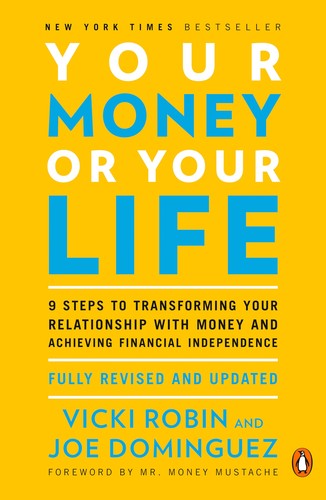
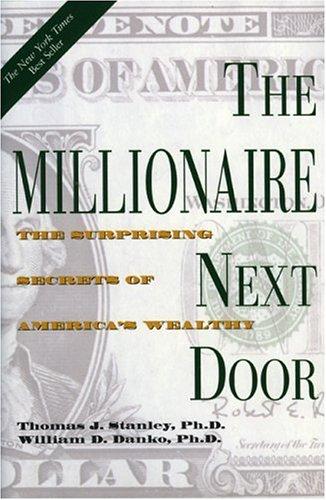
Most personal finance books treat the reader as a single decision-maker. When two people are merging finances — moving in, getting married, having a kid, buying a house — the decisions aren't just financial. They're translation problems. One partner grew up watching parents fight about money. The other grew up not knowing what money was. One is a spender who tracks nothing and stays roughly on plan; the other is a saver who tracks everything and panics anyway. The books that work for couples aren't necessarily the best personal finance books on the market — they're the ones that give a couple a shared vocabulary fast. Your Money or Your Life is the best first read. The framework — calculating your real hourly wage, evaluating expenses against "life energy," tracking every dollar in and out — is unusable as a solo exercise for most people, but it works well as a couple's exercise. Two people doing the 9 steps together end up with a shared answer to the question "what is this money actually for?" That question is the one couples argue about most and articulate worst. The bond-ladder chapter at the end is dated; ignore it. Everything before it is the real book. The Total Money Makeover is the most useful book on this list for couples in actual financial trouble — combined consumer debt, no emergency fund, no plan. Ramsey's debt snowball isn't mathematically optimal (debt avalanche by interest rate wins on paper) but it's behaviorally optimal for couples, because it produces visible wins fast and the visible wins keep both partners bought into the plan. The investing advice is bad. The early chapters are the reason to read it. The Millionaire Next Door deserves a slot for a non-obvious reason: it kills the comparison trap. A surprising share of couples' money fights are about other couples — what the neighbors drive, what friends spent on their kitchen, what coworkers post about their vacations. Stanley and Danko's data on what actual wealthy households look like is the single most effective antidote to that pattern. Two-paycheck professional couples are particularly prone to it. Read the chapters on household income vs. accumulated wealth together. The Psychology of Money is the slow-burn read for couples already aligned on the basics. Morgan Housel doesn't tell you what to do; he tells you why two reasonable people can look at the same financial decision and reach opposite conclusions, both correctly, based on different histories. That perspective shift is what makes the difficult conversations easier the second time around. The Simple Path to Wealth is the book to read once the joint-finances mechanics are settled and the question becomes "what do we actually do with the money we're not spending?" Collins's index-fund approach is the simplest framework available, which matters when two people need to agree on one strategy and stick to it for 30 years.


Questions about this hub
Joint accounts or separate accounts?
None of the books on this list will give you a clean answer, because there isn't one. What they do — especially Your Money or Your Life and The Psychology of Money — is give you the framework to have the conversation honestly. A common middle path: joint account for shared expenses (rent, utilities, groceries, kids), individual accounts for personal discretionary spending, both partners contributing proportionally to income.
We disagree about risk tolerance. Which book helps?
The Psychology of Money. The chapter on "reasonable vs. rational" is the cleanest articulation of why two intelligent people can have wildly different risk tolerances and both be right. Read it before you negotiate the asset allocation.
Should we read these together or separately?
Separately, then talk about specific chapters. Reading the same book at the same time usually means one partner finishes in three days and the other in three months, which produces resentment instead of alignment. Pick one book at a time, set a check-in date, and discuss the parts that surprised each of you.