
Best Books for Doctors and Dentists Managing Money.
High income, late start, and the unique financial profile of clinical careers
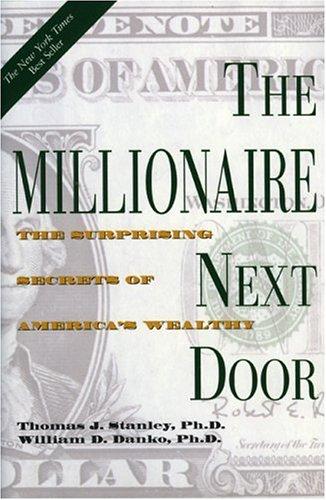
Doctors and dentists have a financial profile almost nobody else does: very high income starting in their early 30s, six-figure student loans, a decade of compounding lost to training, and a target on their back from every financial advisor in the country who knows the demographic pays the bills. Most general-audience personal finance books don't address the specifics — the loan refinancing decision, the PSLF math, the contractor-vs.-employee compensation structures, the disability insurance question — but they handle the foundational behavior, which is what most clinicians get wrong first. The Millionaire Next Door is the most important book on this list for clinicians, and it's not close. Stanley and Danko explicitly studied physicians as one of the high-income-low-net-worth professions, and the data is uncomfortable. High income does not produce wealth automatically. Lifestyle inflation does most of the damage, and it's particularly aggressive in clinical careers because the social environment (colleagues, neighbors, alumni networks) is full of people doing the same thing at the same time. Read the chapters on accumulated wealth vs. income, and the chapters on Economic Outpatient Care if you're planning to give significant money to adult children. The Simple Path to Wealth is the right tactical follow-up. JL Collins's index-fund framework is exactly the strategy most clinicians should be running — broad, low-cost, automated, ignored. The hard part for high-income earners is not the strategy, it's the discipline to stick with it instead of getting talked into a whole-life policy or an actively-managed portfolio by an advisor charging 1% AUM plus product commissions. Collins is dogmatic, which is useful here. The high-income earner who gets sold on three rounds of complexity over a 30-year career loses 20-30% of their potential terminal wealth to fees, and Collins is good at making you remember why that matters. The Psychology of Money belongs on the list for a specific clinician problem: comparison and the lottery-ticket trap. A surprising number of physicians and dentists end up funding speculative real estate deals, dental practice acquisitions, or cryptocurrency positions in their 40s, often because a colleague brought the deal. Housel's chapter on getting rich vs. staying rich is the cleanest articulation of why that pattern destroys wealth. The Total Money Makeover earns a place specifically for the loan-burdened early-career clinician. Ramsey's debt-payoff framework is the wrong tool for sophisticated PSLF planning, but it's the right tool for the clinician carrying $50,000 of car-and-lifestyle debt on top of student loans. The investing advice is bad and stays bad; the debt discipline is good and travels well. The Next Millionaire Next Door is the 2018 update of the original study by Sarah Stanley Fallaw, with newer data on millennial high-income professionals. If you're a younger clinician choosing between this and the 1996 original, read this one. The underlying findings are the same; the demographic detail is more relevant.


Questions about this hub
Why isn't The White Coat Investor on this list?
It's a great book and probably the most clinician-specific personal finance book in print — student loan refinancing, PSLF strategy, disability insurance, contractor vs. employee structures. It's not in our catalog yet. The books on this list cover the behavioral and strategic foundation; for the clinician-specific tactical layer, The White Coat Investor is the standard recommendation.
I'm in my first attending year. What should I read first?
The Millionaire Next Door, then The Simple Path to Wealth. In that order. The first one calibrates your expectations about how high income translates into wealth (it doesn't, automatically). The second one gives you the actual mechanics. Both can be read in a long weekend.
Should I take advice from books written before the current student loan environment?
For tactics, no. For behavior, yes. The Millionaire Next Door's data on lifestyle inflation among physicians is as relevant today as it was in 1996 — arguably more, because attending compensation has grown faster than median household income but slower than the lifestyle benchmark.