
The Best Personal Finance Books for Budgeting.
From zero-based budgeting to envelope systems — every practical framework for taking control of your spending
Budgeting is the one personal finance skill that everything else depends on. You can't pay off debt efficiently, save toward a goal, or invest consistently without knowing where your money goes each month. And yet most people have never been taught how to build a budget that actually works — one they'll follow for more than three months before abandoning in frustration. The books on this list address that gap in fundamentally different ways. Some give you a prescriptive system with specific percentages and categories. Others teach you the mindset shift that makes any system sustainable. One focuses specifically on the psychology of spending decisions, while another applies a corporate finance technique to household budgets with surprising effectiveness. What they share is a focus on behavior change, not just information — because most people who struggle with budgeting aren't missing information, they're missing a system that fits their actual life. These five books cover the full range of approaches so you can find the one that matches how your mind works.
We selected books that offer practical, implementable budgeting systems rather than general advice about the importance of budgeting. Each title on this list gives readers something they can do this week, not just something to think about. We prioritized diversity of approach — different systems work for different people, and we wanted to represent that range.
The list, in order
- №1◈ Best for zero-based budgeting beginners
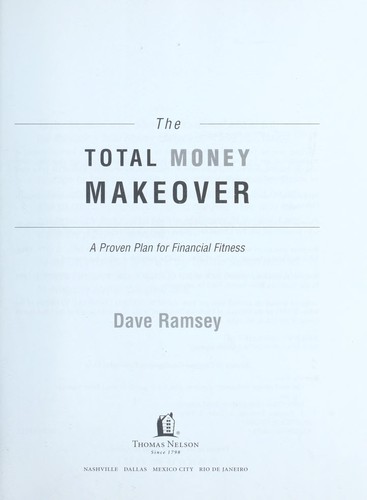
The Total Money Makeover
by Dave Ramsey
◈CanonRamsey's Baby Steps system is built on budgeting as its operational foundation — his 'every dollar has a name' approach (now embodied in the EveryDollar app) is zero-based budgeting made accessible to anyone regardless of financial background. The book's great strength is its sequencing: you don't try to invest and pay off debt and build an emergency fund simultaneously, which is why most people actually complete the plan.
- №2◈ Best for understanding ZBB principles deeply
Zero-base Budgeting comes of age
by Logan M Cheek
Peter Pyhrr's foundational text on zero-base budgeting was written for corporate finance but applies with striking precision to household budgets. The core principle — justify every expense from scratch each period rather than automatically rolling forward last month's numbers — is more rigorous than most consumer budgeting books teach. For readers who like analytical frameworks and want to understand WHY zero-based budgeting works, this is the origin text.
- №3◈ Best for budgeting while paying off debt
The debt-free spending plan
by Joanneh Nagler
JoAnneh Nagler's system is distinctive because it takes debt repayment as a given and builds the spending plan around it rather than treating budgeting and debt payoff as separate problems. Her 'Debt-Free Spending Plan' methodology allocates a fixed amount to debt each month first, then builds the rest of the budget around what's left — a sequence that prevents the common mistake of debt payments getting crowded out by discretionary spending.
- №4◈ Best for finding hidden spending leaks
Spend Smarter, Save Bigger
by Margot Bai
Eleanor Blayney's approach focuses on where the biggest spending inefficiencies actually hide: recurring subscriptions, insurance premiums, utility contracts, and financial product fees that most people pay without reviewing. Her framework for auditing fixed expenses before tackling variable ones is the reverse of most budgeting advice and often delivers larger savings more quickly. Particularly useful for people who feel they're already spending carefully but can't figure out why they're still short.
- №5◈ Best for income-side budgeting strategy
Earn, spend, save
by Kira Vermond
Nicole Lapin's 2020 framework restructures the standard budgeting advice by putting earning strategy alongside spending management — a holistic approach that most budgeting books ignore by treating income as fixed. Her argument that a 10% income increase is often easier and more impactful than a 10% spending cut is both practical and psychologically true for many people who've already squeezed their expenses as far as they can go.


Get notified when our book picks change.
Set it once. We'll email you when a pick worth knowing about changes — no checking back.
Questions about this list
What's the best budgeting system for someone who has never budgeted before?
Start with The Total Money Makeover's zero-based budgeting approach. It has the most accessible language, the clearest implementation steps, and the most supporting infrastructure (apps, worksheets, community). Once you've done zero-based budgeting for 3-6 months and understand where your money actually goes, you can refine the system based on what you learn about your own spending patterns.
How is zero-based budgeting different from the 50/30/20 rule?
The 50/30/20 rule allocates percentages of income to needs, wants, and savings without specifying what happens within each category. Zero-based budgeting requires you to assign every dollar to a specific purpose — 'dining out,' 'car insurance,' 'Netflix' — until income minus all assignments equals zero. ZBB is more granular and more time-consuming, but it forces you to make explicit decisions about every expense rather than hoping the percentages work out.
Can budgeting books help if my income is irregular?
Yes, though you'll need to adapt the systems. The Debt-Free Spending Plan and Earn, Spend, Save both address variable income scenarios more directly than Ramsey's Baby Steps, which assumes consistent monthly paychecks. The core strategy for irregular income is to budget based on your lowest reliable monthly income and treat anything above that as bonus allocation — most budgeting books include a variation of this advice.