
The Best Personal Finance Books for Frugal Living (2026).
Books that teach you to spend less — and actually enjoy it
Frugal living gets a bad reputation because most people confuse it with deprivation. The best books on the subject know the difference. Frugality isn't about suffering through life on the cheapest possible version of everything — it's about being deliberate about where your money goes, eliminating spending that doesn't reflect your values, and finding that most of what people spend money on doesn't actually make them happier. These four books represent the range: from practical spending-cut systems to the philosophical underpinning of why consuming less makes life better. If you're drawn to the idea of living on less without feeling like you're missing out, these books will give you both the framework and the motivation.
We selected books that treat frugality as intentional design rather than hardship. Each book either provides a concrete spending-reduction system, a philosophy of intentional consumption, or both. We excluded coupon-clipping and extreme-cheapskate approaches — those are tactics, not systems.
The list, in order
- №1◈ Best philosophical foundation for frugal living
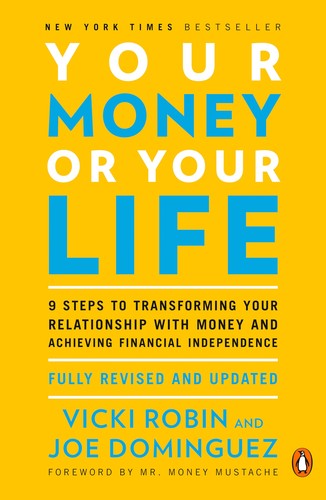
Your Money or Your Life: 9 Steps to Transforming Your Relationship with Money and Achieving Financial Independence
by Vicki Robin · 1992
◈CanonThe foundational text for intentional spending. Robin and Dominguez reframe every dollar as a unit of your life energy — once you make that mental shift, spending decisions change permanently. The 9-step program isn't just about spending less; it's about understanding what you're actually trading your time for. Required reading.
- №2◈ Best practical guide for everyday frugal living
Living well, spending less
by Ruth Soukup
Ruth Soukup's book is the most practical on this list for families and households. It covers how to cut spending in every major category without feeling like you're sacrificing quality of life — and crucially, how to enjoy the process. The real-world examples make it easy to adapt to your own situation.
- №3◈ Best for distinguishing frugal from cheap
Frugal isn't cheap
by Clare K Levison
Clare Levison's book makes a clear distinction between frugality (strategic, values-driven) and cheapness (indiscriminate). The book is a defense of deliberate spending that gives you permission to spend where it matters while cutting ruthlessly where it doesn't. Good for people who've tried budget cuts and found them unsustainable.
- №4◈ Best category-by-category spending audit
Spend Smarter, Save Bigger
by Margot Bai
A category-by-category spending optimization guide. Groceries, utilities, subscriptions, insurance, housing — this book works through the major budget categories and identifies where the highest-leverage cuts are. A practical complement to the more philosophical books on this list.


Get notified when our book picks change.
Set it once. We'll email you when a pick worth knowing about changes — no checking back.
Questions about this list
Is frugal living just another word for being cheap?
No — and Frugal Isn't Cheap makes this distinction clearly. Cheapness is about minimizing all spending indiscriminately. Frugality is intentional: spending less on things that don't matter to you so you can spend more (or save more) on things that do. Your Money or Your Life is the most complete philosophical treatment of this difference.
How much can I realistically save by living more frugally?
It depends on your starting point, but most people who do a deliberate spending audit (as outlined in Spend Smarter, Save Bigger) find 10–20% in unnecessary spending without any meaningful lifestyle sacrifice. Your Money or Your Life's 9-step system can produce much larger reductions for people willing to go deeper.
Can frugal living work if my income is already low?
Frugal living principles apply at any income level, but they're more powerful when income rises to meet them. If you're already spending minimally out of necessity, the priority is income growth, not additional cuts. Living Well Spending Less and Your Money or Your Life both acknowledge this — the goal is margin between income and spending, which requires both sides of the equation.