

It's never too late to get rich

Curated by Brian Kim, CPA — every pick gets a plain-English summary and the key takeaways.
Brian Kim, CPA · 2.89M YouTube Subscribers →What this book actually teaches
- 01Late starters should not respond to a time deficit by taking on more investment risk — Jorgensen's framework is to redirect income aggressively into tax-advantaged accounts and eliminate consumer debt rather than chasing returns.
- 02Workers over 50 have access to catch-up contribution provisions in 401(k)s and IRAs that younger savers cannot use — one of the few structural advantages that specifically benefits late starters.
- 03Carrying high-rate consumer debt while trying to build a retirement portfolio is self-defeating; Jorgensen's sequencing rule is to eliminate punishing debt first, then redirect those payments into savings.
- 04A 50-year-old who can save 30-40% of an established income may accumulate more in 15 years than a 25-year-old saving 10% of a smaller income over 40 years — the time deficit can be partially offset by higher earnings and savings rates.
- 05Delayed Social Security claiming is framed as longevity insurance rather than investment return, which is the correct lens for evaluating that decision — and the book's treatment of this tradeoff is clearer than most introductory personal finance resources.
What's in this book
It's Never Too Late to Get Rich by James A. Jorgensen addresses a specific anxiety: what happens if you reach your 40s, 50s, or beyond with little saved and the retirement clock already running? Jorgensen's argument is that late starters are not doomed — but they need a different playbook than the standard advice aimed at 25-year-olds. The book was originally published in the 1980s, and some readers may encounter editions that reflect tax rules, interest rates, and financial products from that era; the strategic framework remains useful, but specific numbers should be verified against current law.
Jorgensen's core framework is organized around the reality that time is the one resource late savers cannot manufacture. His answer to the time deficit is not to chase higher-risk investments to compensate — a tempting but statistically poor response — but to aggressively redirect income into tax-advantaged accounts, eliminate consumer debt that is draining monthly cash flow, and build a lean lifestyle that allows savings rates that would feel impossible at 25 but are achievable for established earners whose income has grown. The argument is that a 50-year-old who can save 30-40% of a larger income may accumulate more in 15 years than a 25-year-old saving 10% of a smaller income over 40 years.
The book places particular emphasis on employer retirement plans as the primary vehicle for late-stage catch-up. Jorgensen walks through the logic of the employer match, the tax deferral benefit, and the catch-up contribution provisions that exist specifically for workers over 50 — one of the more useful structural advantages available to late starters that younger savers cannot access. He is direct about the math: for many late starters, the combination of a full employer match and deferred taxation is the highest guaranteed return available to them.
Debt elimination receives nearly as much attention as savings. Jorgensen's position is that carrying high-rate consumer debt while trying to build a retirement portfolio is self-defeating — the after-tax return required to outperform a 20% credit card rate is unachievable through conventional diversified investing. He pushes readers to sequence decisions: eliminate punishing debt first, then redirect those payments into savings. This sequencing is one of the more actionable frameworks in the book and holds up well regardless of when it was written.
The book also addresses Social Security strategy — specifically, the tradeoffs between claiming early, at full retirement age, or delayed — with a clarity that is welcome given how poorly most people understand this decision. Jorgensen frames delayed claiming as longevity insurance rather than investment performance, which is the correct frame.
Who this is for: adults 45 and older who feel behind on retirement savings and want a realistic, non-panicky framework for what to do about it — and for financial advisors who work with this demographic and want a plain-language resource to recommend.
Weaknesses
the publication era creates gaps. Specific contribution limits, Social Security bend points, Roth IRA mechanics, and required minimum distribution rules in older editions reflect rules that no longer apply. The book's investment guidance is also thin relative to its strength on savings mechanics — readers who need specific portfolio construction guidance for late-stage accumulation will need to supplement it. Some passages reflect the financial product landscape of the 1980s in ways that feel dated, particularly around insurance and annuity recommendations.
Verdict
a genuinely useful resource for late starters who need reassurance alongside a plan — the sequencing logic and catch-up framework hold up, but readers should verify all specific numbers and contribution limits against current IRS rules before acting.
Read next

For high earners who feel financially successful but unsatisfied, and for anyone grinding toward a financial independ…
Buy on Amazon →
People within five to ten years of retirement who have addressed the financial planning and are beginning to think se…
Buy on Amazon →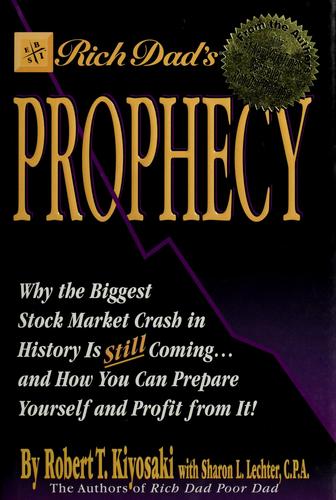
Existing Rich Dad readers curious about the macro and retirement-policy critique. Not for new readers — start with th…
Buy on Amazon →
Professionals in their 30s through 50s doing long-range financial planning, particularly those in careers facing tech…
Buy on Amazon →About James A Jorgensen
Read more from James A Jorgensen and explore the full bibliography on ClearValue Books.
View James A Jorgensen's page →Get an email if our take on It's never too late to get rich changes.
We re-review our picks. We'll email you if It's never too late to get rich's ranking or review changes — no checking back.

Ready to read It's never too late to get rich?
Buy the edition we recommend on Amazon.
Buy on Amazon →