

You've Lost It, Now What? How to Beat the Bear Market and Still Retire on Time

Curated by Brian Kim, CPA — every pick gets a plain-English summary and the key takeaways.
Brian Kim, CPA · 2.89M YouTube Subscribers →What this book actually teaches
- 01Clements's core argument is that bear-market losses are recoverable for most investors who honestly assess three variables — time remaining before retirement, flexibility in anticipated retirement spending, and ability to increase savings rate — and then pull the available levers deliberately rather than reacting emotionally.
- 02The book applies academic research on expected returns, diversification, and rebalancing in an accessible way, using historical return data to set realistic recovery timelines under different allocation scenarios — a direct corrective to the unrealistic return assumptions many investors developed during the 1990s bull market.
- 03The spending and savings adjustment sections treat delayed retirement, increased savings rates, reduced anticipated retirement spending, and housing cost rightsizing as specific calculable levers rather than abstract options — the practical framework is the book's most durable contribution.
- 04Clements is explicit about what the book cannot offer: no one can guarantee any individual will recover in time, because future market returns are unknowable; the framework instead maximizes the probability of a good outcome under uncertainty.
- 05Specific numerical examples — return assumptions, Social Security rules, tax brackets — reflect 2002 conditions; readers should update figures from current sources, and the active-versus-passive fund discussion does not reflect two additional decades of evidence that has strengthened the indexing case considerably.
What's in this book
You've Lost It, Now What? How to Beat the Bear Market and Still Retire on Time by Jonathan Clements was published in 2002 in the wake of the dot-com bust — a period when many investors had watched portfolios decline 40-60% and were recalculating whether retirement was still achievable on their original timeline. Clements, then the personal finance columnist for The Wall Street Journal, wrote the book as a practical recovery guide: not a post-mortem on what went wrong, but a structured framework for what to do next when the damage is already done and the question is how to rebuild.
The book's thesis is that bear-market losses, while genuinely damaging, are recoverable for most investors who are willing to make specific adjustments rather than either panicking into worse decisions or paralyzed inaction. Clements argues that the recovery path depends on an honest assessment of three variables: how much time remains before retirement, how much flexibility exists in retirement income needs, and whether the investor can increase savings rate in the recovery period. He is careful not to promise that all investors can recover fully — the book's intellectual honesty is one of its distinguishing features — but he lays out the conditions under which recovery is realistic and the levers that accelerate it.
The portfolio reconstruction chapters are methodologically sound for the era. Clements, drawing on his years of interviewing financial economists for the Journal, applies academic research on expected returns, diversification, and rebalancing in a way that is accessible to individual investors without being simplistic. The asset allocation chapters use historical return data to set realistic expectations for recovery timelines under different allocation scenarios — a useful corrective for investors who had developed unrealistic return assumptions during the 1990s bull market.
The spending and savings adjustment sections are particularly practical. Clements addresses the specific behavioral and financial levers available to investors whose timelines are compressed: increasing savings rates, adjusting anticipated retirement spending, considering delayed retirement, and rightsizing housing costs. These are not presented as theoretical options but as specific calculations the reader can run against their own situation. The Social Security optimization chapter, while reflecting the rules in place in 2002, covers the structural logic of timing decisions in a way that remains directionally useful even as specific thresholds have changed.
Clements is honest about what the book cannot offer. He cannot tell any individual investor whether they specifically will recover in time, because that depends on market returns that are unknowable. What the book offers instead is a framework for making the decisions that maximize the probability of a good outcome — a modest but genuinely useful contribution.
Who this is for: investors in their 40s and 50s who experienced significant portfolio losses in the 2002 or 2008-2009 bear markets and are recalibrating their retirement plans, and younger investors who want a recovery framework before the next bear market rather than during it.
Weaknesses
the specific numerical examples — return assumptions, Social Security benefit calculations, tax brackets — reflect 2002 conditions and have been superseded by subsequent market recoveries, rule changes, and the TCJA. The book does not address target-date funds, which were available but not yet dominant in 2002 and have since become the default vehicle for retirement investors. Some sections on investment selection are dated in ways that matter — the discussion of active versus passive funds, for instance, does not reflect two additional decades of evidence that has strengthened the case for indexing considerably.
Verdict
a methodologically sound recovery framework from a credible Wall Street Journal journalist — most useful as a bear-market decision guide that readers can adapt to current conditions, with the specific numbers updated from current sources.
Read next

For high earners who feel financially successful but unsatisfied, and for anyone grinding toward a financial independ…
Buy on Amazon →
People within five to ten years of retirement who have addressed the financial planning and are beginning to think se…
Buy on Amazon →
For adults 45 and older who feel behind on retirement savings and want a realistic framework for what to do — not a p…
Buy on Amazon →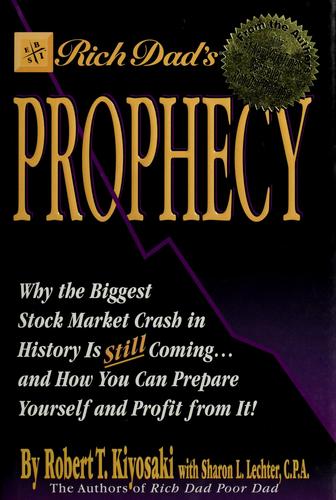
Existing Rich Dad readers curious about the macro and retirement-policy critique. Not for new readers — start with th…
Buy on Amazon →About Jonathan Clements
Read more from Jonathan Clements and explore the full bibliography on ClearValue Books.
View Jonathan Clements's page →Get an email if our take on You've Lost It, Now What? How to Beat the Bear Market and Still Retire on Time changes.
We re-review our picks. We'll email you if You've Lost It, Now What? How to Beat the Bear Market and Still Retire on Time's ranking or review changes — no checking back.

Ready to read You've Lost It, Now What? How to Beat the Bear Market and Still Retire on Time?
Buy the edition we recommend on Amazon.
Buy on Amazon →