
What to Read After The Psychology of Money.
Morgan Housel's book is the best entry point in personal finance. Here's where to go next.
Books in this guide.


The Psychology of Money by Morgan Housel has become the default recommendation for anyone new to personal finance. Its 20 short essays cover behavioral economics, risk tolerance, wealth vs. richness, and the role of luck — in accessible, non-technical language that holds up across multiple readings.
The challenge is what to read next. The Psychology of Money is unusual in that it addresses the behavioral and philosophical foundations of personal finance without prescribing a specific system. It leaves readers with better mental models but without a tactical framework for what to actually do.
The right next book depends on which part of The Psychology of Money resonated most.
If the chapter on "Getting Wealthy vs. Staying Wealthy" resonated
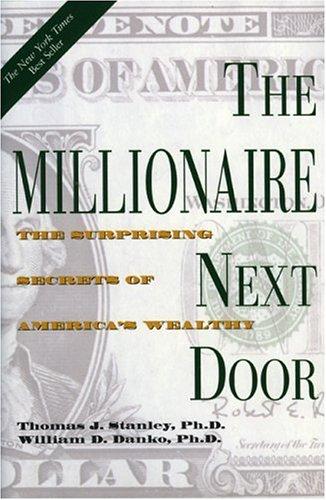
This chapter distinguishes between the skills required to accumulate wealth and the very different skills required to preserve it. The Millionaire Next Door is the right follow-up — it's an empirical study of how wealth is actually built and preserved in the United States, and its findings validate Housel's argument that the consistency and defensiveness of staying wealthy matters as much as the aggressiveness of getting there.
If the chapter on "Enough" resonated
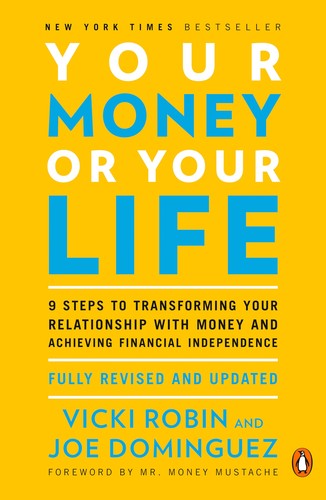
Housel's chapter on knowing when to stop optimizing is one of the most frequently cited in the book. Your Money or Your Life by Vicki Robin is the natural extension — it develops the concept of "enough" from an essay-length treatment into a full framework for evaluating financial decisions against life goals. How Much Is Enough? by Robert and Edward Skidelsky pushes further into the philosophical territory: what should enough look like for a human life, not just a financial portfolio?
If the chapter on compounding resonated
The Simple Path to Wealth by JL Collins is the most direct follow-up for readers who came away from the compounding chapter wanting to implement a long-term investment strategy. Collins makes the case for index fund investing with the same emphasis on time horizon and patience that Housel describes in the abstract.
If the behavioral chapters (fear, greed, FOMO) resonated most
The Intelligent Investor by Benjamin Graham is the foundational text on investor behavior — specifically on the distinction between the investor (who makes decisions based on business value) and the speculator (who makes decisions based on market price movements). Graham's "Mr. Market" metaphor, which Housel references approvingly, is developed at length in The Intelligent Investor.
Unshakeable by Tony Robbins covers similar behavioral territory with a more contemporary voice and specific tactical guidance on avoiding the cognitive errors that destroy investment returns.
If the chapter on wealth and happiness resonated
The Psychology of Money ends with a meditation on the relationship between money and happiness — specifically that wealth beyond a certain threshold contributes less to happiness than most people expect. The research Housel cites (Kahneman and Deaton's income/happiness study) points toward a broader body of behavioral economics literature. Think and Grow Rich, despite its title, contains a chapter on the definition of success that grapples honestly with the same question.
A note on reading order
The Psychology of Money works as a first book because it doesn't require prior knowledge. Almost all of the books above are more effective after The Psychology of Money has been read, because Housel's behavioral framework provides context that makes the tactics in the follow-up books more meaningful.
The books above are not equally approachable without that foundation. The Intelligent Investor is a demanding read for someone without prior financial context. The Simple Path to Wealth is accessible from the start. Reading The Psychology of Money first makes both easier.
Common questions.
Is there a book by Morgan Housel that goes deeper than The Psychology of Money?
Housel's newsletter and writing at Collaborative Fund extend many of the book's themes. As of 2026, Same as Ever (2023) is his follow-up book, which focuses on timeless patterns in human behavior rather than financial behavior specifically.
Which follow-up book is the most different from The Psychology of Money?
The Intelligent Investor is the most different in tone and approach — it's analytical, densely written, and requires active engagement rather than the passive reading The Psychology of Money permits. It's the highest-payoff departure from Housel's style for readers ready for a challenge.
Can The Psychology of Money be re-read productively?
Yes — many readers report that specific chapters land differently at different life stages. The chapter on tail events, for example, reads differently after experiencing market volatility. It's worth revisiting every few years.