
Best Books for Career Changers.
The financial runway questions that come before the career questions
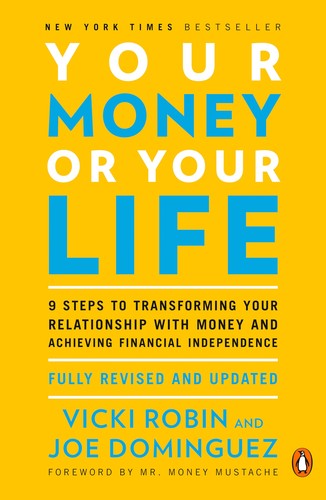
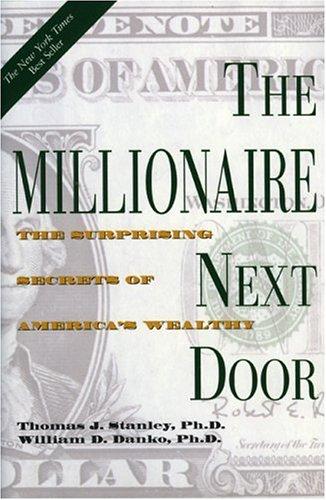
Career-change books are a crowded shelf. What it would take you years to cover. What color is your parachute. Designing your life. They're useful for the question of what to do next. They're mostly silent on the financial question that comes first: do you have the runway to actually make a change, and what are you optimizing for once you do? That second question is what the catalog here is for. Read a career-change book for the career question. Read these for the money question that surrounds it. Your Money or Your Life is the right starting point and probably the only career-change-adjacent personal finance book anyone strictly needs. Dominguez and Robin's framework — calculating financial independence as the moment your passive income covers your expenses — reframes career change from 'risky leap' to 'engineering problem.' Once you know how many months of runway you have, and what monthly expense level you can sustain on it, the question of whether to take a 40% pay cut to do work you actually want stops being scary and starts being a calculation. The investment chapters are dated; skip them. The runway and values framework is exactly what a career changer needs. The Psychology of Money is the right second read. Housel's chapters on tail risks and on the value of optionality are written for exactly this situation. The argument that wealth is what gives you the ability to say no — to a bad boss, to a bad client, to a job that's quietly eroding you — is the cleanest case for why building a savings cushion before the change is itself a career move. The Millionaire Next Door is the data anchor. Stanley and Danko's findings on what wealthy households actually do — live below their means, drive used cars, avoid lifestyle inflation — are most useful in the run-up to a career transition, when keeping fixed expenses low is the difference between a clean exit and a forced retreat. The book is also unexpectedly motivating for anyone considering self-employment or starting a business, because the data shows owner-operators massively overrepresented in the wealthy population. Rich Dad Poor Dad has a narrower but real use here: the chapter framework about the four income quadrants (employee, self-employed, business owner, investor) is the cleanest mental model in the catalog for thinking about where a career change is actually taking you. Read it for that framework. Discount the anecdotes. The Total Money Makeover is the runway-building book. If you're more than two years out from a planned change and you have debt, Ramsey's protocol — emergency fund first, then debt elimination, then aggressive savings — is the most direct way to build the financial position that makes the change possible. The investment chapters are not the reason to be here. The discipline chapters are. What to do with this: spend three months on the financial runway question before you spend three years agonizing over the career question. Most career changes that fail, fail financially, not professionally. Solve the money side first and the rest gets clearer.


Questions about this hub
How much runway do I need before changing careers?
Depends on the change. Pivoting within a field, with similar pay, can require as little as 3-6 months of expenses in cash. Switching fields, taking a pay cut, or starting something new typically calls for 12-24 months. Your Money or Your Life is the best framework for calculating your specific number.
Should I quit before I have my next thing lined up?
Almost never, unless you have 18+ months of expenses saved and a clear plan for what you're doing. The financial flexibility books on this list will tell you the same thing in different words: optionality is what you're building. Quitting without runway destroys optionality.
Is starting a business a career change or an investment?
Both, and treating it as only one of them is where most aspiring owners go wrong. Rich Dad Poor Dad's four-quadrants frame is useful here — moving from employee to business owner is a different financial profile, not just a different job title. Plan it as both.