
Best Books for FIRE Movement Followers.
Financial Independence, Retire Early — the books that actually built the movement
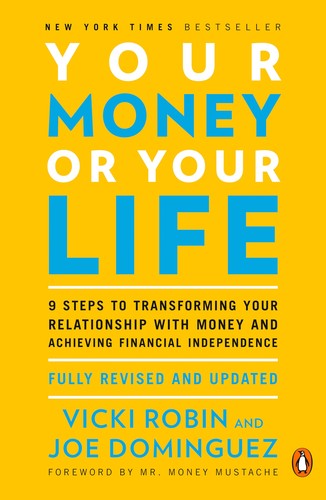
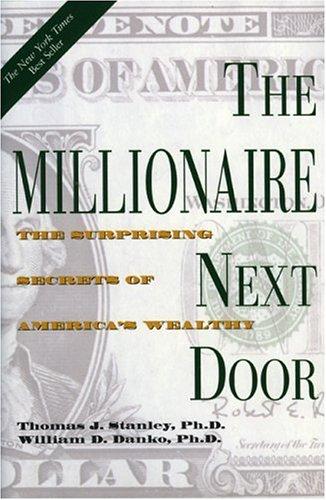
FIRE (Financial Independence, Retire Early) reads like a modern internet phenomenon, but the intellectual foundation is older than most of its blog-era proponents. The core idea — that aggressive savings rates collapse the working years required for financial independence — was published in 1992 by Vicki Robin and Joe Dominguez in Your Money or Your Life. Everything since has been refinement, repackaging, or rebellion against that book. Start there. Your Money or Your Life is uncomfortable in a way modern FIRE blogs aren't — it asks you to track every dollar you've ever earned, calculate your real hourly wage after commute and decompression costs, and then evaluate every purchase against "life energy." The 9-step program is dated in places (the original recommended Treasury bonds as the safe-withdrawal vehicle, which made more sense at 1992 yields than at any point since). Skip the bond chapter. Read everything else. The Simple Path to Wealth is the modern operationalization. JL Collins gives you the actual mechanics — what to buy, where to put it, how to think about the bond/stock allocation in accumulation vs. withdrawal phases. The 4% rule discussion is the cleanest plain-English version you'll find. The weakness is that Collins is allergic to nuance: he'll tell you bonds are nearly always a drag, which is approximately true and occasionally catastrophically wrong (1966-1982 retirees would disagree). The Millionaire Next Door earns its place here because FIRE is, at its core, a savings-rate movement. Stanley's data showed that the people who actually accumulated wealth weren't the high earners — they were the ones whose lifestyle inflation lagged their income growth by 10-20 years. The Next Millionaire Next Door, the 2018 follow-up by Stanley's daughter, updates the dataset and is the better read if you only pick one. The Psychology of Money is the gut-check. Most FIRE failures aren't math failures — they're behavioral failures during the long accumulation phase or during the first 5 years of withdrawal. Housel's chapter on "reasonable vs. rational" is the one most FIRE-curious readers underestimate until they hit their first 30% drawdown six years into the plan. The Total Money Makeover is on the list with a caveat: Ramsey's debt-snowball discipline is genuinely useful for the pre-FIRE phase if you're carrying consumer debt, but his investing advice (12% expected returns, actively-managed mutual funds with 5.75% loads) is wrong in ways that will cost a serious FIRE follower hundreds of thousands of dollars. Read the debt chapters. Throw the investing chapters out.
Featured on this hub


Questions about this hub
Is the 4% rule still safe in 2026?
Probably, but with caveats Bengen himself acknowledges. The original 4% study used 1926-1976 data and a 30-year retirement. FIRE followers are often planning 50+ year retirements, which is closer to a 3.3% safe withdrawal rate historically. The Simple Path to Wealth covers this honestly; most FIRE blogs do not.
Do I need to read all the FIRE books or just one?
If you only read one, make it Your Money or Your Life — it has the worldview and the worldview is what carries you through 15 years of saving 50% of your income. The Simple Path to Wealth is the best second read for the tactical mechanics.