
Best Books for People Who Hate Math.
Personal finance reads that don't require a spreadsheet to follow
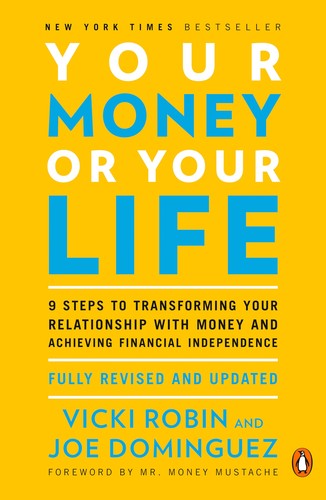
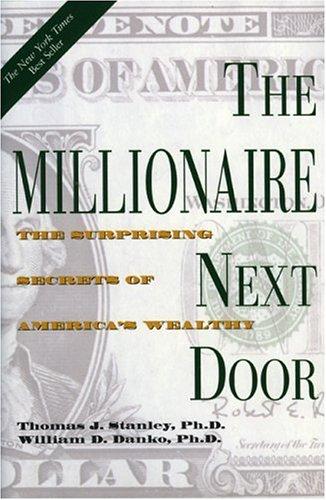
A real share of personal finance books are unreadable for people who don't enjoy math. The Intelligent Investor has tables. The Elements of Investing has formulas. Even "beginner" books frequently assume the reader is fine with compound interest tables, expected return calculations, and bond duration math. If staring at those makes your eyes glaze, the question isn't whether you can manage your money — you can — it's which books treat finance as a behavior problem instead of a math problem. The Psychology of Money is the obvious first pick. Morgan Housel is a writer who happens to cover finance, not a finance writer trying to be readable. The book is 19 essays, each about 15 pages, each about a specific way humans make financial decisions badly. The math is incidental. The lessons compound. A reader who finishes The Psychology of Money has absorbed more useful financial principles than a reader who got halfway through a denser book and gave up. Your Money or Your Life works for math-averse readers because the central exercise is concrete, not abstract. You're calculating your real hourly wage, not your expected portfolio return. You're tracking dollars in and out, not modeling Monte Carlo simulations. The math involved is arithmetic. The thinking involved is hard, but it's emotional and philosophical hard, not numerical hard. The Total Money Makeover is the math-allergic reader's best path through debt. Ramsey's investing advice is wrong in ways that don't matter for the first two years and matter a lot later, so use the early chapters and find better investing advice later. But the debt snowball — pay smallest balance first regardless of interest rate — is the rare piece of financial advice that gets MORE effective the worse you are at math. It runs on momentum and visible progress, not optimization. The Millionaire Next Door is a data-heavy book that somehow doesn't feel like one. Stanley and Danko spent years interviewing actual millionaires, and what they found reads more like a sociology book than a finance book. The math (savings rates, household income ratios) is there, but the takeaways are behavioral: don't buy the lifestyle, do live below your income, do drive the used car. A math-averse reader can skim the tables and absorb the stories without missing the point. Rich Dad Poor Dad is on this list with caveats. Kiyosaki tells stories, not math, which makes the book unusually accessible. But the specific advice (especially around real estate leverage and "good debt") has aged badly and was always oversimplified. Read it for the asset-vs.-liability mental model and the comfort of knowing finance can be a story-driven discipline. Don't take the tactics literally.


Questions about this hub
Is there a personal finance book with literally no math?
The Psychology of Money comes closest. There are a few percentages and one or two compounding examples, but the book doesn't require you to do any math to follow the argument. Your Money or Your Life involves arithmetic (adding up your earnings, your expenses, calculating an hourly wage) but no algebra or statistics.
Will skipping the math books cost me money in the long run?
Not as much as you'd think. The behavioral books cover roughly 80% of what determines a typical person's financial outcome — savings rate, debt avoidance, low-cost broad-market investing, not panicking in downturns. The math-heavy books are about optimizing the last 20%, which matters at scale but isn't where most people lose ground.