
Best Personal Finance Books for Medical Debt (2026).
Negotiate your bills, protect your credit, and find a path through medical debt.
Medical debt is unique among personal financial crises: it's almost always unplanned, often catastrophically large, and rarely the result of a lifestyle choice. A single hospitalization can generate tens of thousands of dollars in bills — from the hospital, the physicians, the anesthesiologist, and the lab — each arriving on a different timeline from a different billing department. Most people don't know that virtually every line item on a medical bill is negotiable, that charity care programs exist at most nonprofit hospitals, or that medical debt is treated differently from consumer debt by credit bureaus. The books on this list cover the full toolkit: how to read and dispute a medical bill, how to negotiate payment plans and settlements, how medical debt interacts with your credit report, and how to manage broader debt when medical bills are part of a larger financial crisis.
Books were selected for direct relevance to people facing medical bills and medical debt. Priority was given to titles that address billing disputes, negotiation tactics, charity care access, and credit impact. General debt books were included only when their frameworks are directly applicable to the medical debt context.
The list, in order
- №1◈ Medical Bill Negotiation
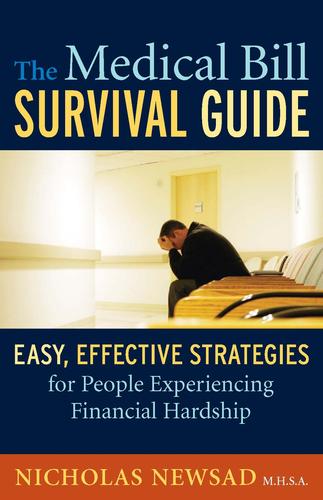
The Medical Bill Survival Guide
by Nicholas Newsad Mhsa
The definitive guide to reading, disputing, and negotiating medical bills. Covers itemized bill requests, common billing errors, how to approach financial assistance offices, and negotiation scripts that actually work with hospital billing departments.
- №2◈ Debt Elimination System
The Debt Escape Plan
by Beverly Harzog
Provides a structured system for eliminating debt — including medical debt — with a psychologically informed approach that builds momentum. Particularly useful for people whose medical bills arrived on top of existing consumer debt.
- №3◈ Debt Rights & Systemic Context
The Debt Resisters’ Operations Manual
by Strike Debt
Takes a broader view of medical debt as a systemic problem, while providing practical tools: how to invoke your rights when dealing with collectors, how to dispute inaccurate medical debt on credit reports, and when to consider more aggressive options like bankruptcy.
- ◈ Debt-Free Roadmap
Debt Free for Life
by David Bach
David Bach's step-by-step debt elimination program works well for medical debt because it starts with the psychological reframe and builds a concrete payoff plan. Includes guidance on negotiating with creditors and using debt consolidation tools appropriately.
- №5◈ Financial Rebuilding Framework
Your Money or Your Life: 9 Steps to Transforming Your Relationship with Money and Achieving Financial Independence
by Vicki Robin · 1992
◈CanonFor people whose medical debt is part of a broader financial reckoning, this book provides the values-based framework for rebuilding from the ground up — reexamining what you earn, what you spend, and what financial independence actually looks like on the other side of a crisis.



Get notified when our book picks change.
Set it once. We'll email you when a pick worth knowing about changes — no checking back.
Questions about this list
Is medical debt negotiable?
Yes — and more so than most people realize. Hospitals and medical providers routinely accept less than the billed amount, especially for uninsured or underinsured patients. Start by requesting an itemized bill and reviewing it for errors (billing errors are common). Then contact the billing department directly and ask about financial assistance programs, income-based charity care, or a discounted lump-sum settlement. Most nonprofit hospitals are legally required to have charity care programs — ask specifically for the financial counselor, not the standard billing rep.
How does medical debt affect your credit score?
Medical debt is now treated more favorably by the major credit bureaus than other consumer debt. As of 2023, medical debt under $500 is no longer reported by Equifax, Experian, and TransUnion. Paid medical collections must be removed from reports immediately. Unpaid medical debt over $500 can still be reported, but only after a 365-day grace period. The CFPB has also proposed removing all medical debt from credit reports — check current rules when disputing, as the landscape continues to shift.
When should someone with medical debt consider bankruptcy?
Bankruptcy is a serious step but a legitimate one when medical debt is so large that no realistic repayment plan is viable. Chapter 7 bankruptcy can discharge most unsecured medical debt, though it significantly impacts your credit for 7–10 years. The calculus changes if you have significant assets to protect (home equity, retirement accounts) — in that case, Chapter 13 repayment plans may be more appropriate. Consult a bankruptcy attorney before deciding; many offer free consultations. Also explore income-based hospital payment plans and charity care programs first, as they can sometimes achieve outcomes comparable to bankruptcy without the credit impact.