
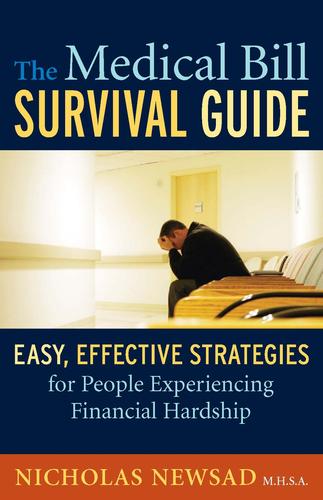
The Medical Bill Survival Guide

Curated by Brian Kim, CPA — every pick gets a plain-English summary and the key takeaways.
Brian Kim, CPA · 2.89M YouTube Subscribers →What this book actually teaches
- 01Medical bills are opening offers, not fixed prices — hospitals have established internal processes for reducing balances that most patients never access because they don't ask.
- 02A large percentage of hospital bills contain errors: duplicate charges, upcoded procedure codes, and charges for services not rendered that only appear on an itemized statement.
- 03Uninsured patients are typically charged chargemaster rates — the highest possible prices — but can request the same negotiated discount that insurance companies contractually receive.
- 04Written payment plan agreements should specify what happens on a missed payment and what the hospital commits to report (or not report) to credit bureaus.
- 05The 2010 publication date means specific regulatory guidance has changed; the No Surprises Act (2022) and updated medical debt credit-reporting rules are not covered.
What's in this book
The Medical Bill Survival Guide by Nicholas Newsad is a practical how-to guide for navigating the American medical billing system — one of the most opaque and error-prone consumer financial environments in the country. Newsad, a health information management professional, writes from direct operational knowledge of how hospital billing departments work, what negotiating levers actually exist, and where the errors and overcharges that inflate medical bills most commonly occur.
The book's core argument is that medical bills are not fixed prices. They are opening offers from institutions that have financial incentives to bill at the highest achievable rate, significant structural tolerance for billing errors, and internal processes for reducing balances that most patients never learn about. Newsad's thesis is that patients who understand the billing process — who know what to ask for, what to request in writing, and when to escalate — consistently pay less than patients who treat the bill as a non-negotiable invoice.
The most actionable section covers itemized billing requests. Newsad documents that a large percentage of hospital bills contain errors — duplicate charges, charges for services not rendered, upcoded procedure codes, and facility fees that can be questioned. He walks through how to request an itemized statement (most patients receive a summary bill), what to look for when comparing the itemized statement against admission records, and how to formally dispute specific line items. The procedure code chapter is particularly useful: Newsad explains the CPT coding system at a level that lets patients identify potential upcoding without needing clinical training.
The negotiation chapters cover financial hardship programs, charity care, and the distinction between the chargemaster rate (the listed price) and the rate that insured patients pay under contract. Uninsured and underinsured patients, Newsad argues, are often charged chargemaster rates — the highest possible prices — precisely because they lack the institutional negotiating power that insurance companies exercise on behalf of their members. He provides a framework for requesting the same negotiated discount that an insurer would receive, which most patients don't know they can ask for.
The payment plan and collections chapters are written for patients who have already received a bill they cannot pay in full. Newsad is direct about what the hospital can and cannot do: they can send to collections, report to credit bureaus, and sue for non-payment, but they cannot garnish wages or seize property without a court judgment, and most hospitals would rather negotiate than litigate. The chapter on written payment plan agreements — specifying what happens if the patient misses a payment and what the hospital will and won't report — is more specific than most consumer finance guides attempt.
Who this is for: any adult who receives a significant medical bill and doesn't know what they're looking at or what their options are — which describes the majority of American adults. Particularly urgent for uninsured and underinsured patients who face chargemaster rates, and for anyone dealing with out-of-network surprise billing.
Weaknesses
the 2010 publication date predates the Affordable Care Act's implementation, the No Surprises Act (2022), and the consumer financial protection rules around medical debt that have been revised multiple times since publication. Some specific regulatory guidance in the book is outdated. The book does not address medical debt's updated credit reporting treatment (medical debt under $500 was removed from credit reports by the major bureaus in 2023), which is a significant change in the consumer protection landscape. Readers should verify current rules on any specific regulatory point the book makes.
Verdict
the underlying negotiating framework — request itemized bills, dispute errors, ask for the negotiated rate, understand your rights before paying or committing to a payment plan — remains valid and underused; supplement with current regulatory guidance for rules that have changed since 2010.
Read next

For anyone whose financial education was "get a good job and save" — the book is most valuable for first-time readers…
Buy on Amazon →
For anyone who confuses high income with wealth, or who feels behind because their lifestyle doesn't look like the we…
Buy on Amazon →
Anyone who earns enough to make discretionary spending choices but suspects their spending is not generating proporti…
Buy on Amazon →
Households in active consumer-debt distress who need a non-negotiable shared script. Not for investors already past B…
Buy on Amazon →About Nicholas Newsad Mhsa
Read more from Nicholas Newsad Mhsa and explore the full bibliography on ClearValue Books.
View Nicholas Newsad Mhsa's page →Get an email if our take on The Medical Bill Survival Guide changes.
We re-review our picks. We'll email you if The Medical Bill Survival Guide's ranking or review changes — no checking back.
Across the site
Featured in lists

Ready to read The Medical Bill Survival Guide?
Buy the edition we recommend on Amazon.
Buy on Amazon →