
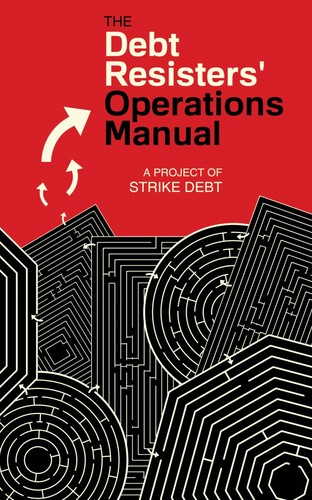
The Debt Resisters’ Operations Manual

Curated by Brian Kim, CPA — every pick gets a plain-English summary and the key takeaways.
Brian Kim, CPA · 2.89M YouTube Subscribers →What this book actually teaches
- 01The medical debt chapter is unusually specific: nonprofit hospitals are obligated to provide charity care under their 501(c)(3) status, itemized bills regularly contain errors, and outstanding balances can often be negotiated down significantly by citing the hospital's own charity care policy.
- 02The book frames consumer debt as a mechanism of wealth extraction and social control rather than a neutral financial instrument — a political lens that shapes every chapter and that readers should engage with deliberately rather than ignore.
- 03The foreclosure chapter covers servicer procedural errors that were rampant in the 2009-2012 period and explains how those errors create legal leverage — some guidance is specific to that era, but the framework for understanding servicer legal obligations remains relevant.
- 04The student loan chapter covers income-driven repayment, Public Service Loan Forgiveness, and discharge conditions — practical information that sits alongside the political analysis and is independently useful regardless of whether readers share the book's broader framework.
- 05The 2012 publication date and post-Occupy political origins mean some regulatory guidance is dated and some collective-action resources are no longer active — treat specific servicer and regulatory details as a starting point requiring current verification.
What's in this book
The Debt Resisters' Operations Manual, published in 2012 by Strike Debt — a working group that emerged from Occupy Wall Street — is not a personal finance guide in the conventional sense. It is a political and practical manual that argues consumer debt is a mechanism of social control, that the financial industry systematically extracts wealth from low- and middle-income households through debt instruments, and that individuals and communities have both the right and the means to resist those instruments. The book combines debt management tactics with political analysis in a format unusual for the personal finance category.
The manual opens with a chapter on the political economy of debt, arguing that the expansion of consumer debt since the 1970s is not a neutral response to consumer demand but a deliberate restructuring of the economy that transferred risk from employers and the state to individuals. Stagnant wages, declining employer-sponsored benefits, and the erosion of public services — education, healthcare, housing support — were financed through debt rather than through wage growth or public investment, in the authors' analysis. The chapter frames what follows as resistance to a system rather than navigation of a neutral one. Readers who do not share the political framework will find the advocacy language off-putting; readers who do will find the analysis of debt as a systemic phenomenon more useful than the purely individual framing of most personal finance books.
The practical sections are the book's most surprising element given the political framing. The chapter on credit card debt is a detailed guide to understanding cardholder agreements, disputing charges, negotiating with creditors, and understanding what collectors can and cannot legally do. The chapter on medical debt is particularly valuable and relatively rare in consumer personal finance literature: it covers the difference between hospital charges and negotiated rates, the obligation of nonprofit hospitals to provide charity care under their 501(c)(3) status, how to request an itemized bill and what to look for, and how to negotiate outstanding balances down — sometimes significantly — by citing the hospital's charity care policy. The student loan chapter covers income-driven repayment options, Public Service Loan Forgiveness, and the specific conditions under which federal loans can be discharged.
The foreclosure chapter addresses the legal framework of the foreclosure process, the specific procedural errors that were rampant in mortgage servicing in the 2009-2012 period, and how to identify and raise those errors to slow or contest a foreclosure. Some of this guidance is specific to the post-financial-crisis environment and less directly applicable now, but the framework for understanding what servicers are legally required to do and where errors create leverage for borrowers remains relevant.
The manual also covers the Debt Resisters Network, debt strikes, and collective action — content that has no parallel in conventional personal finance and that reflects the book's origins in organized political action rather than individual financial planning.
This is for readers who are facing aggressive debt collection, medical debt, student debt, or foreclosure and want both practical tools and a political framework for understanding their situation — and who are open to the advocacy framing the book brings throughout.
The weaknesses are political register and currency. The consistent advocacy framing will alienate readers who want practical tools without political analysis; the two are inseparable in this book in a way that limits its audience. The 2012 publication date means some regulatory and servicer-specific guidance is dated — the Consumer Financial Protection Bureau's rulemaking since 2012 has changed the collection and servicing landscape in ways the book does not reflect. The Strike Debt political project has also evolved since publication; some of the collective-action resources referenced are no longer active.
For readers navigating aggressive debt collection, medical bills, or student debt who want practical tools grounded in a systemic rather than individual understanding of consumer debt, The Debt Resisters' Operations Manual covers territory most personal finance books ignore entirely.
Read next

For anyone whose financial education was "get a good job and save" — the book is most valuable for first-time readers…
Buy on Amazon →
For anyone who confuses high income with wealth, or who feels behind because their lifestyle doesn't look like the we…
Buy on Amazon →
Anyone who earns enough to make discretionary spending choices but suspects their spending is not generating proporti…
Buy on Amazon →
Households in active consumer-debt distress who need a non-negotiable shared script. Not for investors already past B…
Buy on Amazon →About Strike Debt
Read more from Strike Debt and explore the full bibliography on ClearValue Books.
View Strike Debt's page →Get an email if our take on The Debt Resisters’ Operations Manual changes.
We re-review our picks. We'll email you if The Debt Resisters’ Operations Manual's ranking or review changes — no checking back.
Across the site
Featured in lists

Ready to read The Debt Resisters’ Operations Manual?
Buy the edition we recommend on Amazon.
Buy on Amazon →