

A Letter to My White Friends and Colleagues

Curated by Brian Kim, CPA — every pick gets a plain-English summary and the key takeaways.
Brian Kim, CPA · 2.89M YouTube Subscribers →What this book actually teaches
- 01Rogers frames the racial wealth gap as a market failure and business opportunity rather than solely a moral issue: the systematic exclusion of Black Americans from capital, business ownership, and home equity accumulation has created a structural deficit with both ethical and economic dimensions for white business leaders who choose to address it.
- 02The historical documentation is causal rather than contextual — Rogers presents land seizures after Reconstruction, GI Bill exclusion, and redlining not as background but as the specific mechanisms that produced current wealth disparities, and argues that understanding this causation is prerequisite to acting effectively.
- 03The most practically specific sections address levers that white business leaders control: supplier diversity programs, venture capital and procurement access, mentorship, and corporate capital allocation — these chapters are more actionable than the structural policy recommendations.
- 04Rogers distinguishes symbolic action from structural action throughout the book, addressing the common pattern of diversity initiatives that improve optics without changing capital flows, and providing a framework for evaluating whether a given action reaches the economic levers that actually affect wealth outcomes.
- 05The book is calibrated to persuade skeptical white readers and is less useful as a direct resource for Black entrepreneurs seeking financing strategies or business guidance — its primary audience is white professionals and business leaders who want to move from awareness to action.
What's in this book
A Letter to My White Friends and Colleagues (2021) by Steven S. Rogers is a business and equity book written by a Harvard Business School professor and serial entrepreneur who has spent decades studying minority entrepreneurship and wealth gaps in America. Rogers' central argument is that the racial wealth gap in the United States is not an abstract social problem but a concrete market failure and business opportunity: that the systematic exclusion of Black Americans from capital, business ownership, and wealth accumulation has produced a structural deficit that creates both moral obligation and economic opportunity for white business leaders, investors, and institutions who choose to act.
The book's opening sections document the historical mechanisms of wealth exclusion in specific terms — the seizure of Black-owned land and businesses after Reconstruction, the systematic denial of GI Bill benefits to Black veterans, the redlining that prevented Black families from building home equity during the postwar period that generated the most significant wealth accumulation for white middle-class families, and the continued financing gaps that constrain Black entrepreneurs. Rogers presents this history not as background but as the causal explanation for current wealth disparities, and insists that understanding it is prerequisite to acting on it effectively.
The middle sections address the business and investment case for closing the gap: the market size represented by Black consumers and entrepreneurs, the underperformance of institutions that exclude diverse perspectives, and the return profile of minority business investment. Rogers draws on his own research into minority entrepreneurship and his experience as a business educator to make this case with specificity rather than broad assertion. The chapters on supplier diversity, venture capital access, and corporate procurement are particularly concrete — they address levers that white business leaders actually control and provide a framework for action rather than reflection.
The final sections are more personally addressed — Rogers writes directly to white readers who want to act and addresses the common failure modes (symbolic action over structural action, discomfort with the historical documentation, the preference for "color-blind" approaches that preserve existing inequalities) with the directness the book's title promises. The financial literacy and business formation sections make a case for mentorship and capital access as the highest-leverage interventions available to individual white business leaders.
The weaknesses reflect the book's dual ambition. The historical documentation sections are well-sourced and important, but readers who are already familiar with the history of American racial wealth policy will find them preparatory rather than revelatory. The action sections are more practically specific for corporate leaders and investors than for individual professionals or small business owners, and the structural recommendations (policy change, institutional reform) are less developed than the individual-action framework. The book's tone is calibrated to persuade skeptical white readers rather than to serve as a resource for Black entrepreneurs directly.
For white business leaders, managers, investors, and professionals who want to understand the financial and business dimensions of racial wealth inequality and identify actionable responses within their sphere of influence, Rogers provides both the historical grounding and the practical framework that most books on this topic provide separately.
Read next

For anyone whose financial education was "get a good job and save" — the book is most valuable for first-time readers…
Buy on Amazon →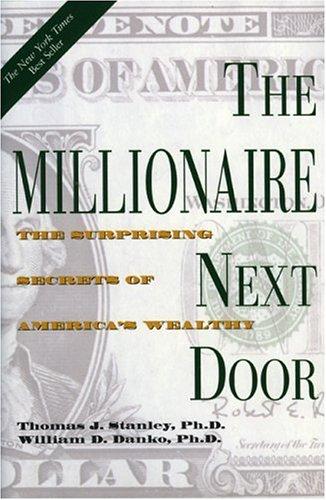
For anyone who confuses high income with wealth, or who feels behind because their lifestyle doesn't look like the we…
Buy on Amazon →
Anyone who earns enough to make discretionary spending choices but suspects their spending is not generating proporti…
Buy on Amazon →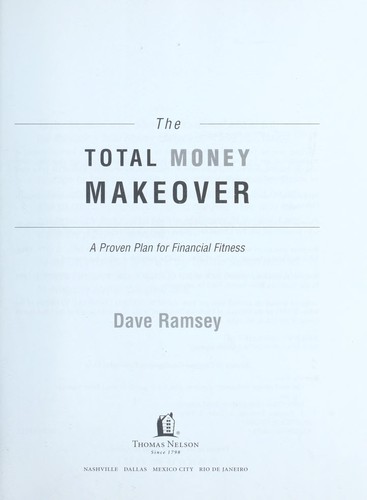
Households in active consumer-debt distress who need a non-negotiable shared script. Not for investors already past B…
Buy on Amazon →About Steven S Rogers
Read more from Steven S Rogers and explore the full bibliography on ClearValue Books.
View Steven S Rogers's page →Get an email if our take on A Letter to My White Friends and Colleagues changes.
We re-review our picks. We'll email you if A Letter to My White Friends and Colleagues's ranking or review changes — no checking back.

Ready to read A Letter to My White Friends and Colleagues?
Buy the edition we recommend on Amazon.
Buy on Amazon →