

Are you normal about money?

Curated by Brian Kim, CPA — every pick gets a plain-English summary and the key takeaways.
Brian Kim, CPA · 2.89M YouTube Subscribers →What this book actually teaches
- 01Americans consistently overstate their savings rates and understate their debt when surveyed — the gap between self-reported and actual behavior is one of the book's most consistent findings.
- 02Money fights in couples are rarely about the specific purchase and almost always about control, security, or trust.
- 03The book's central value is providing a reference point for normal financial behavior, which most people lack and therefore fill with self-serving assumptions.
- 04Survey-based behavioral data should be read as directional rather than precise — response bias and self-reporting distort the numbers.
- 05The specific figures are dated (early 2000s), so treat behavioral patterns as the durable insight, not the dollar amounts.
What's in this book
Bernice Kanner's book is a survey-based exploration of American money behavior — how people actually handle their finances, what they hide, what they lie about, and how their habits compare to their neighbors'. The premise is that most people have no accurate reference point for what normal financial behavior looks like, which creates anxiety, shame, and self-delusion that compounds poor decisions. By aggregating survey data across thousands of respondents, Kanner tries to give readers that reference point.
The book covers a wide range of territory: how much people save (or don't), how couples fight about money, how many people carry credit card balances and what they say they owe versus what they actually owe, how people tip, how they handle inherited money, and how their spending compares to their stated values. The format is deliberately accessible — organized by topic with data points and anecdotes rather than continuous argument — which makes it easy to browse but limits its analytical depth.
What the book does well is surface the gap between what people say about money and what they actually do. A consistent pattern emerges: respondents systematically overstate their savings rates, understate their debt, and claim more financial discipline than the data supports. This gap between self-reported and actual behavior is a genuine insight, and Kanner documents it across enough domains that the pattern becomes convincing. The chapter on couples and money — who controls it, who hides it, who lies about it — is particularly detailed and holds up against more academic behavioral finance work.
The weaknesses are methodological. Survey data is self-reported, and the book acknowledges but doesn't deeply interrogate the selection and response biases in its sourcing. The surveys Kanner cites come from different years, different sample sizes, and different methodologies — financial institutions, polling firms, magazine reader polls — and these aren't always reconciled. A number that sounds precise ("43% of Americans have less than $500 in savings") may conflate surveys from different definitions of "savings account" versus total liquid assets.
The book is also clearly dated. Published in the early 2000s, the specific dollar figures and behavioral patterns it documents reflect a pre-smartphone, pre-app-based financial management era. Credit card use, emergency savings rates, and investment behavior have all shifted enough that the benchmarks have limited current applicability.
For readers who want a light, data-illustrated read about American money psychology rather than actionable personal finance advice, this book delivers what it promises. As a behavioral finance text, it's anecdotal rather than rigorous.
Read next

For anyone whose financial education was "get a good job and save" — the book is most valuable for first-time readers…
Buy on Amazon →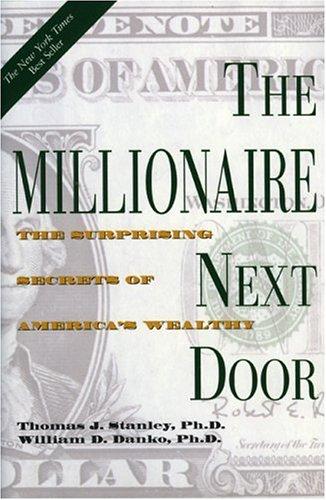
For anyone who confuses high income with wealth, or who feels behind because their lifestyle doesn't look like the we…
Buy on Amazon →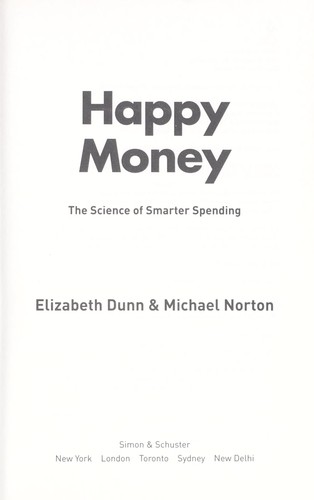
Anyone who earns enough to make discretionary spending choices but suspects their spending is not generating proporti…
Buy on Amazon →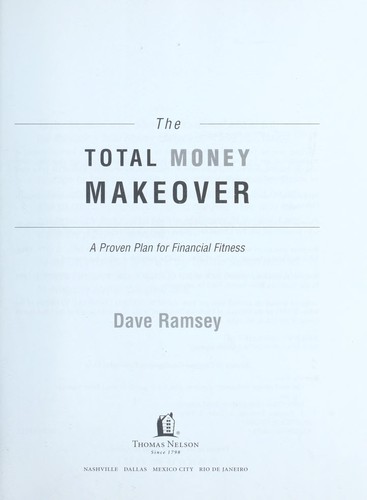
Households in active consumer-debt distress who need a non-negotiable shared script. Not for investors already past B…
Buy on Amazon →About Bernice Kanner
Read more from Bernice Kanner and explore the full bibliography on ClearValue Books.
View Bernice Kanner's page →Get an email if our take on Are you normal about money? changes.
We re-review our picks. We'll email you if Are you normal about money?'s ranking or review changes — no checking back.

Ready to read Are you normal about money??
Buy the edition we recommend on Amazon.
Buy on Amazon →