

Big bucks!

Curated by Brian Kim, CPA — every pick gets a plain-English summary and the key takeaways.
Brian Kim, CPA · 2.89M YouTube Subscribers →What this book actually teaches
- 01The book uses a mentor-parable structure to make foundational personal finance concepts accessible to readers who are disengaged or intimidated by standard guides.
- 02Core principles covered: spend less than you earn, start saving early for compounding, avoid lifestyle inflation, write down a financial plan.
- 03The parable format explicitly trades mechanical detail for narrative ease — no specific account types, tax rules, or allocation frameworks are discussed.
- 04Blanchard's mentor-encounter structure mirrors the One Minute Manager series; the pedagogy is the same applied to money rather than management.
- 05Readers who have already engaged with any personal finance text will find nothing new here; the value is as a first entry point, not a primary reference.
What's in this book
Big Bucks! is a business parable by Ken Blanchard and Ethan Willis — a short, narrative-driven book in the tradition of Blanchard's One Minute Manager series. The setup is simple: a young professional named Andy is struggling to build wealth and through a series of mentor encounters learns a handful of principles about money, purpose, and financial strategy. The book's core argument is that financial success starts not with a specific investment vehicle but with understanding your relationship to money and aligning your financial goals with a larger sense of personal purpose.
The content is organized around the encounters Andy has with various mentors, each of whom imparts a principle. The early lessons cover foundational mindset territory — spending less than you earn, the compounding math of starting savings early, and the danger of lifestyle inflation keeping pace with income. Middle sections address the importance of having a written financial plan rather than vague intentions, and the distinction between assets that appreciate and liabilities that consume cash. Later chapters touch on entrepreneurship and income diversification as paths beyond wage dependence.
The parable format delivers material in a digestible, light narrative that many readers find easier to absorb than a denser text. Blanchard pioneered this format for management books and it has a proven audience. For a total beginner who has avoided personal finance because it feels technical or intimidating, the story wrapper can lower the activation energy.
The weaknesses are significant in proportion to what the book claims to cover. The principles are real — spend less than you earn, start early, diversify income — but the treatment is shallow by design. Nothing here challenges a reader who has already done any reading in personal finance; the book covers in 150 pages what The Millionaire Next Door or I Will Teach You to Be Rich develops with considerably more depth and specificity. The parable device also strips out the mechanical detail that actually matters: account types, tax treatment, asset allocation, specific savings rates. Inspiration is not a plan.
Worth reading as a first spark for someone who is financially disengaged and needs a low-friction entry point. Not the book to read if you have already read anything else in the personal finance genre — the territory it covers is handled better elsewhere.
Read next

For anyone whose financial education was "get a good job and save" — the book is most valuable for first-time readers…
Buy on Amazon →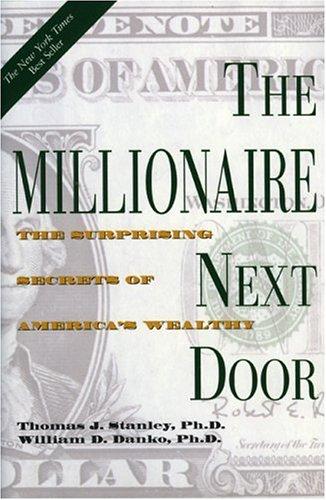
For anyone who confuses high income with wealth, or who feels behind because their lifestyle doesn't look like the we…
Buy on Amazon →
Anyone who earns enough to make discretionary spending choices but suspects their spending is not generating proporti…
Buy on Amazon →
Households in active consumer-debt distress who need a non-negotiable shared script. Not for investors already past B…
Buy on Amazon →About Kenneth H Blanchard
Read more from Kenneth H Blanchard and explore the full bibliography on ClearValue Books.
View Kenneth H Blanchard's page →Get an email if our take on Big bucks! changes.
We re-review our picks. We'll email you if Big bucks!'s ranking or review changes — no checking back.
