

Borrowing Inequality

Curated by Brian Kim, CPA — every pick gets a plain-English summary and the key takeaways.
Brian Kim, CPA · 2.89M YouTube Subscribers →What this book actually teaches
- 01Minority and low-income students borrowed at higher rates and with greater relative burden in the early 2000s, concentrated at institutions with weaker employment outcomes.
- 02The shift from subsidized grants to loans as the primary federal financial-aid vehicle was loading disproportionate risk on the least financially resilient students.
- 03Institutional stratification — where you borrow for matters as much as how much you borrow — is the book's central underappreciated argument.
- 04The book was written in 2004, predating the full expansion of private lending and for-profit enrollment, but its structural analysis anticipated the debt crisis that followed.
- 05Intended for policy researchers, not individual borrowers — it is data-dense and written in academic rather than accessible prose.
What's in this book
Derek V. Price's Borrowing Inequality is an academic analysis of how student loan borrowing in the United States interacts with race, income, and institutional type to produce unequal outcomes for borrowers. Published in 2004 by RoutledgeFalmer as a higher-education policy monograph, the book draws on federal survey data — primarily the National Postsecondary Student Aid Study — to examine which students borrow, how much, from what sources, and with what degree of burden relative to their expected earnings.
The analysis develops in layers. First, Price documents a pattern that was already visible in early 2000s data: minority students and students from low-income families were more likely to borrow, borrowed larger amounts relative to family income, and attended institutions (community colleges, for-profit schools, historically Black colleges and universities) that left them with less earning power to service that debt. Second, he examines the composition of borrowing — federal subsidized and unsubsidized Stafford loans versus PLUS loans versus private loans — and argues that the shift underway in the early 2000s away from subsidized federal grants (Pell) toward loans was disproportionately loading the borrowing burden on the least financially resilient students. Third, he frames institutional stratification as the under-examined variable: a student borrowing $20,000 to attend a four-year university with strong employment placement outcomes faces categorically different risk than a student borrowing the same amount for a credential at a for-profit institution with poor completion and placement rates.
The historical importance of the book is that it identified trends — private loan growth, for-profit enrollment expansion, credential inflation — that culminated in the student debt crisis that defined the following two decades. As a forecasting document it holds up reasonably well.
The limitations are those of a 2004 academic monograph. The analysis predates the full explosion of private lending and for-profit enrollment growth, and the policy landscape has changed substantially. It is data-dense and written for a higher-education policy audience, not for borrowers making decisions about their own debt. Readers looking for a current, actionable analysis would need to update from this foundation.
Worth reading for higher-education policy researchers and anyone trying to understand how the structural conditions for the modern student debt crisis were already visible in early 2000s federal data.
Read next

For anyone whose financial education was "get a good job and save" — the book is most valuable for first-time readers…
Buy on Amazon →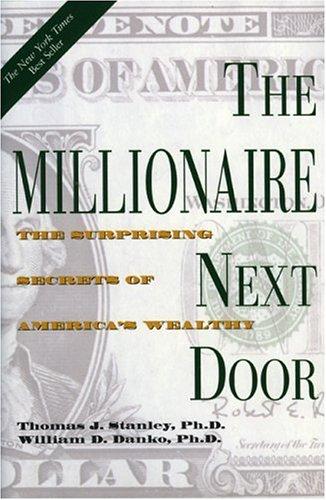
For anyone who confuses high income with wealth, or who feels behind because their lifestyle doesn't look like the we…
Buy on Amazon →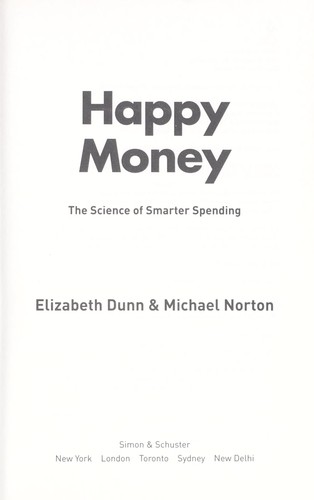
Anyone who earns enough to make discretionary spending choices but suspects their spending is not generating proporti…
Buy on Amazon →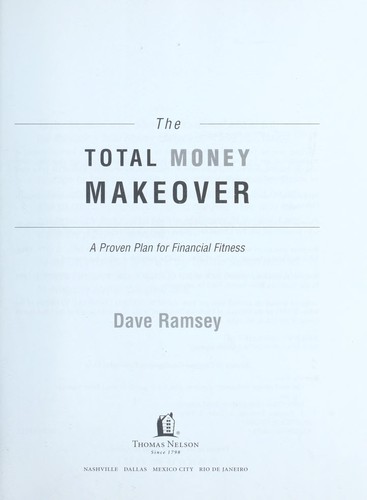
Households in active consumer-debt distress who need a non-negotiable shared script. Not for investors already past B…
Buy on Amazon →About Derek V Price
Read more from Derek V Price and explore the full bibliography on ClearValue Books.
View Derek V Price's page →Get an email if our take on Borrowing Inequality changes.
We re-review our picks. We'll email you if Borrowing Inequality's ranking or review changes — no checking back.

Ready to read Borrowing Inequality?
Buy the edition we recommend on Amazon.
Buy on Amazon →