

Broke

Curated by Brian Kim, CPA — every pick gets a plain-English summary and the key takeaways.
Brian Kim, CPA · 2.89M YouTube Subscribers →What this book actually teaches
- 01Bankruptcy data shows that most filers are homeowners, formerly middle-income, and college-educated — not the stereotyped spendthrift.
- 02Medical crises, job loss, and divorce are the leading triggers; the structural erosion of employer benefits and social insurance amplifies each shock.
- 03Mortgage products shifted risk from lenders to borrowers over several decades; that shift shows up directly in bankruptcy filing patterns.
- 04Single-parent households face a structurally thinner financial margin than married couples — the data bear this out clearly.
- 05The book builds an empirical case for structural causes of debt but stops short of unified policy prescriptions — readers seeking solutions should look elsewhere.
What's in this book
The central argument of Broke: How Debt Bankrupts the Middle Class, edited by Katherine Porter, is that personal debt is not primarily a story of individual irresponsibility — it is a structural problem produced by wage stagnation, the collapse of employer-provided benefits, predatory credit markets, and a safety net that pushes families toward debt as a substitute for income. The essays collected here, written by a mix of legal scholars, sociologists, and economists, use bankruptcy filing data as a lens into how middle-class families actually fall apart financially.
Porter and her contributors draw on the Consumer Bankruptcy Project, a longitudinal study of bankruptcy filers that provides a rare empirical look at who goes broke and why. The data repeatedly challenge the moral-failure narrative: filers are not spendthrifts; they are disproportionately homeowners, college-educated, and formerly middle-income. Their bankruptcies trace to medical crises, job loss, and divorce — events that would have been buffered in earlier decades by stronger employer benefits, union wages, and social insurance but now land directly on household balance sheets because those buffers have been systematically dismantled.
Individual essays drill into specific mechanisms. One examines how mortgage debt transformed from a wealth-building tool into a trap as lenders shifted risk onto borrowers through variable rates and balloon payments. Another tracks how the erosion of employer-sponsored health insurance pushed medical debt into the bankruptcy system — medical bills appear in a substantial share of filings even when they are not the stated cause. A third looks at how single mothers fare differently from married couples in bankruptcy, finding that the financial margin of error for single-parent households is structurally thinner in ways that show up clearly in the data.
This is aimed at policy researchers, students of consumer finance law, and readers who want empirical grounding for debates about debt, credit markets, and the middle class. It is an academic edited volume, not a how-to guide.
The weaknesses are real and worth naming. As an edited collection, the book is uneven — the quality and accessibility of individual essays vary, and the structure does not build toward a unified policy conclusion so much as accumulate evidence. Readers looking for a clean argument or actionable policy prescriptions will find the book frustrating. The data also reflects the pre-2008 period, so the subsequent mortgage crisis and the 2005 bankruptcy reform's long-term effects are not fully integrated. And while the structural critique is compelling, the book is less useful at explaining what individual households should actually do given the constraints it describes.
For readers who want to understand why the American middle class is financially fragile — with evidence rather than anecdote — Broke is the right starting point. It does not make for easy reading, but its empirical foundation is stronger than most of what gets written on the subject.
Read next

For anyone whose financial education was "get a good job and save" — the book is most valuable for first-time readers…
Buy on Amazon →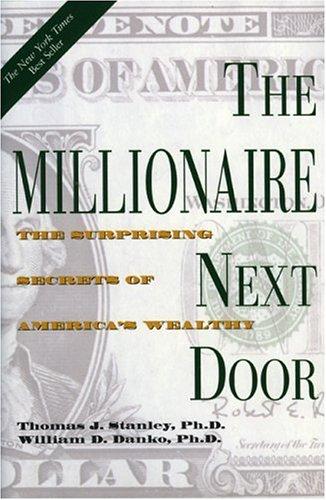
For anyone who confuses high income with wealth, or who feels behind because their lifestyle doesn't look like the we…
Buy on Amazon →
Anyone who earns enough to make discretionary spending choices but suspects their spending is not generating proporti…
Buy on Amazon →
Households in active consumer-debt distress who need a non-negotiable shared script. Not for investors already past B…
Buy on Amazon →About Katherine Porter
Read more from Katherine Porter and explore the full bibliography on ClearValue Books.
View Katherine Porter's page →Get an email if our take on Broke changes.
We re-review our picks. We'll email you if Broke's ranking or review changes — no checking back.
