

Brokenomics

Curated by Brian Kim, CPA — every pick gets a plain-English summary and the key takeaways.
Brian Kim, CPA · 2.89M YouTube Subscribers →What this book actually teaches
- 01Standard personal finance advice assumes a financial baseline — regular income, no debt crisis, basic cushion — that many people in their twenties and thirties never reach.
- 02Naming the friction between mainstream money advice and actual financial reality is the book's primary contribution, not solving it.
- 03The essays on salary negotiation and freelance income volatility are the closest the book comes to actionable guidance.
- 04Financial instability has a performative dimension — looking financially stable while not being so is its own exhausting labor.
- 05This is a humor essay collection, not a personal finance guide; read it for perspective and validation, not a roadmap.
What's in this book
Dina Gachman's Brokenomics is a collection of short humor essays about being perpetually underfunded in your twenties and thirties in America. The book's premise is that the standard personal finance advice — budget, cut lattes, max your 401(k) — assumes a financial baseline that a significant portion of the population never reaches, and that addressing the absurdity of that gap is more useful than pretending the gap does not exist. The essays cover rent, student loans, credit cards, the economics of dating while broke, negotiating salaries, freelancing, and the performative aspects of looking financially stable when you are not.
Gachman's approach is observational and comedic. She is not a financial expert and does not claim to be. The essays work by naming situations with enough specificity that readers who have lived them recognize the territory: the calculation of whether to attend a destination wedding given current bank balance, the mental gymnastics of explaining a résumé gap to a hiring manager, the way health insurance becomes a major factor in choosing a job rather than a background benefit. The humor is self-deprecating and earned — she writes from inside the experience rather than from a distance.
The book is most useful as a reframing device. For readers who consume mainstream personal finance content and feel a friction between what that content assumes and what their actual financial life looks like, Brokenomics names the friction explicitly. That naming has real value even when the book cannot resolve the underlying problem. The essays on salary negotiation and freelance income volatility are the closest the book gets to practical guidance, and they land better than the more purely comedic pieces.
This is for readers in their twenties and thirties navigating entry-level and early-career finances — especially those working in creative fields, gig arrangements, or any sector where income is irregular and the advice to invest the difference assumes a difference exists.
The weaknesses are proportional to the book's ambitions, which are modest. Brokenomics is not trying to solve anything, and readers who pick it up for solutions will be disappointed. The essay format means the book is deliberately episodic rather than cumulative — there is no framework that builds across chapters. Some essays land better than others, and the shorter ones that aim for a quick joke feel slight. The book was published in 2015, and the specific financial touchstones (student loan amounts, rental markets) have only gotten worse since, which simultaneously dates some references and makes the core frustration more relevant.
For what it is — honest, funny, specific essays about financial reality in early adulthood — Brokenomics delivers. It will not tell anyone how to get out of their situation, but it will confirm that the situation is real and shared.
Read next

For anyone whose financial education was "get a good job and save" — the book is most valuable for first-time readers…
Buy on Amazon →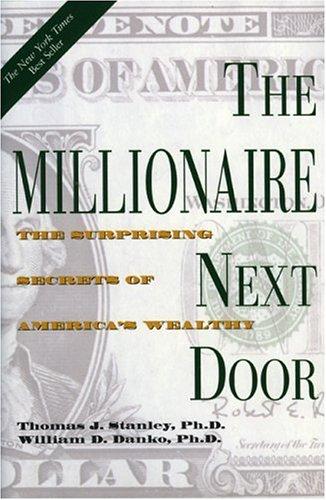
For anyone who confuses high income with wealth, or who feels behind because their lifestyle doesn't look like the we…
Buy on Amazon →
Anyone who earns enough to make discretionary spending choices but suspects their spending is not generating proporti…
Buy on Amazon →
Households in active consumer-debt distress who need a non-negotiable shared script. Not for investors already past B…
Buy on Amazon →About Dina Gachman
Read more from Dina Gachman and explore the full bibliography on ClearValue Books.
View Dina Gachman's page →Get an email if our take on Brokenomics changes.
We re-review our picks. We'll email you if Brokenomics's ranking or review changes — no checking back.
