

Business and Personal Finance

Curated by Brian Kim, CPA — every pick gets a plain-English summary and the key takeaways.
Brian Kim, CPA · 2.89M YouTube Subscribers →What this book actually teaches
- 01Covers both personal finance (budgeting, credit, insurance, investing) and basic business finance in a single secondary-school curriculum text.
- 02The paycheck-to-investing sequence mirrors the order a young adult actually encounters these financial decisions — which is a feature, not an accident.
- 03As a textbook written to meet state curriculum standards, it is comprehensive but lacks the depth and personality of a good trade book on any individual topic.
- 04Investment and banking sections predate index investing dominance and app-based finance; supplement with current examples for classroom use.
- 05Better suited as a curriculum reference or catch-up text than as adult self-education reading — trade books outperform it on any single topic it covers.
What's in this book
Business and Personal Finance is a high school textbook published by McGraw-Hill (Glencoe) that covers the financial literacy curriculum adopted by many state education standards. Its argument is foundational: financial decision-making is a learnable skill, and introducing students to budgeting, banking, credit, investing, insurance, and tax basics in an organized sequence produces better outcomes than leaving financial education to chance. The book is structured as a two-track text — personal finance (income, spending, saving, credit, insurance) and basic business finance (entrepreneurship, business structures, financial statements) — intended to give students fluency in both domains before they leave secondary school.
The personal finance sections cover the standard curriculum in roughly the order a young adult would encounter these topics: getting a first job and understanding a paycheck and tax withholding, opening and managing checking and savings accounts, understanding how credit works and what credit reports contain, evaluating insurance needs (auto, health, renter's, life), and basic investing concepts (stocks, bonds, mutual funds, compound interest). Each chapter includes vocabulary terms, worked examples, review questions, and case studies built around fictional student characters making financial decisions.
The business finance sections introduce profit and loss, balance sheets, cash flow statements, and the basics of starting and running a small business — more introductory than the personal finance material but sufficient for a student encountering these concepts for the first time. The integration of both tracks is the book's distinguishing feature relative to purely personal finance curricula.
This is a classroom textbook, not a trade book. It is aimed at high school teachers delivering financial literacy courses and students completing them. It is not designed for adult self-education, though motivated adults who missed formal financial education could use it as a structured catch-up.
The weaknesses follow from the format. Textbooks are written by committee to satisfy curriculum standards, which produces broad coverage at the cost of depth and personality. The writing is functional rather than engaging, and the fictional characters and scenarios feel dated even in relatively recent editions. The investment sections cover traditional instruments but predate the explosion of index investing, robo-advisors, and app-based banking that now dominate how young adults actually interact with financial products. Teachers who use the book as a spine will need to supplement with current-context examples. The dual business-personal finance structure also means neither track gets as much space as a dedicated single-subject text would provide.
As a reference for what financial literacy standards expect high school students to know, and as a structured introduction for anyone who never received formal financial education, the book is competent and comprehensive. For self-education, better trade books exist for most of the individual topics it covers.
Read next

For anyone whose financial education was "get a good job and save" — the book is most valuable for first-time readers…
Buy on Amazon →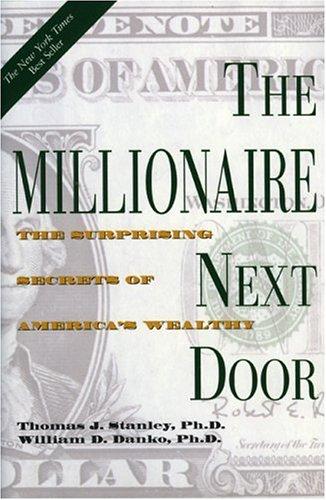
For anyone who confuses high income with wealth, or who feels behind because their lifestyle doesn't look like the we…
Buy on Amazon →
Anyone who earns enough to make discretionary spending choices but suspects their spending is not generating proporti…
Buy on Amazon →
Households in active consumer-debt distress who need a non-negotiable shared script. Not for investors already past B…
Buy on Amazon →About Mcgraw Hill
Read more from Mcgraw Hill and explore the full bibliography on ClearValue Books.
View Mcgraw Hill's page →Get an email if our take on Business and Personal Finance changes.
We re-review our picks. We'll email you if Business and Personal Finance's ranking or review changes — no checking back.
Across the site
Featured in lists

Ready to read Business and Personal Finance?
Buy the edition we recommend on Amazon.
Buy on Amazon →