

Cash cows, pigs and jackpots

Curated by Brian Kim, CPA — every pick gets a plain-English summary and the key takeaways.
Brian Kim, CPA · 2.89M YouTube Subscribers →What this book actually teaches
- 01Most people lose more to financial industry fees and interest than to bad investment picks — the leak is the problem, not the portfolio.
- 02Build a household cash flow statement before doing anything else; most people cannot accurately account for where their income goes.
- 03Car costs, irregular expenses, and home maintenance are systematically undercounted in personal budgets — and the gap is usually significant.
- 04Fee-based mutual funds and commission-compensated advisors have a structural incentive misalignment with clients that compounds over decades.
- 05The Canadian regulatory and tax context (RRSP, TFSA, Canadian MER rules) limits direct applicability for US readers, but the framework translates.
What's in this book
David Trahair's central argument in Cash Cows, Pigs and Jackpots is that the financial services industry is structured to capture as much of Canadians' income as possible through fees, commissions, and tax-inefficient products — and that most people are losing far more to this system than they realize, because the costs are obscured in percentage terms rather than dollar terms. The book's thesis is that the path to financial security is not finding better investments but stopping the leak: minimize fees, eliminate debt before investing, and understand where money is actually going before trying to optimize it.
Trahair, a CPA, organizes the book around three archetypes that appear in the title. Cash cows are the financial industry products and relationships that extract value from consumers reliably — high-MER mutual funds, whole life insurance, bank fees, and commissions paid to advisors who are compensated to sell rather than advise. Pigs are the spending categories that consume disproportionate shares of income, often invisibly: car costs, restaurant and convenience spending, and carrying balances on revolving credit. Jackpots are the moments when a windfall — an inheritance, a business sale, a legal settlement — gets mismanaged because people do not have a clear financial plan before the money arrives.
The book's practical core is the cash flow statement — a tool Trahair argues most Canadians have never built for their own household. Before investment strategy, before RRSP optimization, before any advisor conversation, knowing exactly where income goes each month is foundational. The book walks through constructing one, including categories people routinely undercount (car depreciation, home maintenance, irregular expenses), and then uses it to show how much of gross income is being consumed by fees and interest versus actually building net worth.
This is aimed at middle-income Canadians who are working, have some investable assets or savings, and feel like they should be further ahead financially than they are. The CPA-grounded skepticism toward the financial advice industry makes it particularly useful for readers who have had advisor relationships that did not deliver.
The weaknesses are worth noting. The book is firmly Canadian in its tax and regulatory context — RRSP, TFSA, and Canadian mutual fund MER regulations are the frame, and American readers will need to translate. The skepticism toward financial advisors, while often justified, shades into a broad dismissal that may not serve readers who genuinely need help with complex situations. And the book was published in 2009, pre-dating fee-only advisor models and the low-cost index fund revolution that addressed many of the fee complaints it raises — some of the alternatives are now more accessible than the book implies.
For any reader who suspects the financial services industry is not fully aligned with their interests, Cash Cows, Pigs and Jackpots makes that suspicion rigorous and quantifiable. The cash flow statement framework alone is worth the read.
Read next

For anyone whose financial education was "get a good job and save" — the book is most valuable for first-time readers…
Buy on Amazon →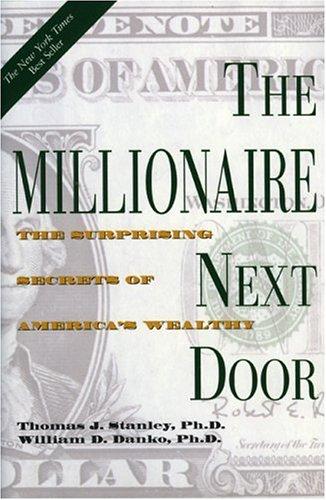
For anyone who confuses high income with wealth, or who feels behind because their lifestyle doesn't look like the we…
Buy on Amazon →
Anyone who earns enough to make discretionary spending choices but suspects their spending is not generating proporti…
Buy on Amazon →
Households in active consumer-debt distress who need a non-negotiable shared script. Not for investors already past B…
Buy on Amazon →About David Trahair
Read more from David Trahair and explore the full bibliography on ClearValue Books.
View David Trahair's page →Get an email if our take on Cash cows, pigs and jackpots changes.
We re-review our picks. We'll email you if Cash cows, pigs and jackpots's ranking or review changes — no checking back.

Ready to read Cash cows, pigs and jackpots?
Buy the edition we recommend on Amazon.
Buy on Amazon →