

Cash in a flash

Curated by Brian Kim, CPA — every pick gets a plain-English summary and the key takeaways.
Brian Kim, CPA · 2.89M YouTube Subscribers →What this book actually teaches
- 01The book's core system: identify a marketable knowledge niche, package it as a digital product, build a simple sales mechanism, and iterate fast.
- 02Multiple income streams from digital products (courses, ebooks, consulting, affiliate marketing) are the primary vehicles presented.
- 03The motivational framework emphasizes mindset and speed-to-market over perfectionism — useful framing but not a substitute for market validation.
- 04Published in 2009, the specific tactics (affiliate rates, email list economics, SEO approaches) reflect a materially different internet marketing era.
- 05Income examples in the book skew toward people selling products about making money — a self-referential bias the authors do not acknowledge.
What's in this book
Cash in a Flash by Mark Victor Hansen and Robert G. Allen argues that the traditional model of building wealth slowly through a single job and steady saving is obsolete, and that the internet has created a new environment where ordinary people can generate multiple rapid income streams — what the authors call "multiple streams of internet income" — without large capital or specialized credentials. The book positions itself as a practical system for moving from financial stress to financial freedom by finding a profitable idea, testing it fast, and scaling what works.
Hansen and Allen structure their approach around a framework they call the "Cash in a Flash" system, which emphasizes speed and iteration over perfectionism. The core sequence is: identify a marketable skill or knowledge niche, package it as a digital product or service (ebook, course, coaching, consulting), build a simple online sales mechanism, and drive traffic to it. The book covers affiliate marketing, information products, online auctions, and service-based businesses as primary vehicles, with chapters on building an email list, writing sales copy that converts, and outsourcing tasks to multiply output.
The motivational architecture draws heavily on Hansen's Chicken Soup for the Soul lineage — positive thinking, visualization, and the belief that mindset precedes income. The Allen contribution anchors the book to his earlier real estate and multiple-streams methodology. The combination produces a hybrid: part internet marketing manual, part self-help pep talk.
This is aimed at people in financial distress or dissatisfied with their income who are willing to put in effort to build side income online, particularly those without technical backgrounds who need a simplified entry point to digital business models.
The weaknesses are significant and structural. The book was published in 2009, when the internet marketing landscape — affiliate commissions, ebook pricing, email list economics, and the relative ease of ranking a simple website — was materially different from today's. Tactics described as accessible have become saturated or algorithmically harder; the platforms the book implies still operate differently. More fundamentally, the book shares the genre's common flaw: the examples skew heavily toward people selling products about making money, which creates a self-referential loop the authors do not acknowledge. The income claims, while not fabricated, are not representative of typical results.
For readers interested in the fundamentals of digital product creation and online marketing, Cash in a Flash introduced those concepts accessibly for its era. Anyone using it as a current tactical guide should treat the frameworks as starting points and verify every specific against today's platform economics.
Read next

For anyone whose financial education was "get a good job and save" — the book is most valuable for first-time readers…
Buy on Amazon →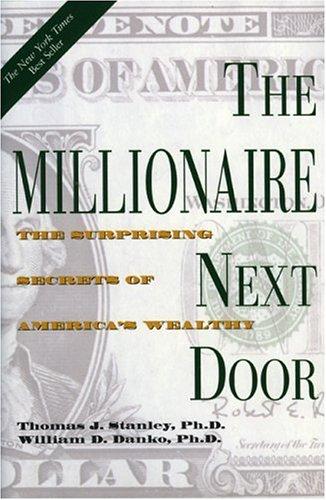
For anyone who confuses high income with wealth, or who feels behind because their lifestyle doesn't look like the we…
Buy on Amazon →
Anyone who earns enough to make discretionary spending choices but suspects their spending is not generating proporti…
Buy on Amazon →
Households in active consumer-debt distress who need a non-negotiable shared script. Not for investors already past B…
Buy on Amazon →About Mark Victor Hansen
Read more from Mark Victor Hansen and explore the full bibliography on ClearValue Books.
View Mark Victor Hansen's page →Get an email if our take on Cash in a flash changes.
We re-review our picks. We'll email you if Cash in a flash's ranking or review changes — no checking back.
