

College planning for dummies

Curated by Brian Kim, CPA — every pick gets a plain-English summary and the key takeaways.
Brian Kim, CPA · 2.89M YouTube Subscribers →What this book actually teaches
- 01The admissions-thinking sections remain the book's most durable contribution: Ordovensky explains how admissions offices read transcripts and extracurriculars, the GPA-and-course-rigor relationship, and the practical difference between reach, target, and safety schools in a way that transfers across the decades.
- 02The financial aid and FAFSA sections are obsolete — the Perkins Loan program (featured prominently) was eliminated in 2017, the FAFSA underwent its most significant redesign for the 2024-2025 aid year, and the EFC calculation has been substantially restructured; current applicants should use studentaid.gov exclusively for process guidance.
- 03The college search process described — college fairs, paper viewbooks, phone calls to admissions offices — reflects the pre-internet research environment of 1999 and has been substantially replaced by net price calculators, digital Common App, college search engines, and virtual tours.
- 04The campus visit framework and college fit evaluation sections (asking about graduation rates, student support resources, academic culture) are the most time-resistant portions of the book and provide a useful checklist for families doing in-person evaluations.
- 05The For Dummies format prioritizes comprehensive coverage over depth — the book works well as a first orientation to the college planning sequence but is insufficient as a guide for families who want to optimize any specific dimension such as financial aid packaging, merit scholarship strategy, or admissions positioning.
What's in this book
College Planning for Dummies (1999) by Pat Ordovensky is a comprehensive guide to the college selection and application process, covering academic planning, admissions strategy, financial aid mechanics, and campus life preparation within the accessible, structured format of the For Dummies series. Ordovensky, a longtime education journalist, wrote the book when the internet was reshaping how students discovered and applied to colleges but before it had matured into the dominant research and application channel it has since become.
The book's strongest contribution is its demystification of the admissions process for first-generation college students and families without prior higher education experience. Ordovensky is particularly good at explaining what admissions offices actually evaluate — the GPA and course rigor relationship, what a high school transcript signals to readers who have seen thousands of them, how extracurricular involvement is read versus how students typically present it, and what the difference is between a reach, target, and safety school in practice. This section functions as a competent introduction to admissions thinking for readers who approach the process without institutional context.
The FAFSA and financial aid chapters are the book's most significantly dated section. College planning timelines, aid eligibility mechanics, federal loan program structures, and the Expected Family Contribution calculation have all changed materially since 1999. The Perkins Loan program, which receives significant coverage in the 1999 edition, was eliminated in 2017. The FAFSA itself underwent its most significant redesign in decades for the 2024-2025 aid year, changing core mechanics that the 1999 edition describes in detail. Readers should treat all financial aid specifics in this edition as obsolete and verify against current studentaid.gov materials.
The college search chapters document the pre-internet research process — college fairs, paper viewbooks, school visits, guidance counselors — in a way that was accurate for 1999 but reads as a historical document today. The emergence of the Common Application's digital expansion, the rise of college search engines, the availability of net price calculators (required after 2011), and the general shift of the application process online have changed the research and application mechanics substantially.
The campus visit and college selection chapters are the most durably useful sections. Ordovensky's guidance on what to look for during campus visits, how to evaluate fit across academic, social, and financial dimensions, and how to structure the decision between admission offers addresses aspects of the college selection process that are less time-sensitive than specific programs or aid mechanics. The framework for asking honest questions about graduation rates, student support resources, and campus culture transfers well despite the publication date.
The book's core weakness beyond currency is scope. The For Dummies format pushes toward comprehensiveness over depth — covering the full admissions-through-enrollment sequence in one volume means no single topic gets the treatment a dedicated book would provide. The result is useful as a process orientation for first-time navigators but insufficient as a guide for families who want to optimize any specific dimension of the college planning process.
For readers in 1999, College Planning for Dummies was a solid comprehensive guide. For current readers, it functions primarily as a structural orientation to the college planning sequence — the chapter framework and the admissions-thinking sections remain useful, while the financial aid and application process specifics require current sources.
Read next

For anyone whose financial education was "get a good job and save" — the book is most valuable for first-time readers…
Buy on Amazon →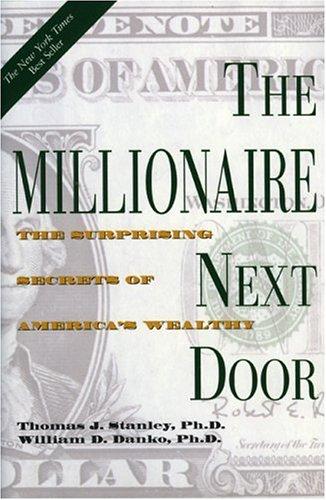
For anyone who confuses high income with wealth, or who feels behind because their lifestyle doesn't look like the we…
Buy on Amazon →
Anyone who earns enough to make discretionary spending choices but suspects their spending is not generating proporti…
Buy on Amazon →
Households in active consumer-debt distress who need a non-negotiable shared script. Not for investors already past B…
Buy on Amazon →About Pat Ordovensky
Read more from Pat Ordovensky and explore the full bibliography on ClearValue Books.
View Pat Ordovensky's page →Get an email if our take on College planning for dummies changes.
We re-review our picks. We'll email you if College planning for dummies's ranking or review changes — no checking back.

Ready to read College planning for dummies?
Buy the edition we recommend on Amazon.
Buy on Amazon →